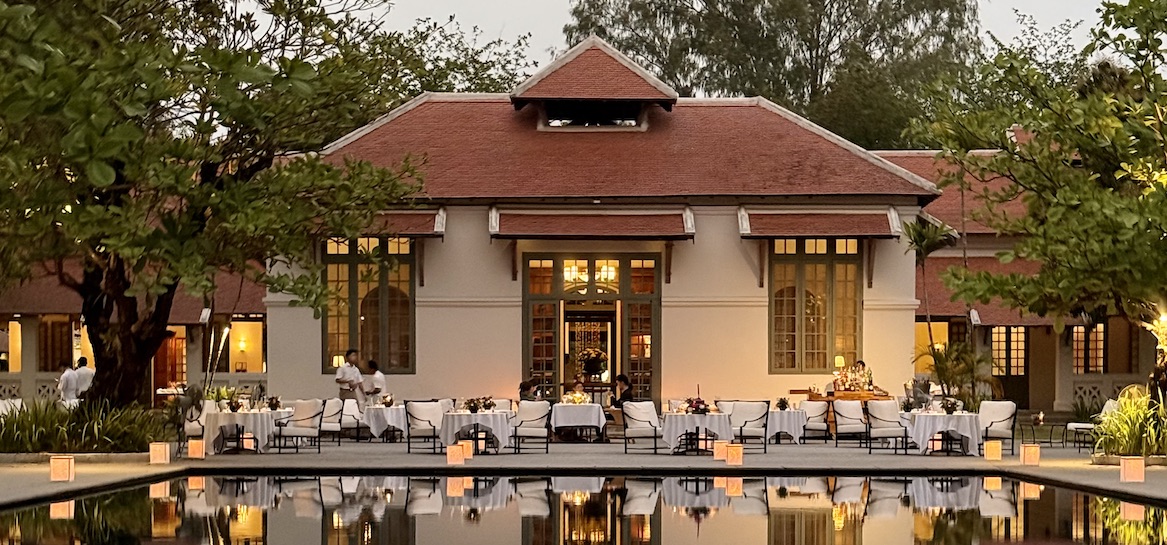
Since my solo trip to Shanghai last July (my first time flying without kids since becoming a mom), I decided that I need to do one kids-free trip every year. Nothing extravagant, just a sweet little four-day, three-night escape. Thanks to A, who took leave to stay home with Em & El, that wish came true this February.
去年七月回上海,是我生孩子後第一次獨自飛行。雖然只是去辦事,但那種滲透全身的自由感在心裡種下了一個念頭 – 每年都要不帶孩子去旅行一次。不貪心,四天三夜就好。感謝神隊友A先生請假在家顧 Em & El,我今年二月順利實現了願望。
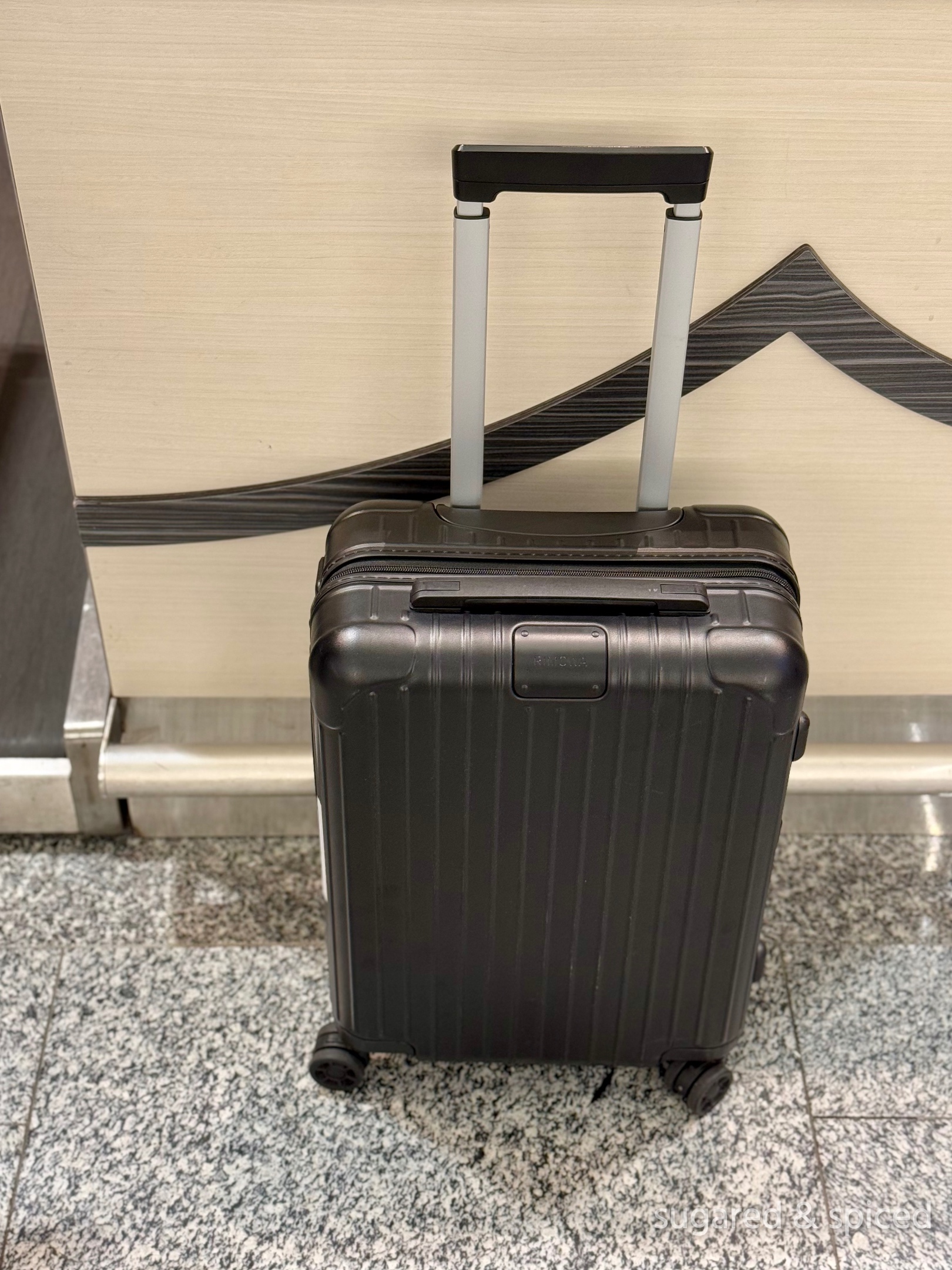
No kids, no fuss.
Packing was a breeze — four days, all neatly tucked into a carry-on.
不帶孩子,從整理行李開始就很輕鬆。
四天三夜一個登機箱就夠了。
There were a few destinations on my mind. Paris was my heart’s first choice, but too ambitious for such a short trip. Chiang Mai was another contender, but I’d rather save that for a family holiday. Fukuoka seemed like the practical option — quick flight, easy logistics. And yet, there was this little voice nudging me toward somewhere unfamiliar.
That place turned out to be Luang Prabang, Laos.
目的地原本有幾個選項:最想去的是巴黎,但四天太趕;清邁也在清單上,但更想帶孩子一起去;福岡飛行時間短,非常實際…但心裡有個聲音說,想去一個陌生的地方。
於是,選了位於寮國的龍坡邦。
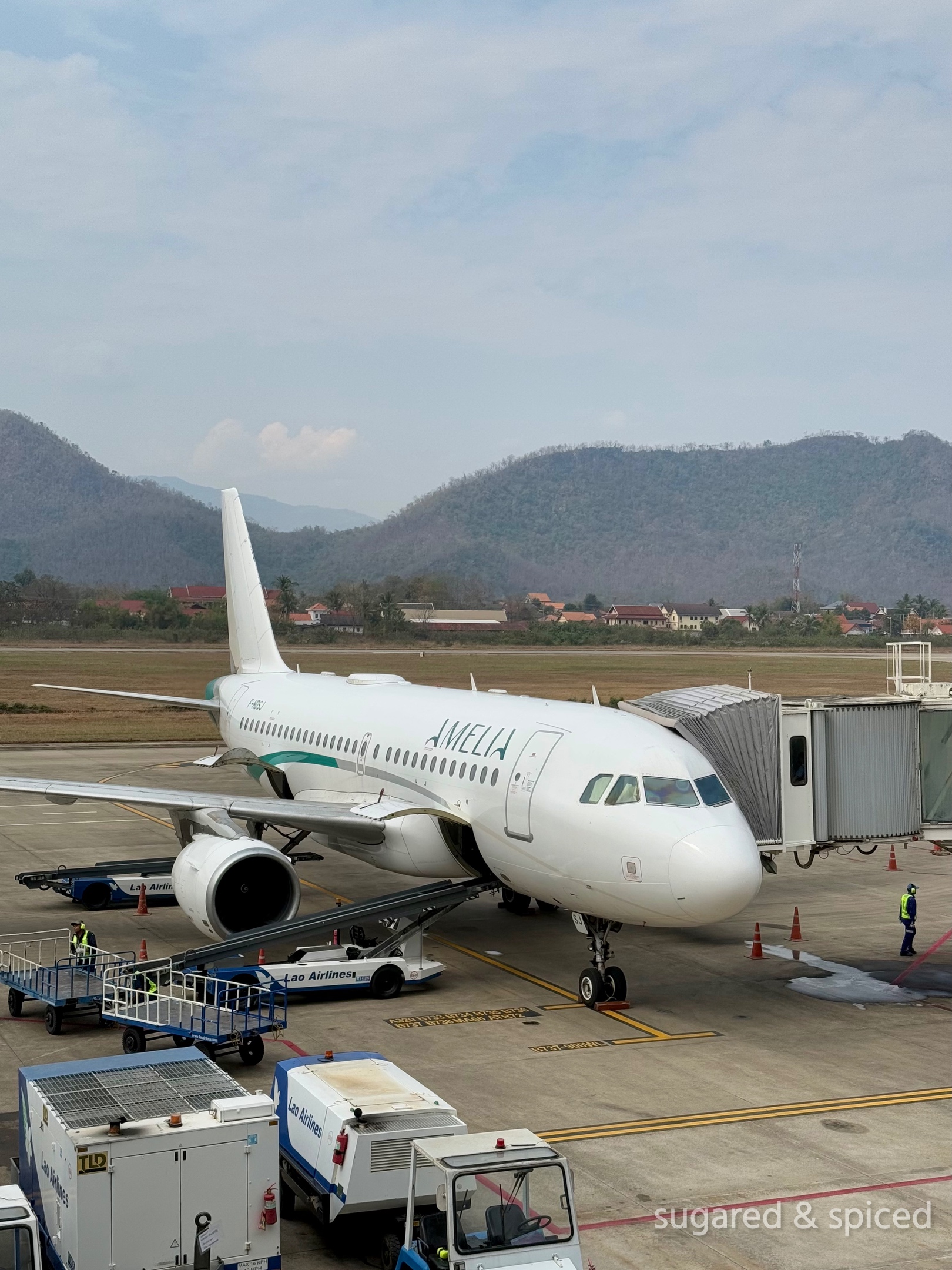
A small plane landing at a small airport.
Mom and I were the only two Asian faces on board flying from Bangkok, what a surprise.
乘著小飛機抵達龍坡邦的小機場。
從曼谷轉機,我和媽媽居然是唯二的亞洲面孔。
This ancient city, often regarded as “the best-preserved town in Southeast Asia,” had been on my curiosity list for years. But what really drew me was a hotel I’d been keen to try for a while — Amantaka.
Years ago, I read Haruki Murakami’s travel essay collection “What Do You Mean, Laos?” and ever since, the name Luang Prabang lived in a corner of my imagination. For this trip, I brought that book with me — or perhaps you could say that it brought me here.
我對這個被譽為 「東南亞保存最完整城市」 的古都早有好奇,不過想去龍坡邦最大的原因,是因為這裡有一間我嚮往已久的酒店 – Amantaka。
多年以前看過村上春樹的散文集《你說,寮國到底有什麼?》,從那時起,龍坡邦這個名字就在心裡種下想象。這次,我帶著那本書同行,或許也可以說,是它帶我來的。
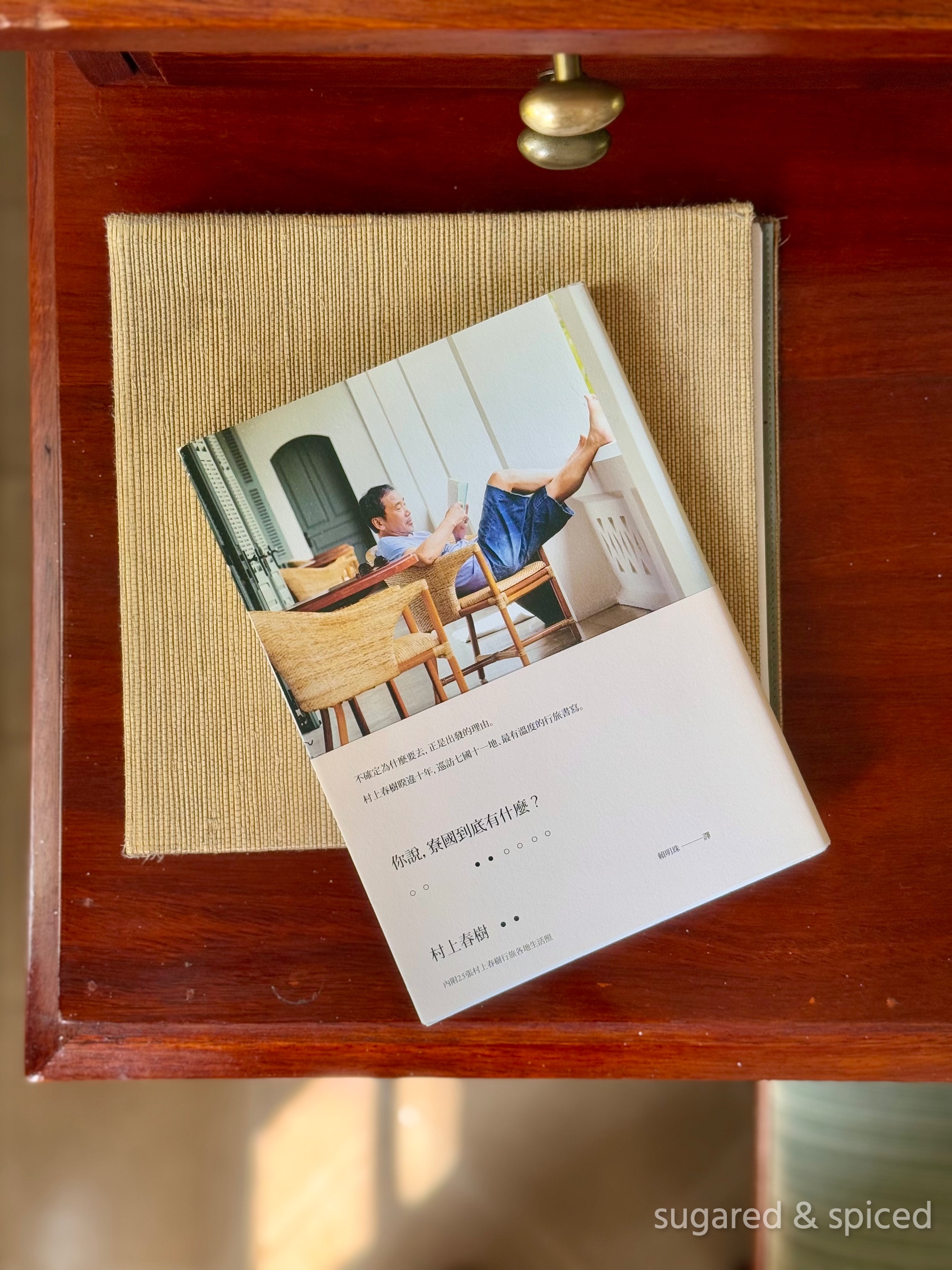
「因為,就是要尋找那什麼,現在才要去寮國,這不就是所謂旅行這回事嗎?」
– 村上春樹《你說,寮國到底有什麼?》
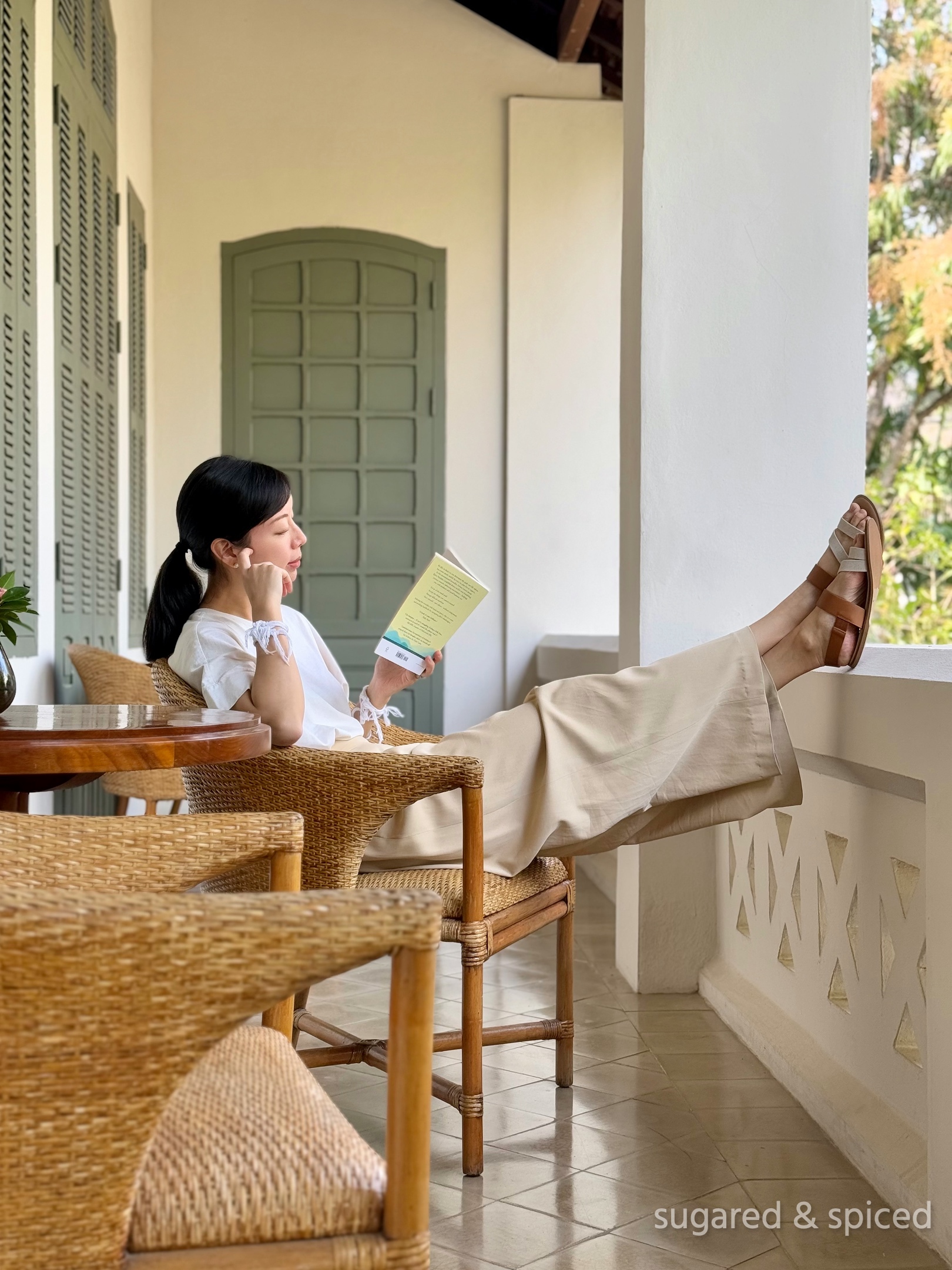
The obligatory Murakami photo at Amantaka.
不免俗地在Amantaka裡跟村上春樹拍了同款照片。
Mom was my travel companion for this trip. We’ve shared many adventures, but after marriage and kids, mother-daughter time became rare. So this journey felt precious on two levels: my first time leaving the kids behind (not counting the quick errand trip to Shanghai), and the first trip with my mother in eight long years.
One evening, while having dinner on a street corner, our conversation meandered into unexpected places. Out of nowhere, I found myself blurting out a childhood secret I’d never shared with anyone — surprising even myself. Maybe it was being in a foreign land, or maybe the air was just softer that night. Whatever the reason, I was grateful for that moment of honesty.
同行的是我媽。我們曾一起走過許多地方,但自從結婚生子後,母女獨處的時間變得稀少,上次一起旅行已是2017年的事了。所以這趟旅程對我意義重大:第一次離開孩子(不算上海快閃的話)、八年來首次與媽媽同行。
某晚在街邊吃晚餐,聊著聊著,我突然吐出了一個從小就藏在心裡的秘密,連自己也很訝異。不知是因為人在異國,還是氣氛特別鬆弛,總之,我很感激有這樣坦誠相見的時刻。
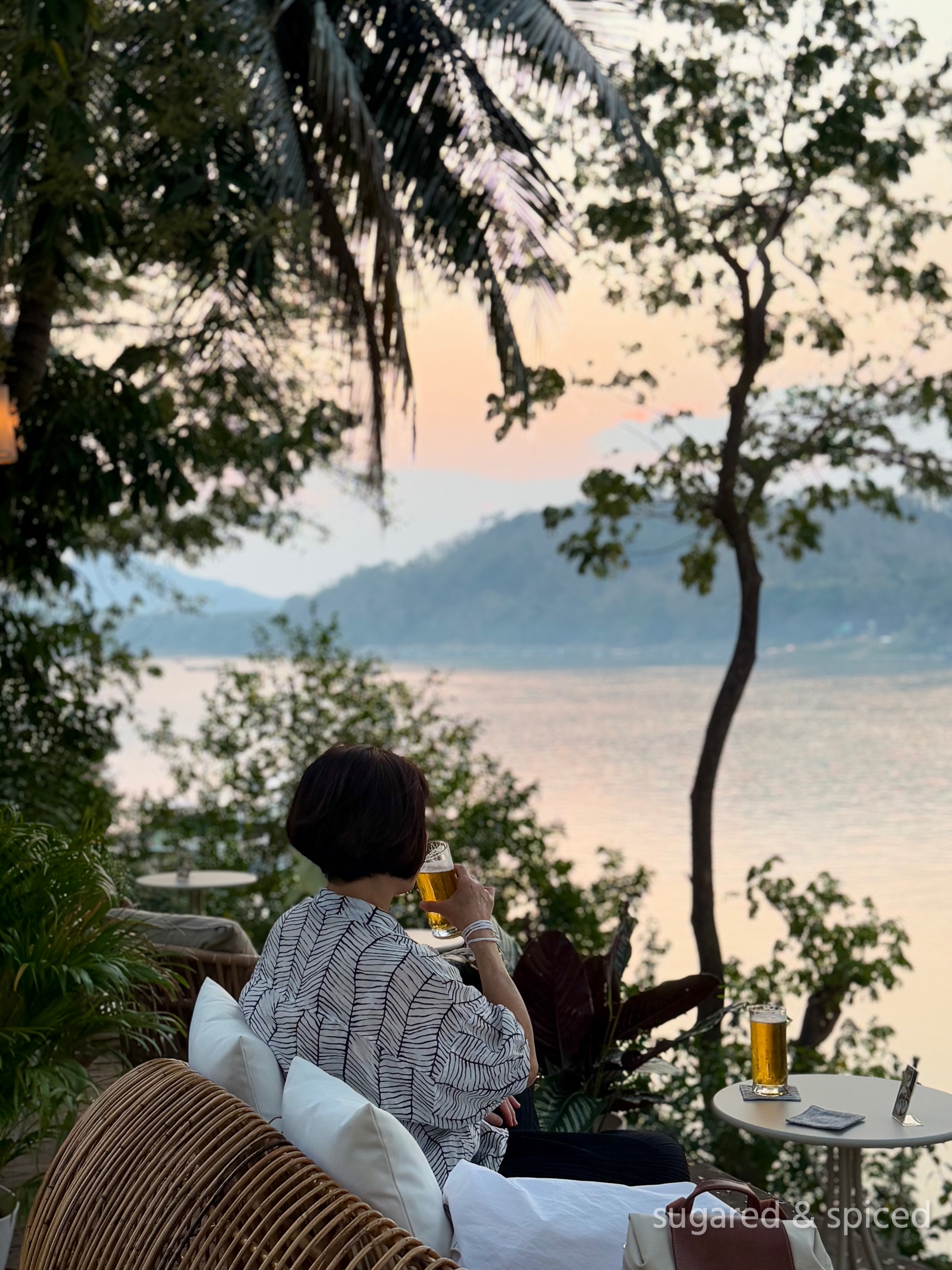
Mekong River, Beerlao, mom.
在湄公河畔喝著Beerlao的,我的媽媽。
The quickest way from Taipei to Luang Prabang was through a transfer in Bangkok. We woke at 4am, navigated the usual travel hiccups, and by 3pm, finally arrived at Amantaka. We were welcomed with cool towels perfumed with jasmine and a tamarind iced tea, which felt like salvation in that moment.
I had planned to explore the town right away, but as soon as we stepped into the hotel, all desire to move simply melted away. We stayed put, and it was perfect.
台北沒有直飛龍坡邦,最快的方式是從曼谷轉機。我們凌晨四點起床,一番波折之後,終於在下午三點抵達 Amantaka。 服務生端上帶茉莉花香的毛巾與羅望子冰茶,那一刻彷彿獲得救贖。原想立刻出門探索,但事實上是一進酒店,就這麼穩穩待著,一點不想動彈了。
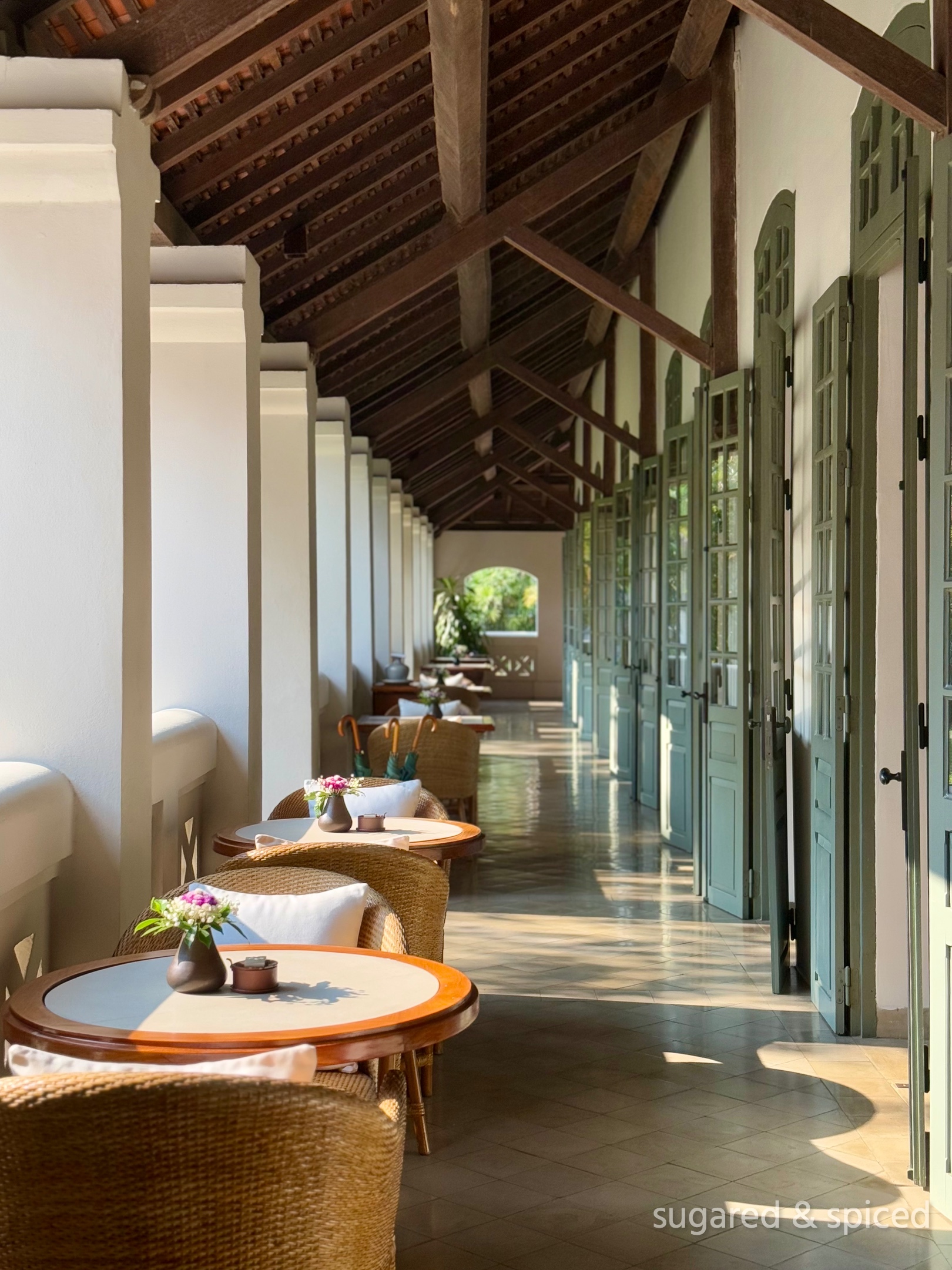
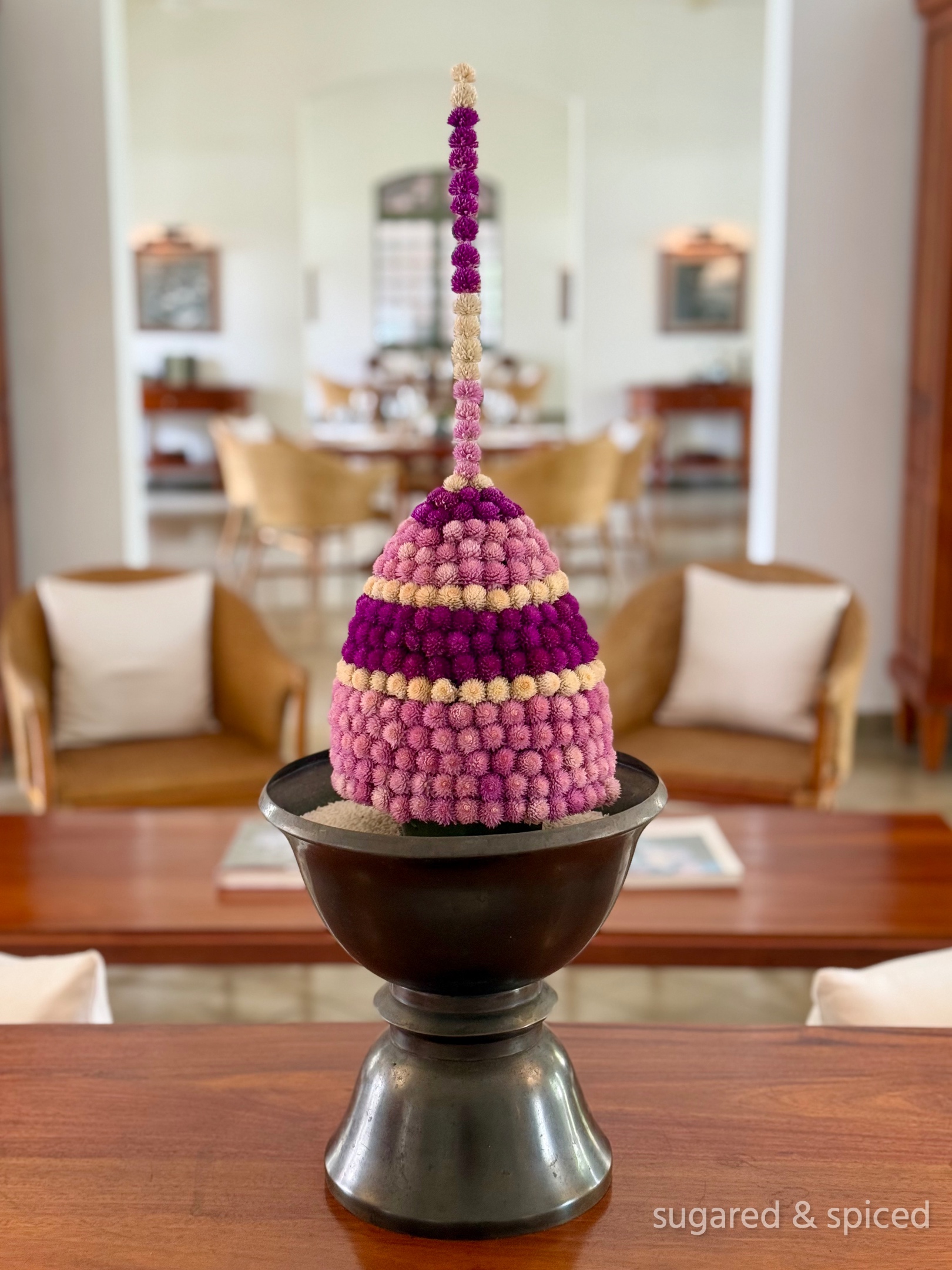
Most Aman resorts I’ve visited are tucked away in secluded corners of the world. Amantaka, on the other hand, is practically in the middle of town — just a 10-minute walk from the bustling main street. Yet the moment we stepped inside, the world outside faded into a hush.
The property itself is a former French colonial hospital, its century-old bones now imbued with a quiet, understated grace. Terracotta tiles cloak the rooftops in deep crimson, while the sun-drenched white walls glow with a gentle light.
過往住過的安縵多在僻靜之地,但 Amantaka 幾乎就坐落在鬧市中,距離最熱鬧的街道步行僅10分鐘。但神奇的是,一轉入酒店,便彷彿與世隔絕。
酒店的前身是一座法國殖民時期的舊醫院,百年歲月洗練出一種低調而從容的優雅。屋頂覆蓋著深紅陶瓦,白色牆面在日光下閃著柔和的光。
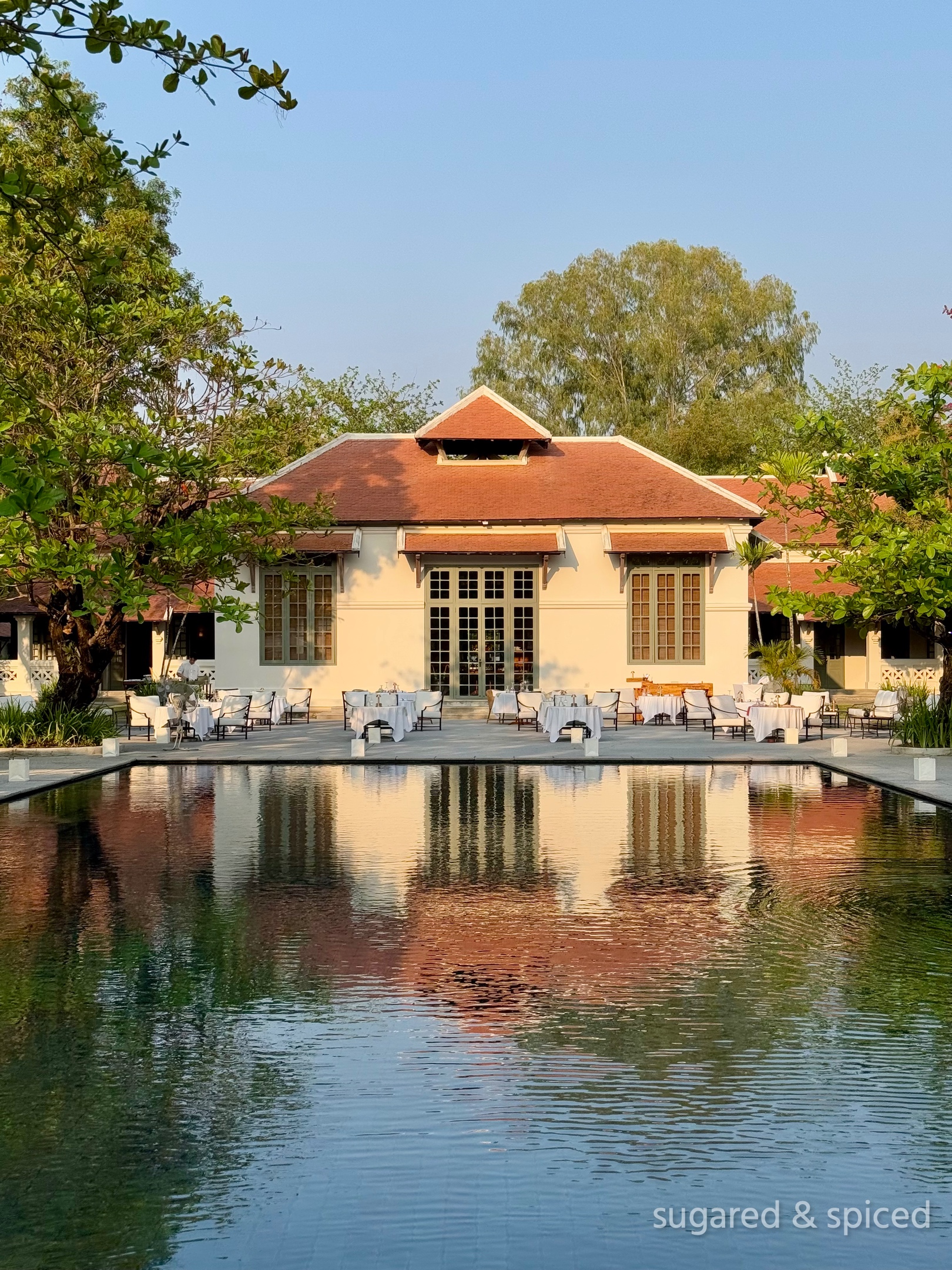
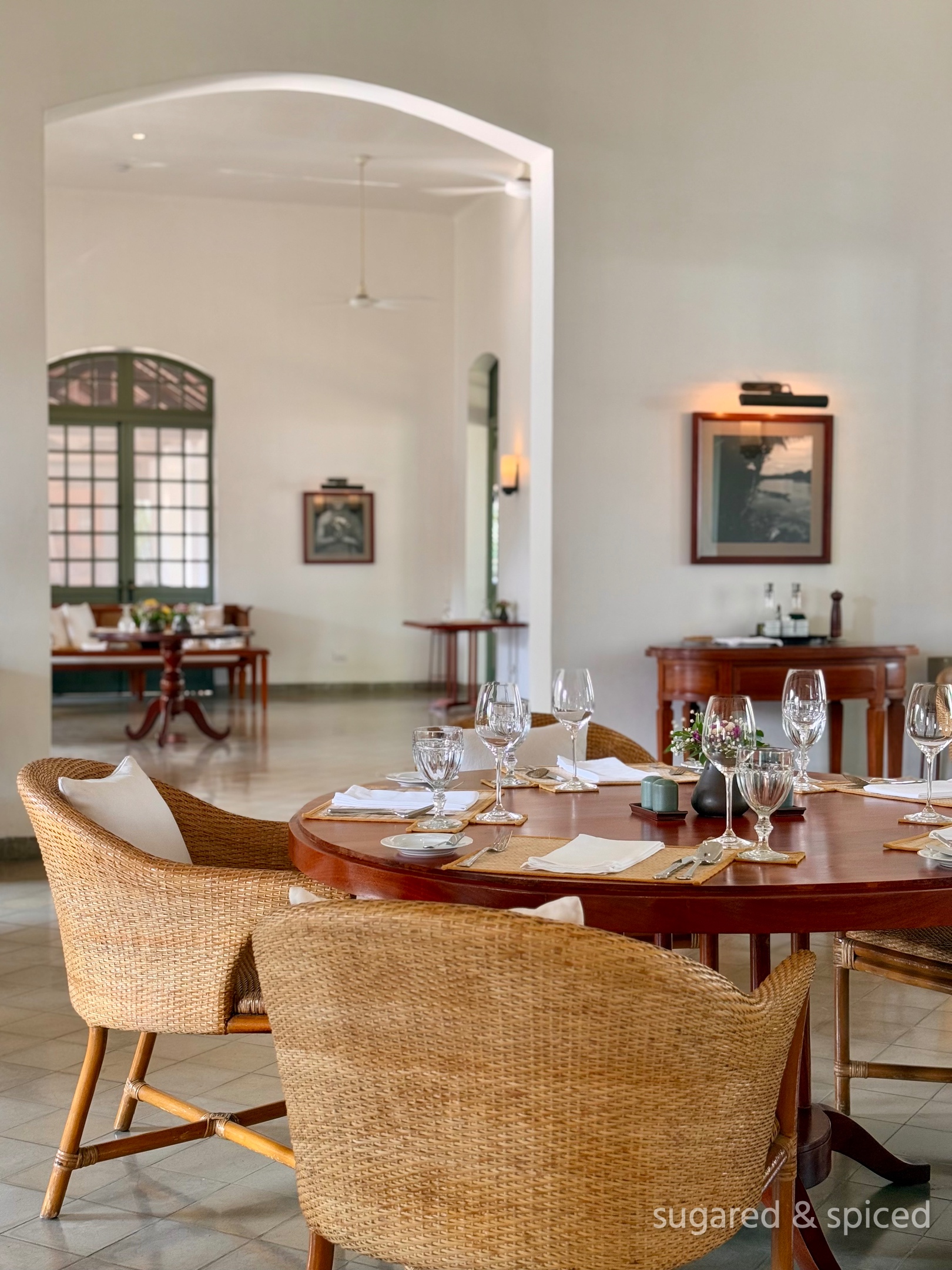
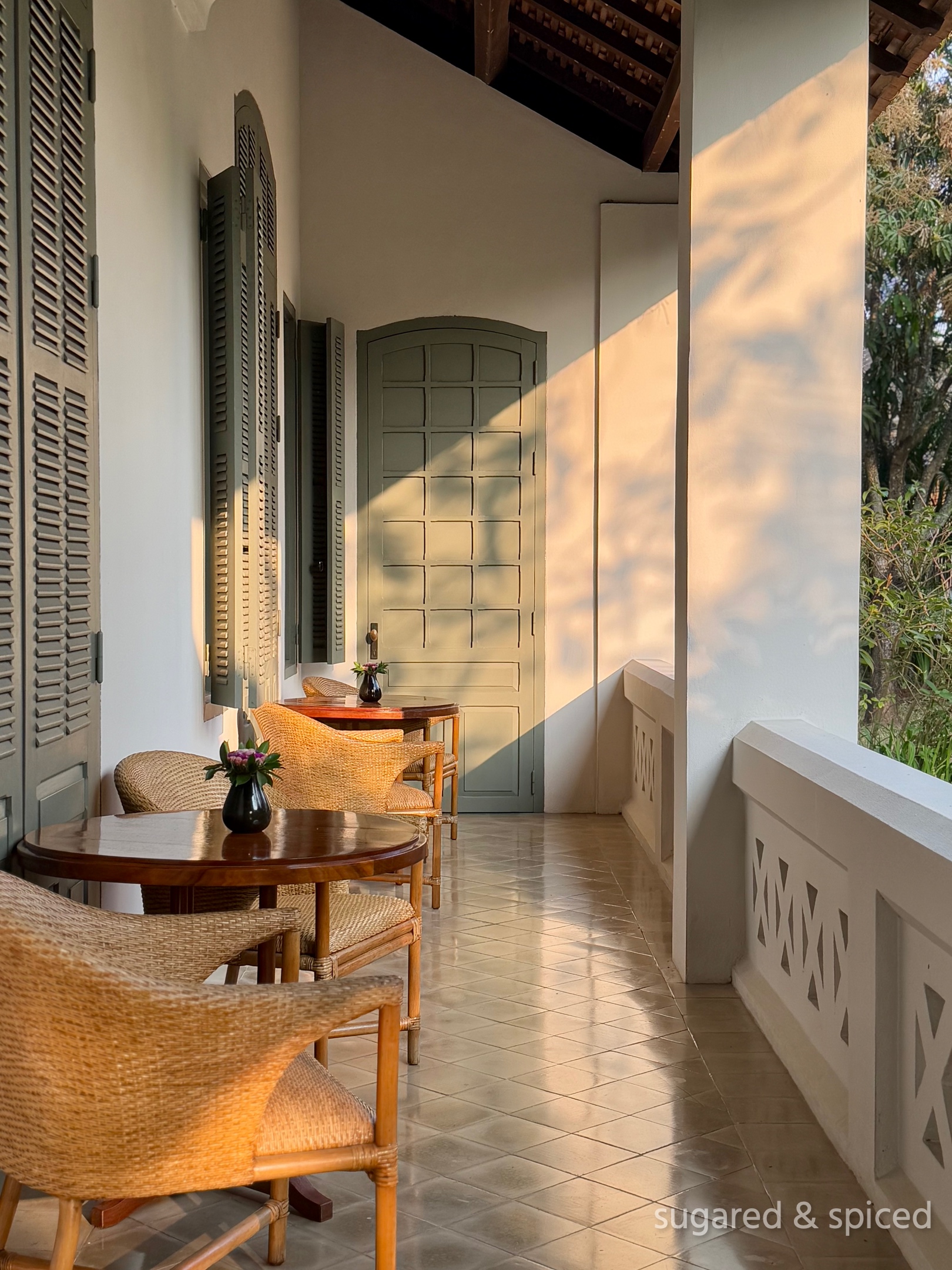
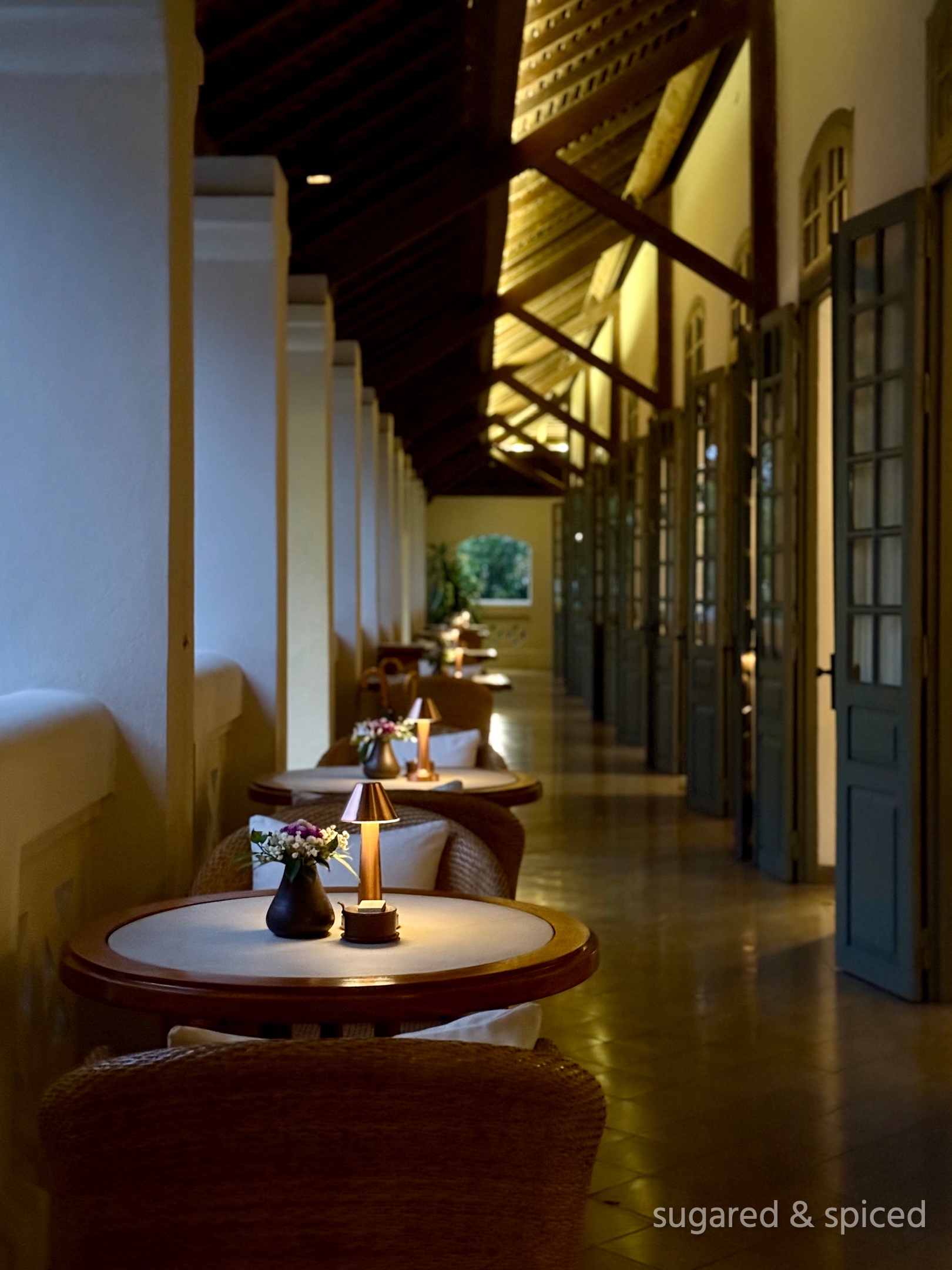
Stepping into the main building, I felt my pace slowing down naturally. Tall windows, deep verandas, with long, open corridors that allow the air to flow easily and footsteps echo softly.
走進主建築,那空間感令人不由地放慢腳步。高大的長窗與深邃的迴廊讓陽光與空氣自然流通,腳步聲在通透長廊中輕輕回響。
Then, our butler led us through a lush courtyard to our suite.
管家帶著我們穿過綠意盎然的廣大庭院,前往這次下榻的套房。
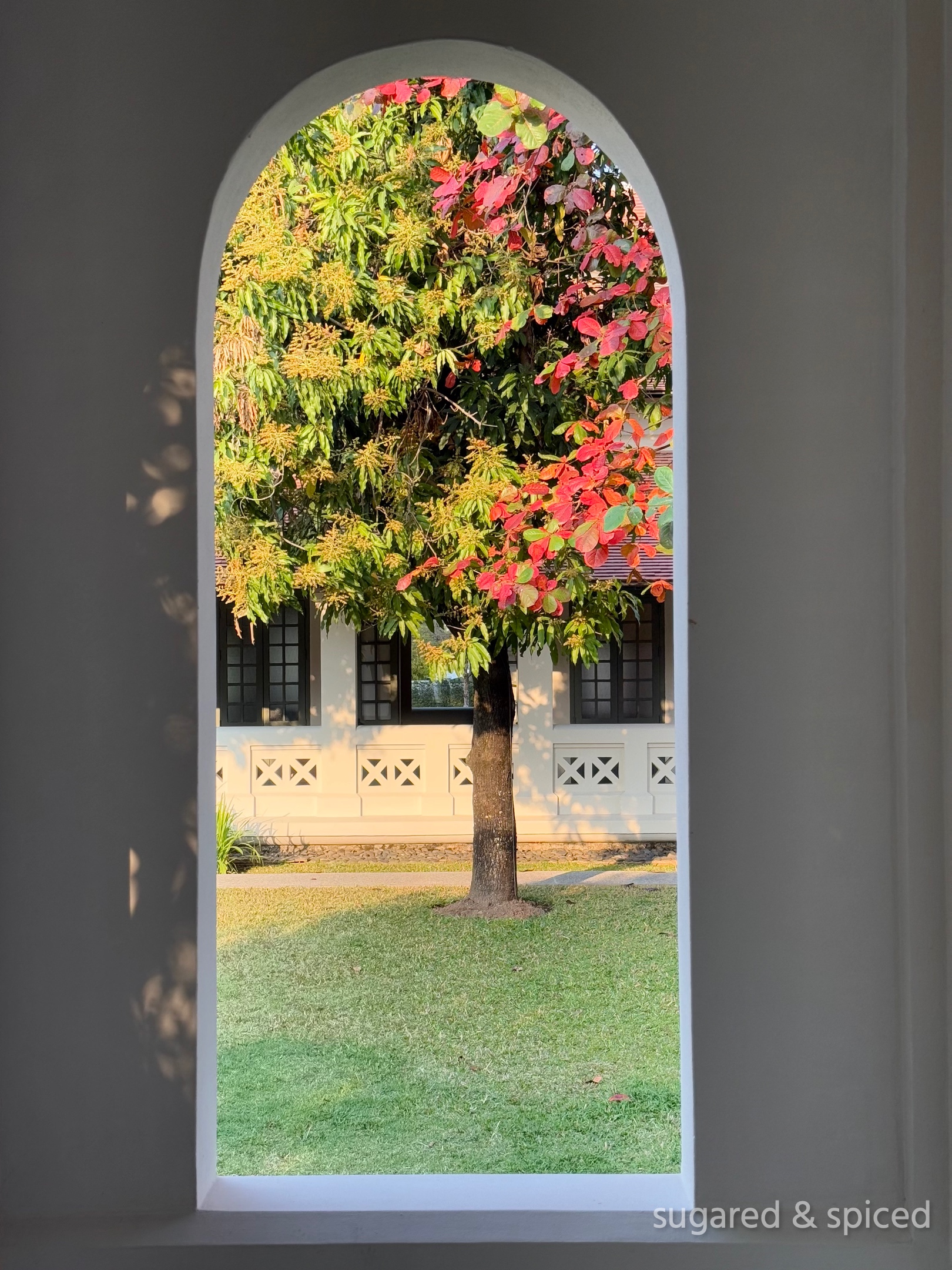
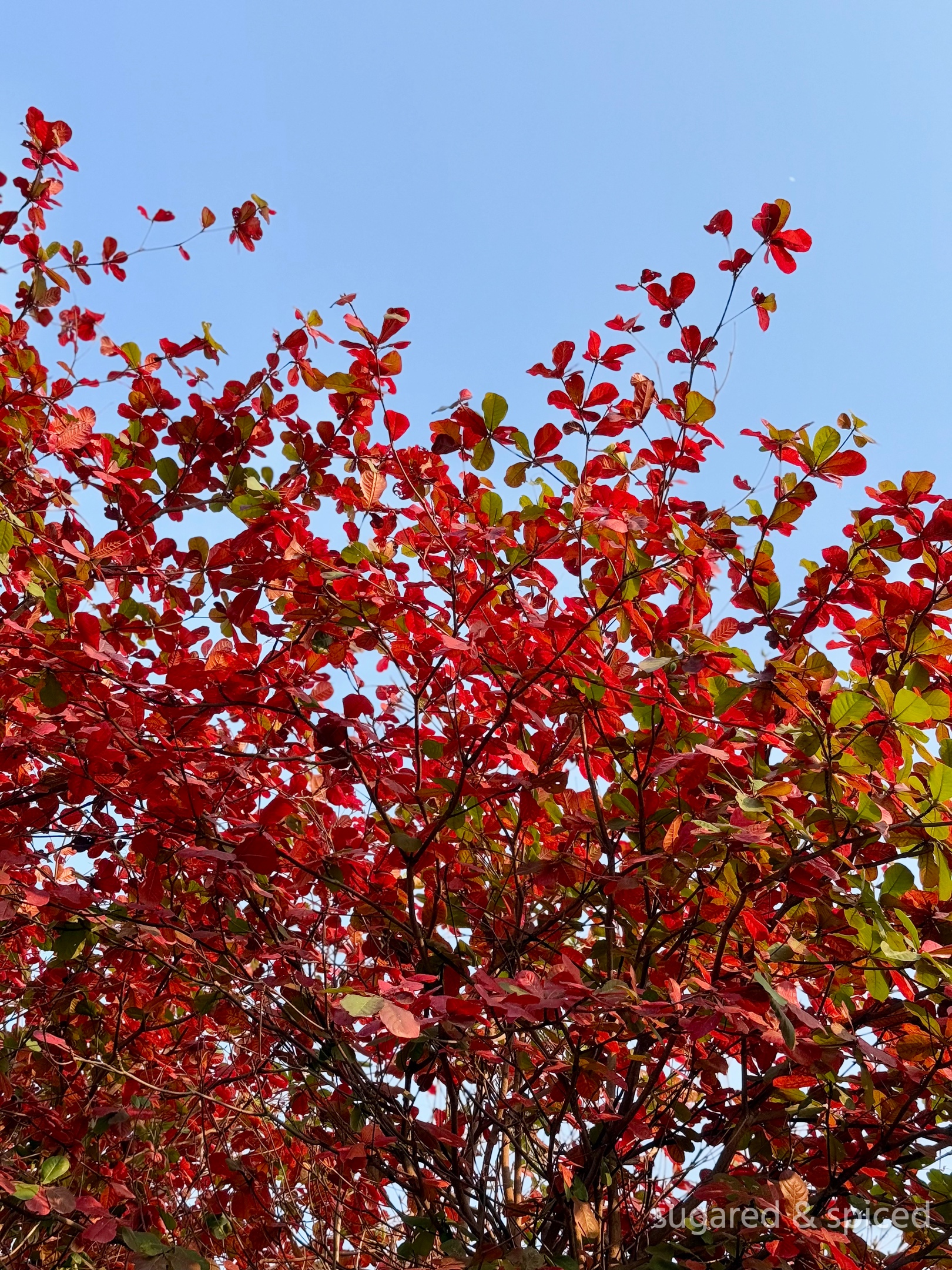
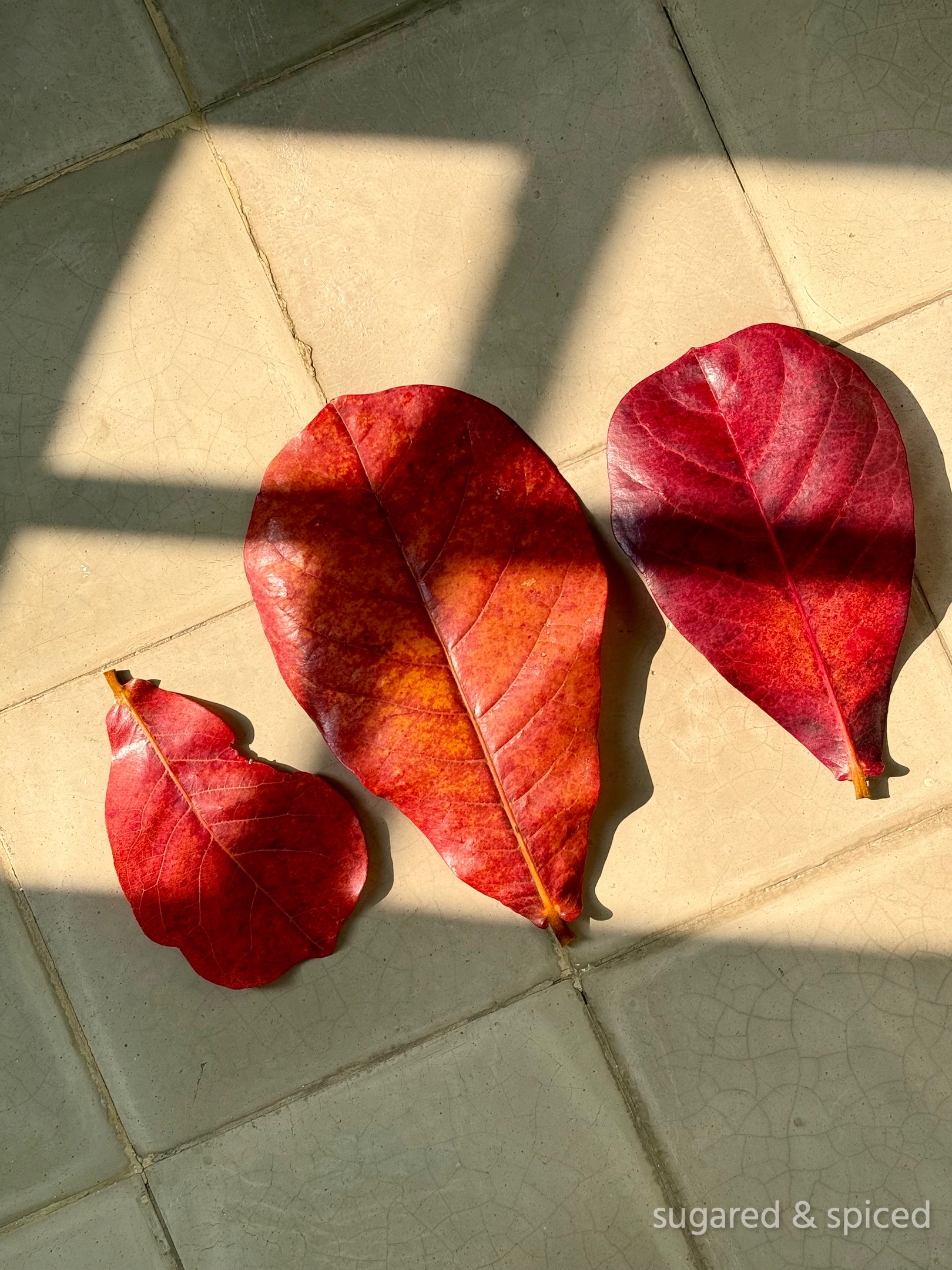
In the courtyard, an Indian almond tree stands tall and steady.
I picked up a few of its beautiful fallen leaves to keep.
庭院裡有一棵茁壯的大葉欖仁,
紅色落葉太美了,忍不住撿了幾片。
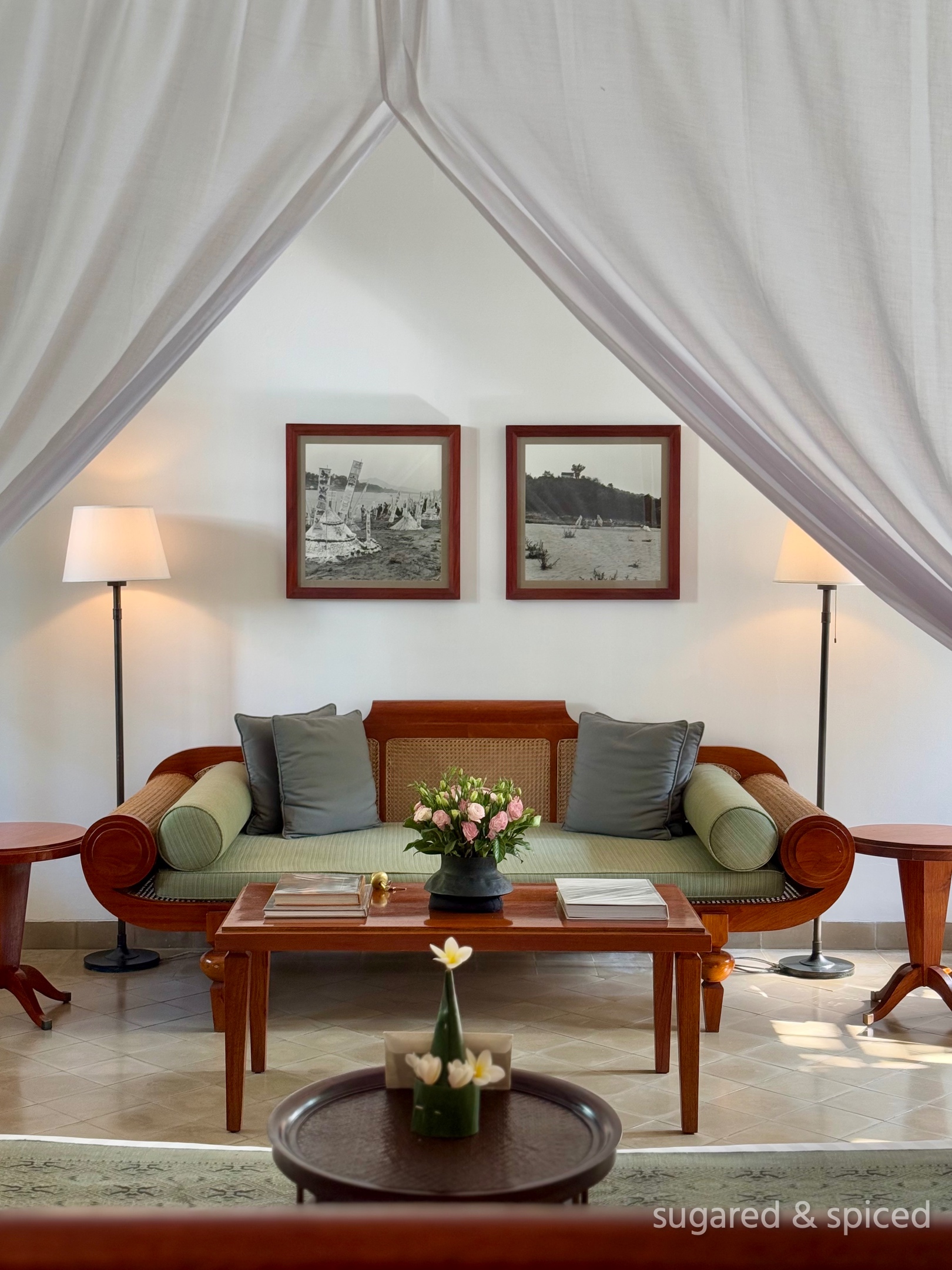
Inside the suite, the décor was simple, unpretentious, yet beautiful. Sunlight filtered through lattice windows and rustling leaves, casting dappled shadows on walls and floors.
室內裝潢簡潔樸實,美麗而安靜。陽光透過格窗與樹葉的縫隙灑入,在牆面與地板映出跳動的光影。
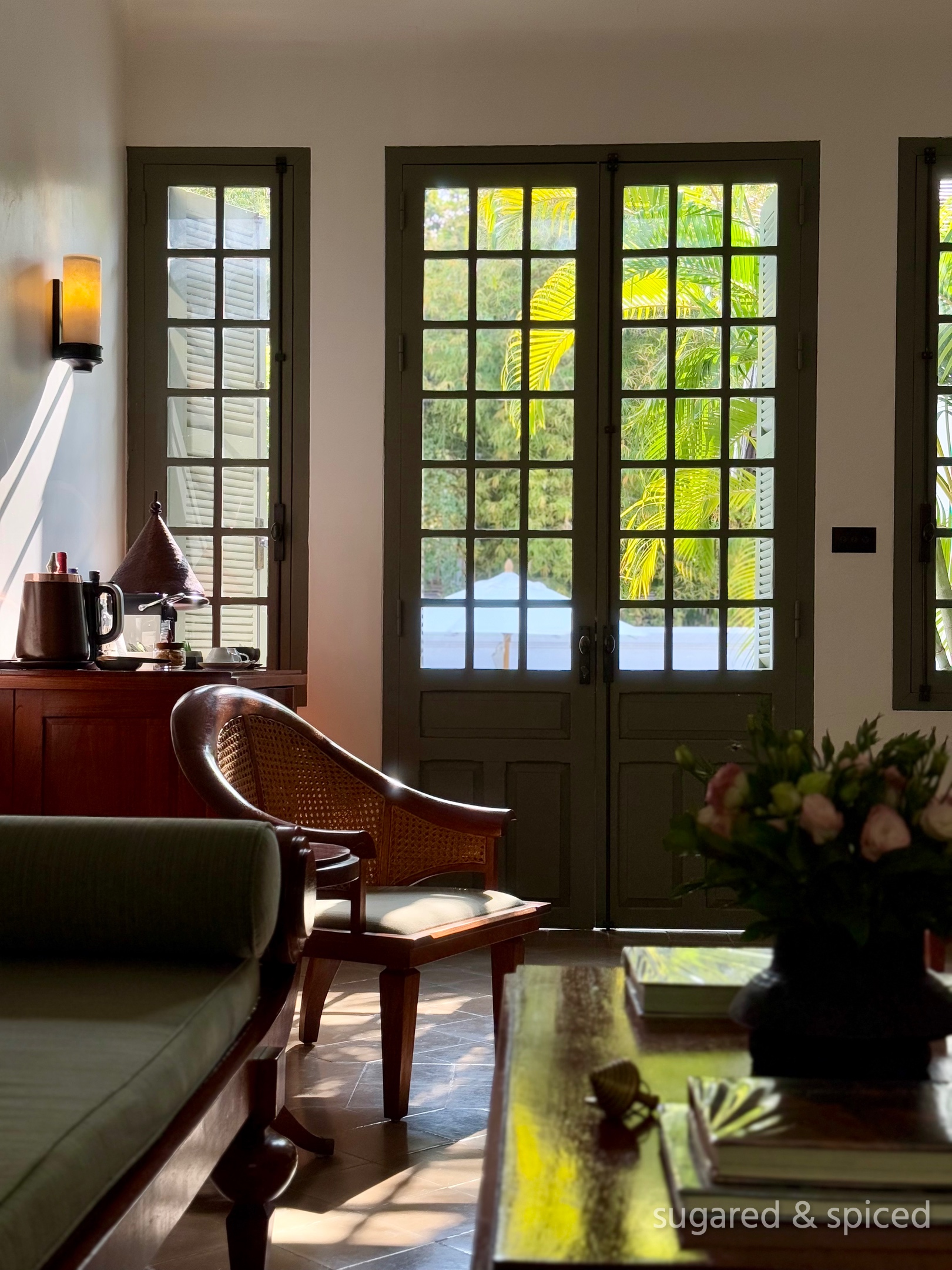
The bed was a four-poster draped in sheer white mosquito netting.
床鋪是配有清透白紗蚊帳的四柱床。
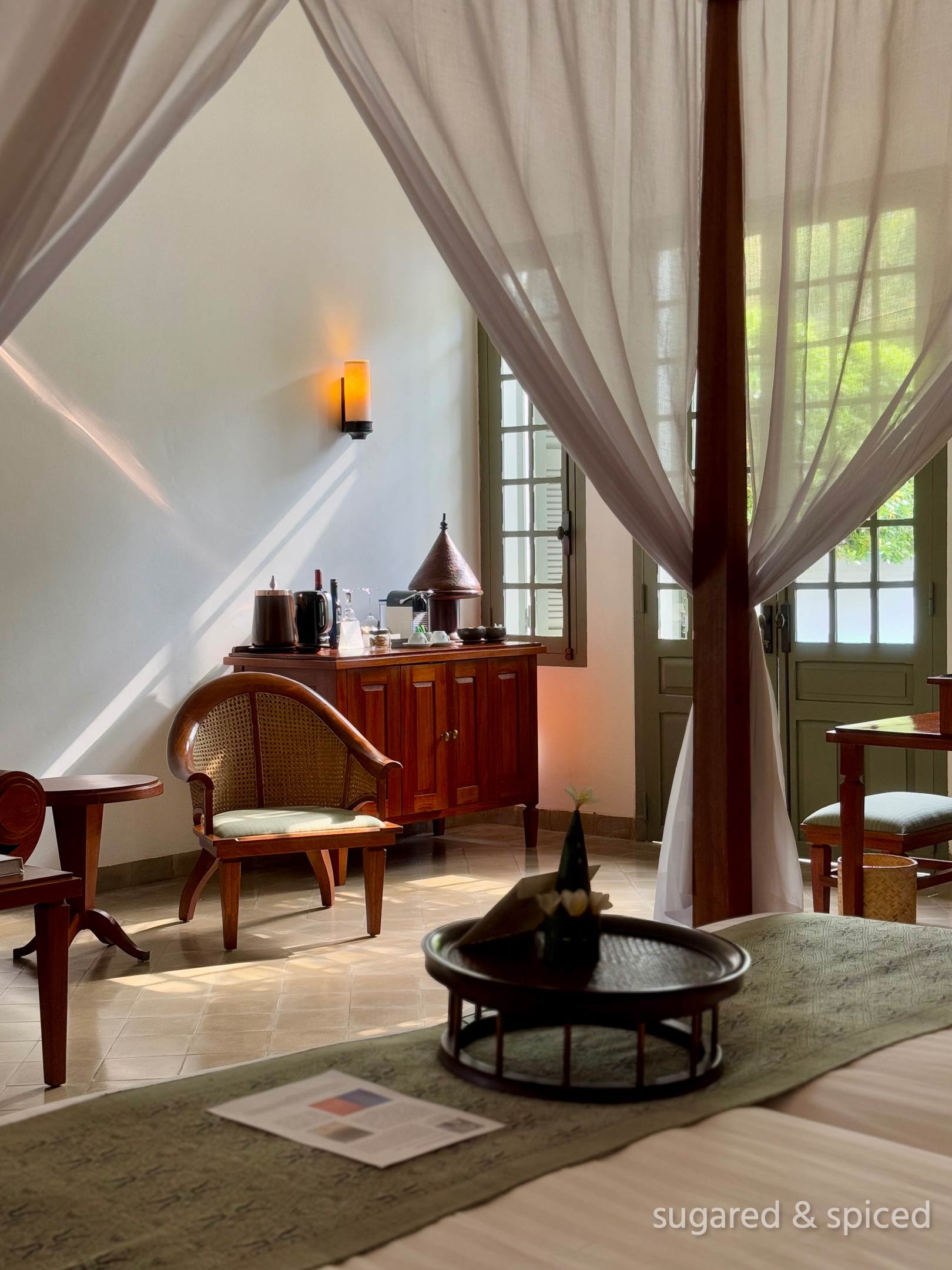
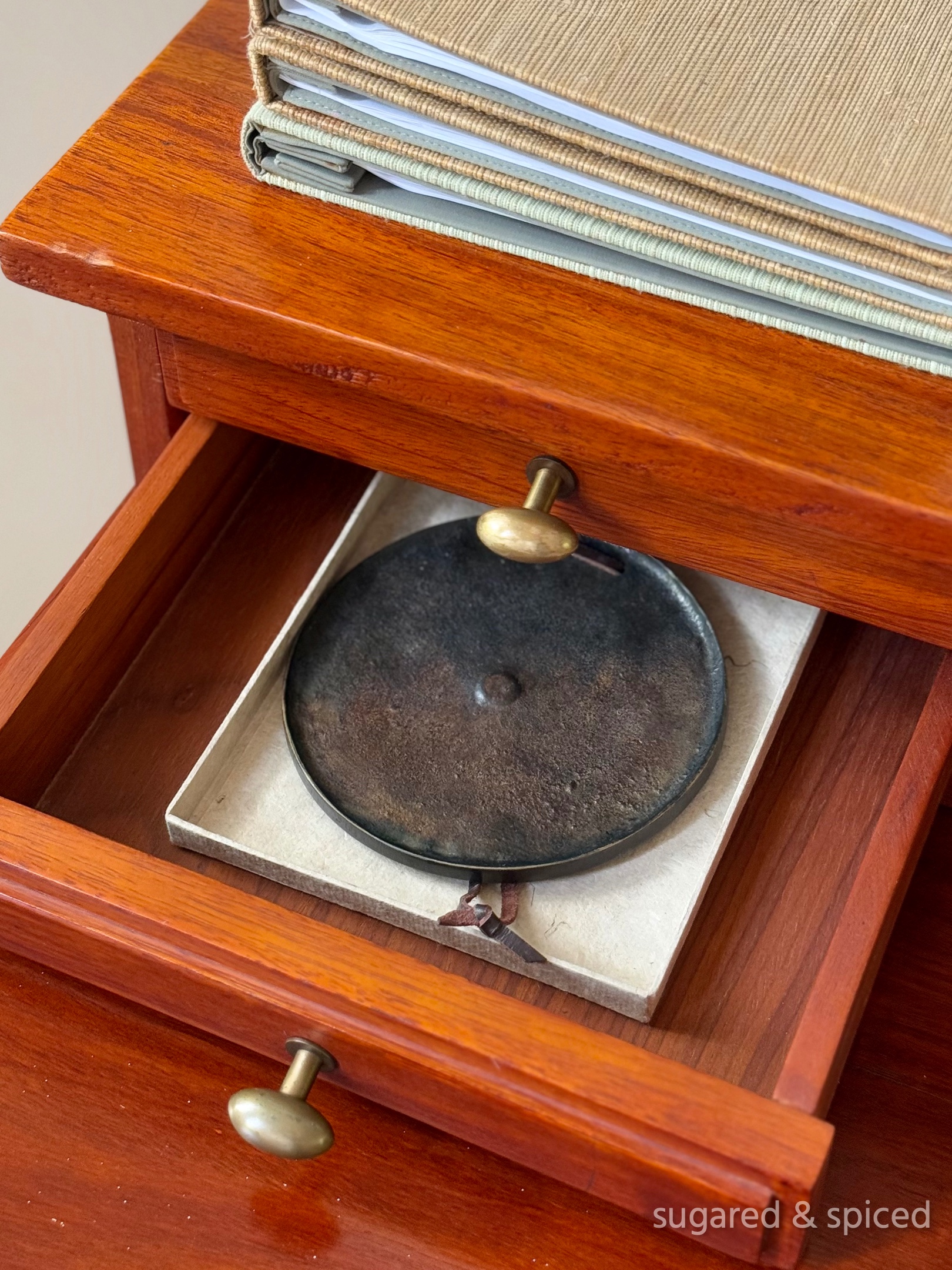
I loved this small gong, which served as a charming “Do Not Disturb” sign. On a related note, throughout our stay, every time we returned to the room — even after the briefest outings — everything would be perfectly tidied, yet we never once encountered housekeeping staff. It was like little elves had passed through when we were not looking…
很喜歡這塊作為 「請勿打擾」 的小鑼。順帶一提,入住期間,每次外出歸來(哪怕只是短短一小時),房間總是已整理妥當,卻從未遇見服務人員進出。簡直是像小精靈般的神奇存在。
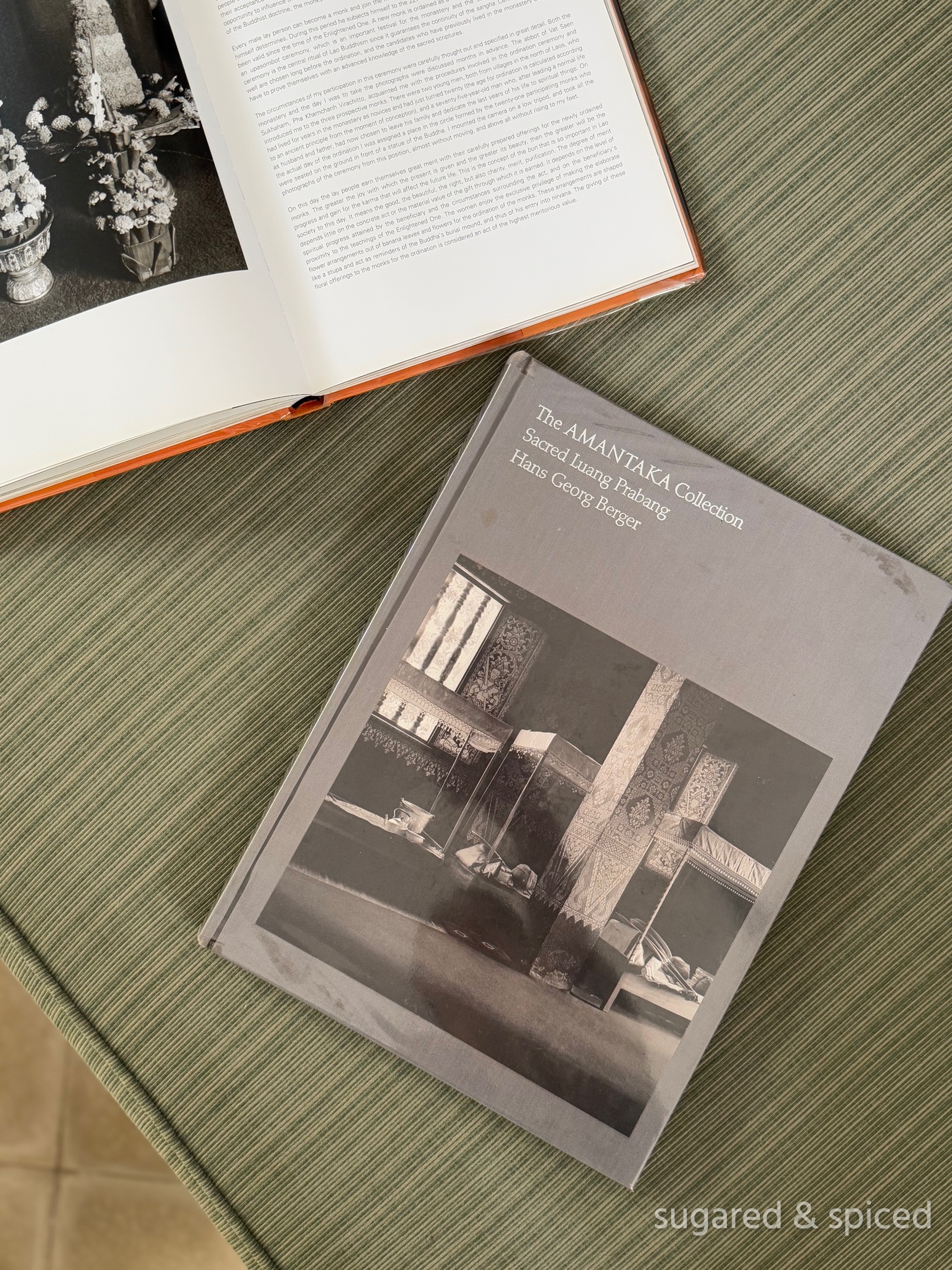
On the bedside table were two photo books by German photographer Hans Georg Berger, who spent 15 years documenting Luang Prabang’s monastic life. His black-and-white photos are scattered throughout Amantaka as thoughtful accents — subtle but evocative.
房內放著兩本德國攝影師 Hans Georg Berger 的作品集。他花了15年記錄龍坡邦僧侶的日常,不僅收錄在書中,也作為裝飾點綴在 Amantaka 的各處,低調卻極富意味。
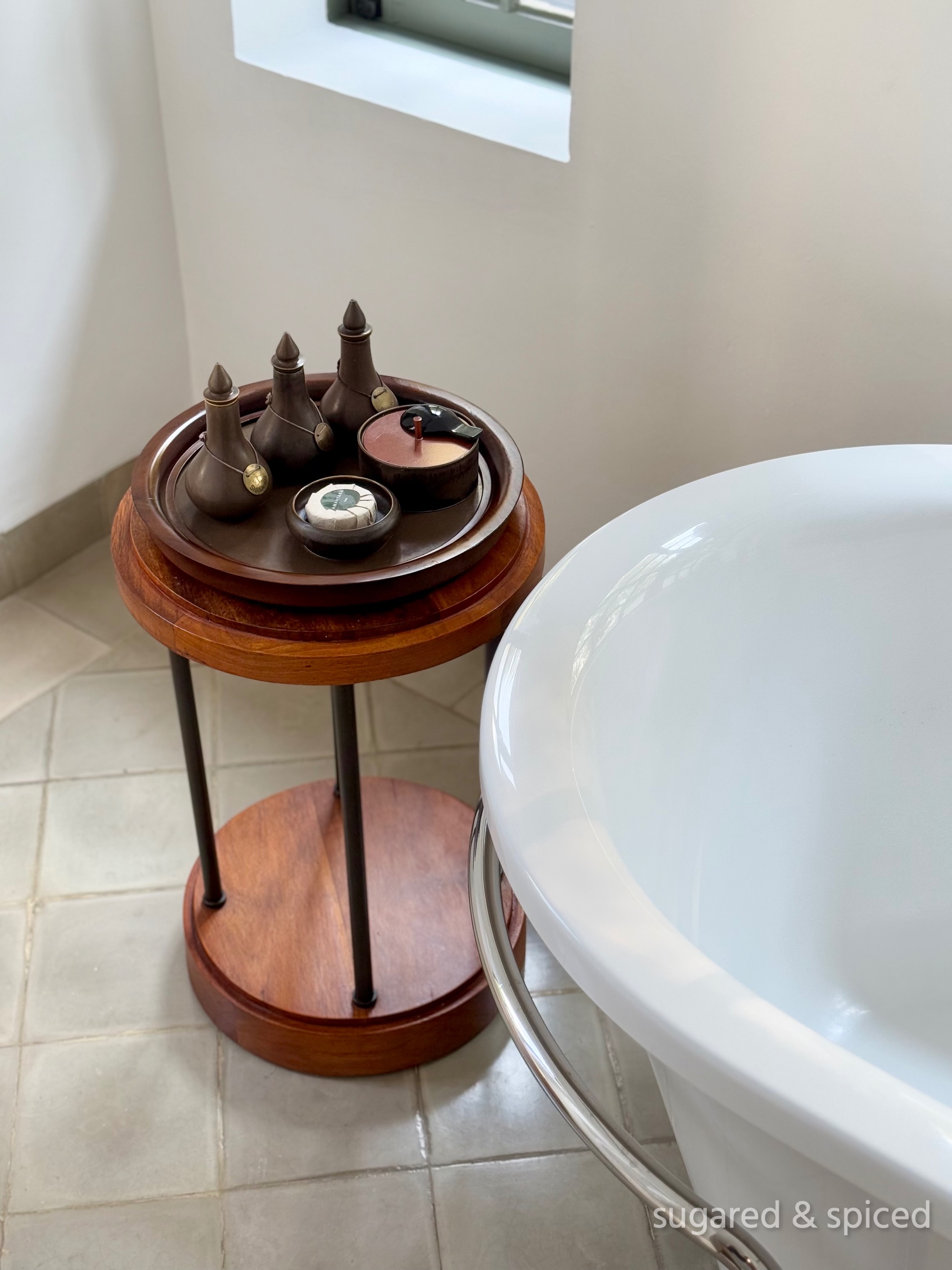
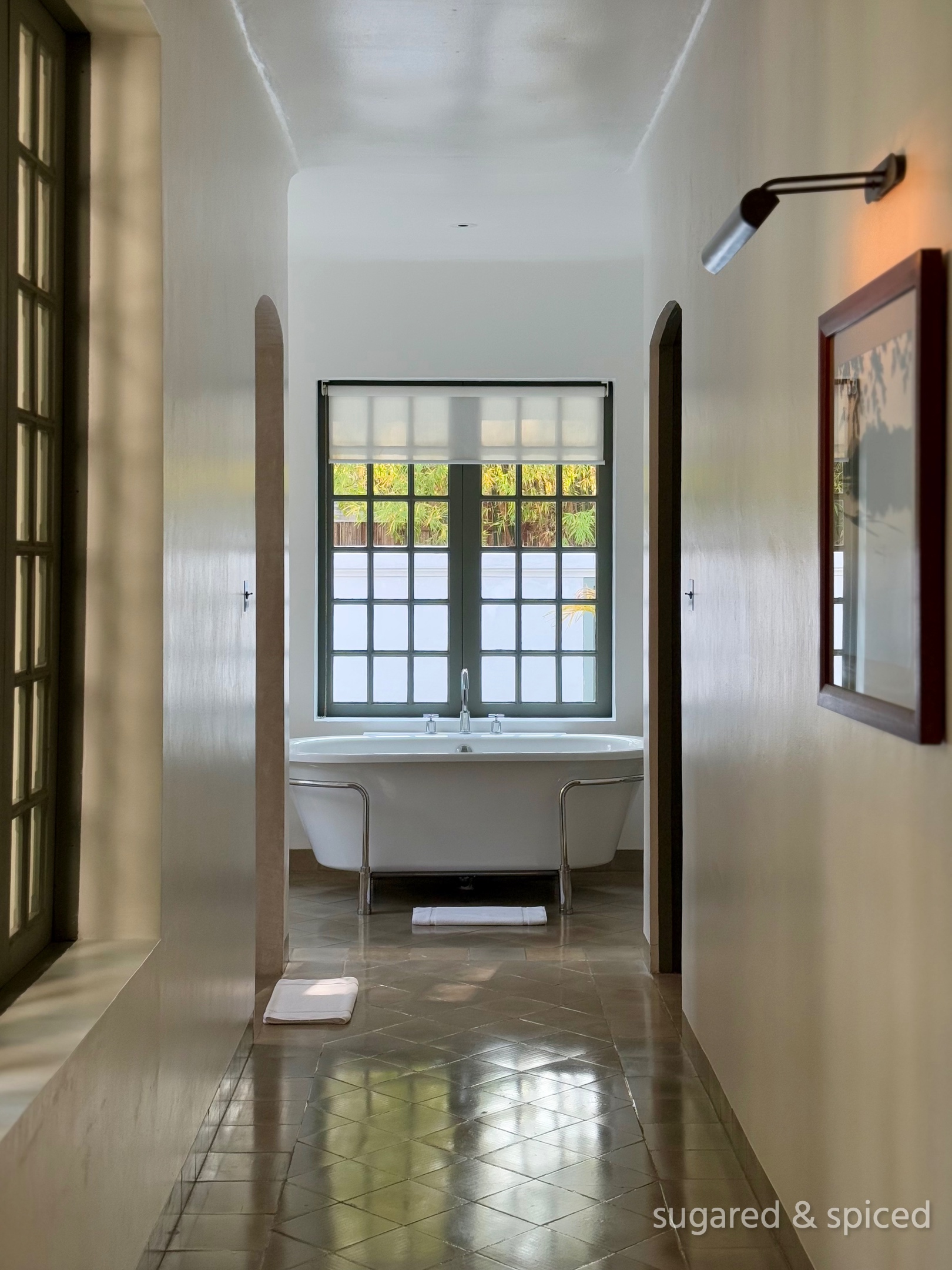
The bathroom featured a deep soaking tub, stone slab floors, and double vanities. Aman’s own bath amenities were gentle and soothing, though if I must complain, the conditioner was a tad stubborn to pour due to the bottle design.
浴室有獨立深浴缸、細緻石板地與雙洗手台。盥洗用品為安縵自家調制,氣味溫和、質地舒服,唯一的小缺點是潤發乳不易倒出。
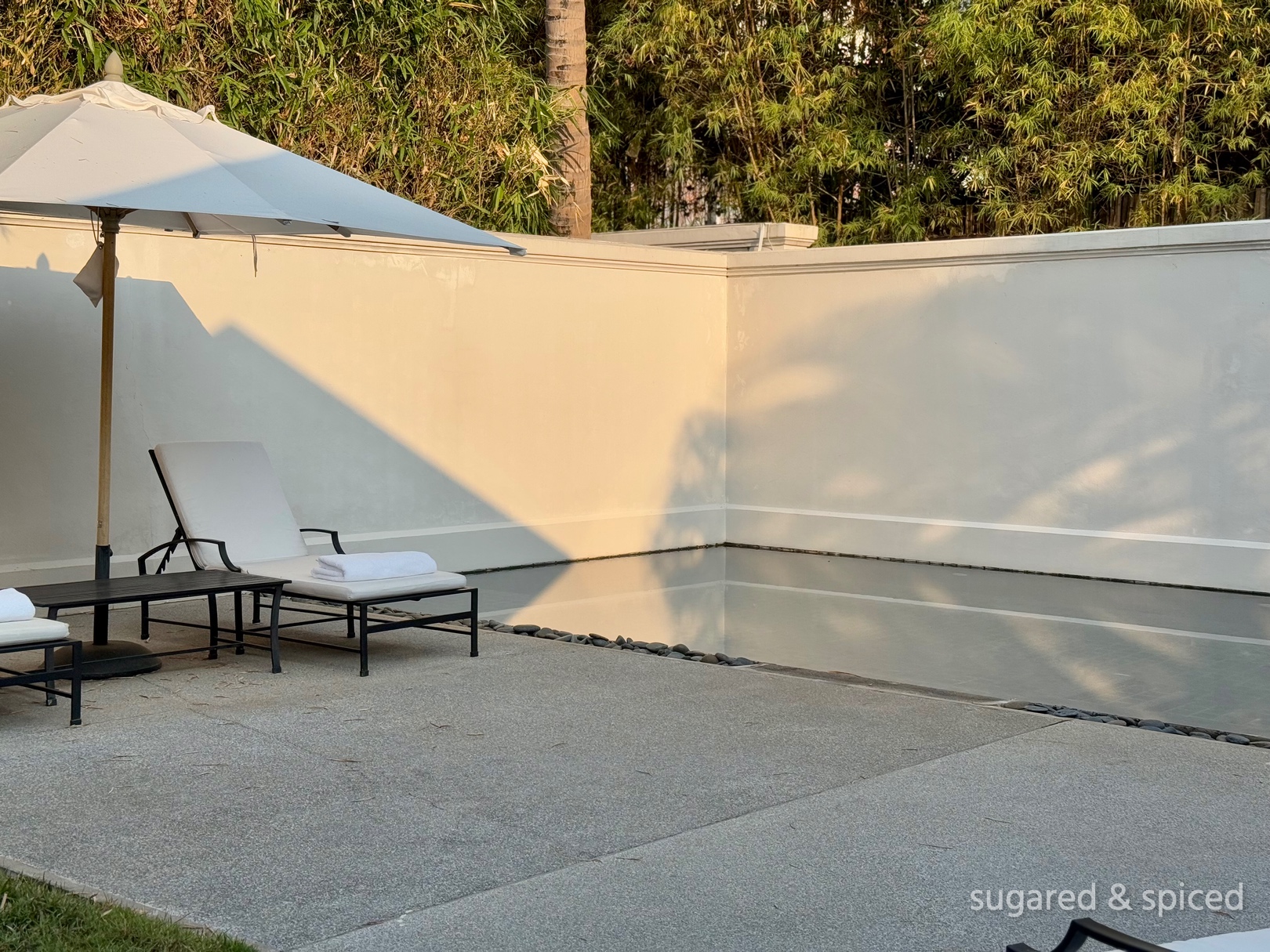
Every suite at Amantaka has its own backyard, with some offering private pools. I could imagine how lovely it’d be to enjoy an in-room breakfast there on a sunny morning.
Amantaka 每間套房皆有獨立後院,有些還有私人泳池。天氣好時,在後院吃頓 in-room breakfast,想必是件非常享受的事。
///
With just four days and three nights in Luang Prabang, I wanted to keep the itinerary light, to soak it all in at my own pace. Here are my ten favorite moments from this little escape.
在龍坡邦僅有四天三夜,沒有過度安排,想以最舒服的節奏慢慢體會。以下是我在這裡的十個 favorite moments。
1. Baci Ceremony | 靈魂的召喚
On our first day, we joined a baci ceremony arranged by the hotel. In Lao tradition, it is believed that each person’s soul is made up of 32 khuan — spiritual essences that can sometimes drift away, leaving one feeling unsettled or weak. The baci ritual is a way to gently call these wandering souls back home.
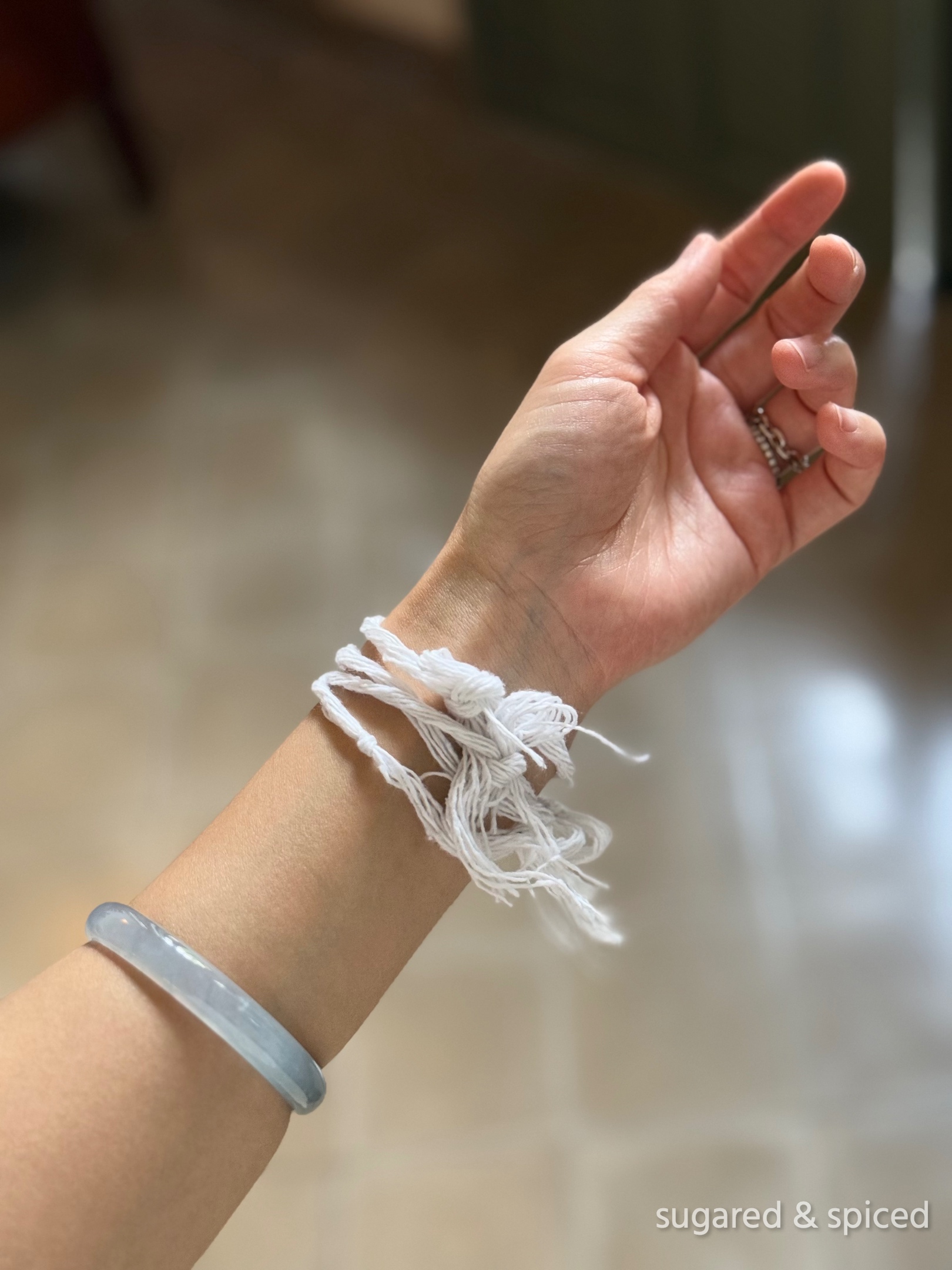
As the elders chanted blessings, they tied white threads around our wrists, one by one. In that moment, it felt as if the boundaries of my body softened, opening up a quiet connection with this land. A silent welcome, so to speak. The strings are meant to stay on for three full days before being untied. And so, they remained with me, a quiet guardian throughout the trip, until I was safely back home.
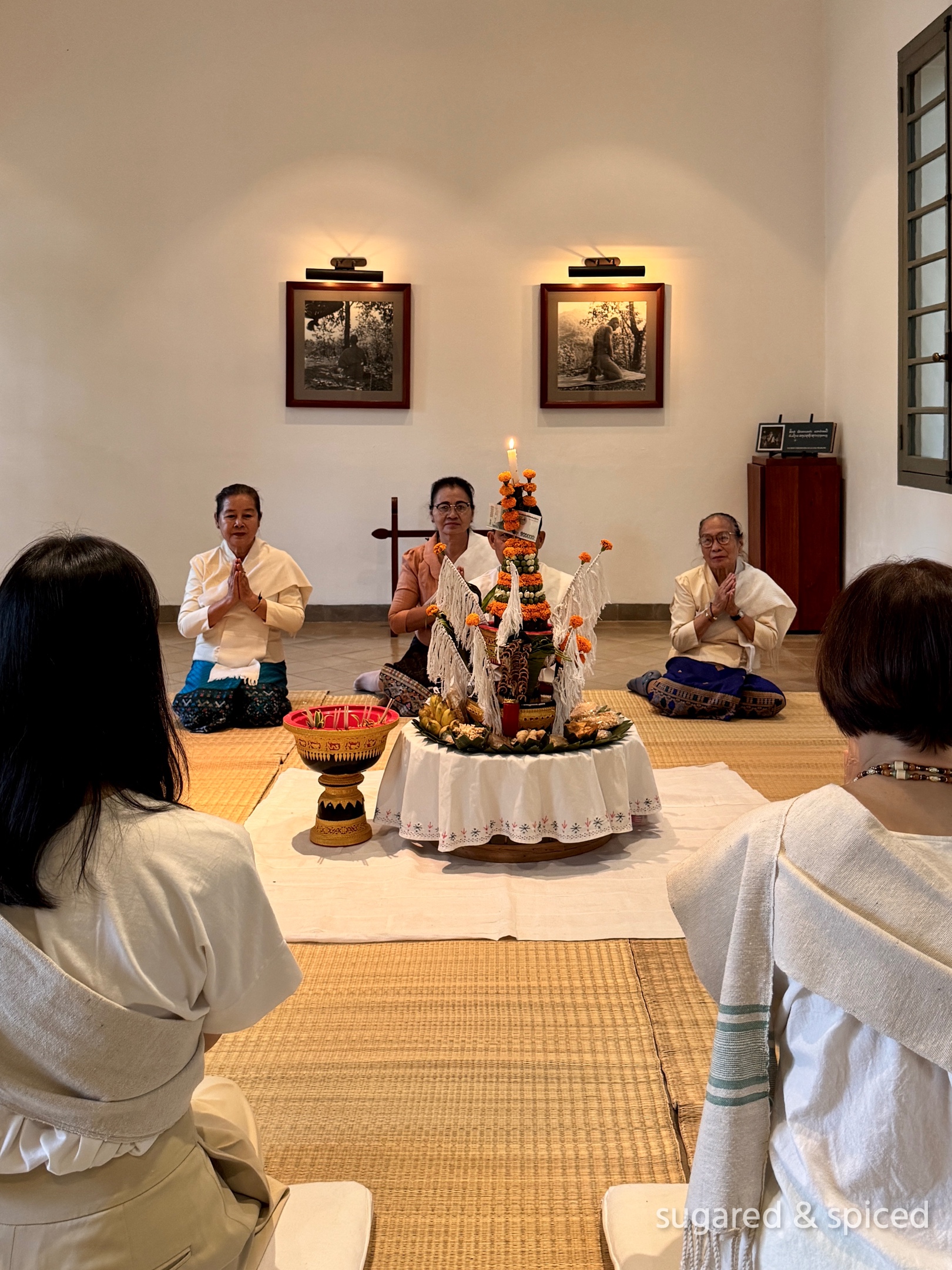
抵達的第一天,我們參加了酒店安排的 baci ceremony。在寮國的傳統觀念里,人的靈魂由 32 個 「Khuan」 組成,若其中幾個走失或飄蕩在外,人便會感到虛弱或不安。Baci 儀式就是要把這些飄蕩的靈魂,一一召回。
長者一邊念著經文,一邊在我們的手腕上系上白線。那個瞬間,好像身體的邊界被悄悄打開,與這片土地發生了某種連接,被接納了進來。線要綁三天整才能解開,於是它就這樣守護著我走完旅程,直到回到家中。
2. Morning Alms Giving|清晨托鉢
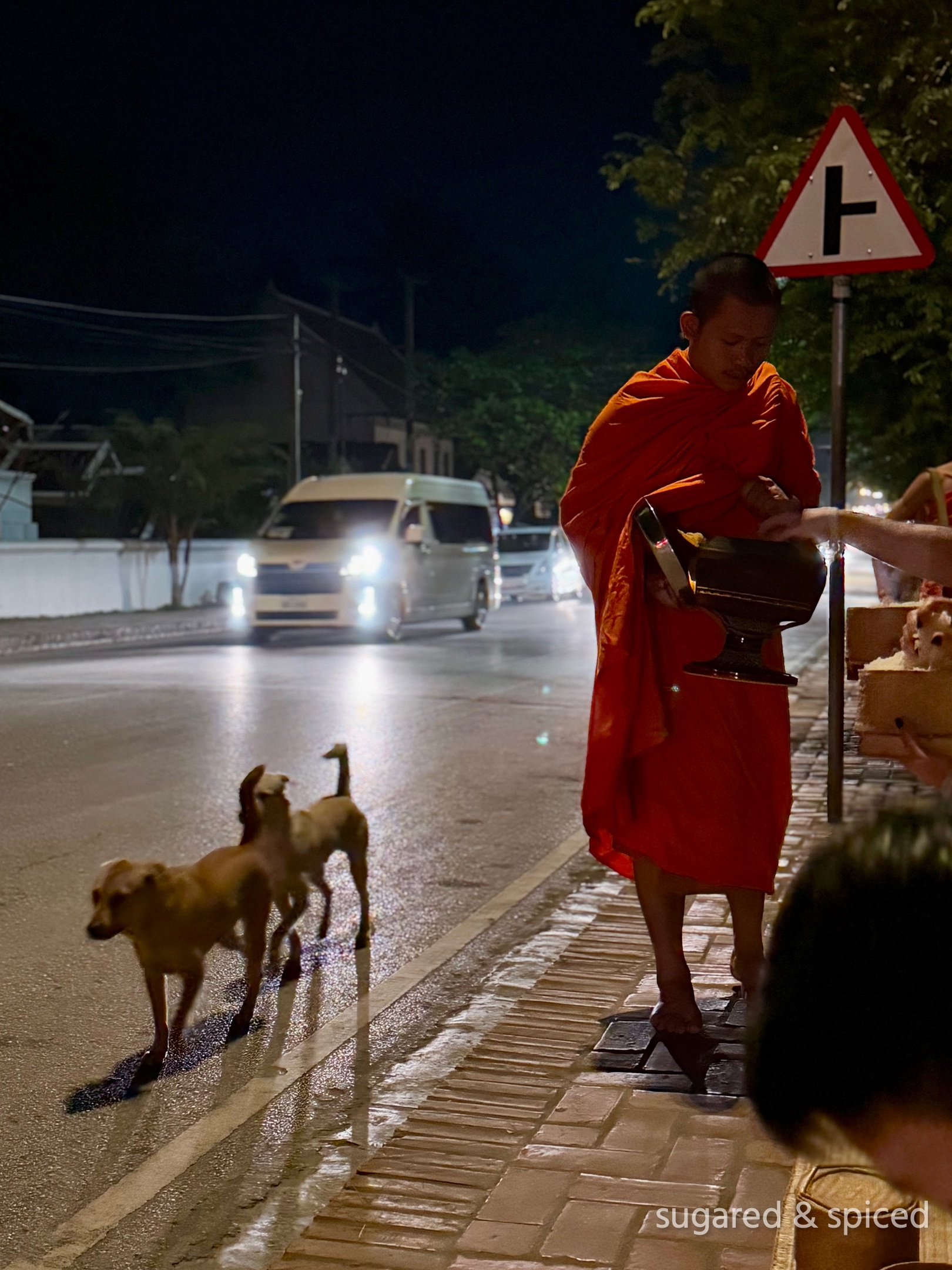
For hundreds of years, Luang Prabang’s monks have walked the streets at dawn, alms bowls in hand, while locals wait patiently by the roadside, offering sticky rice as an act of merit.
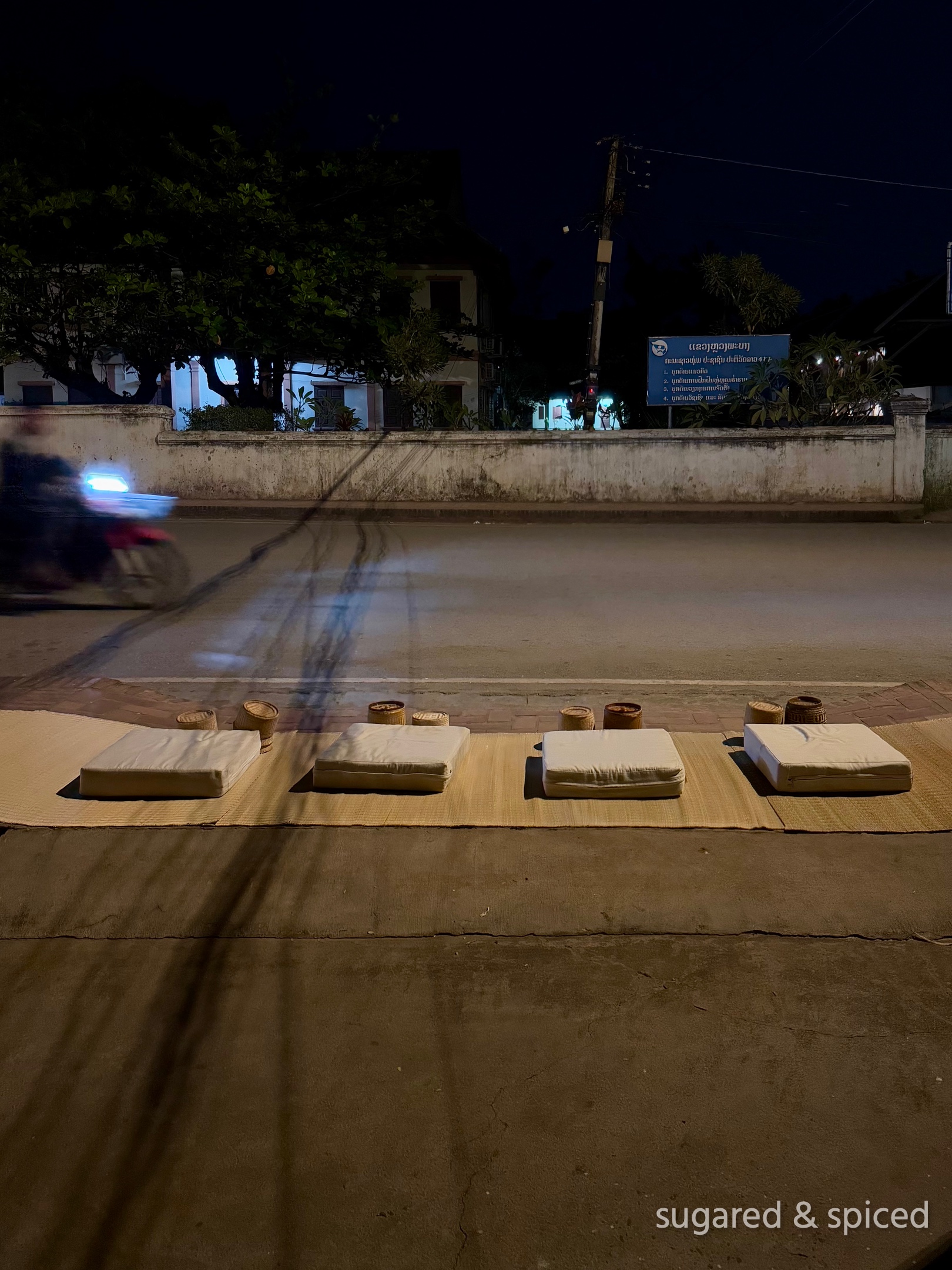
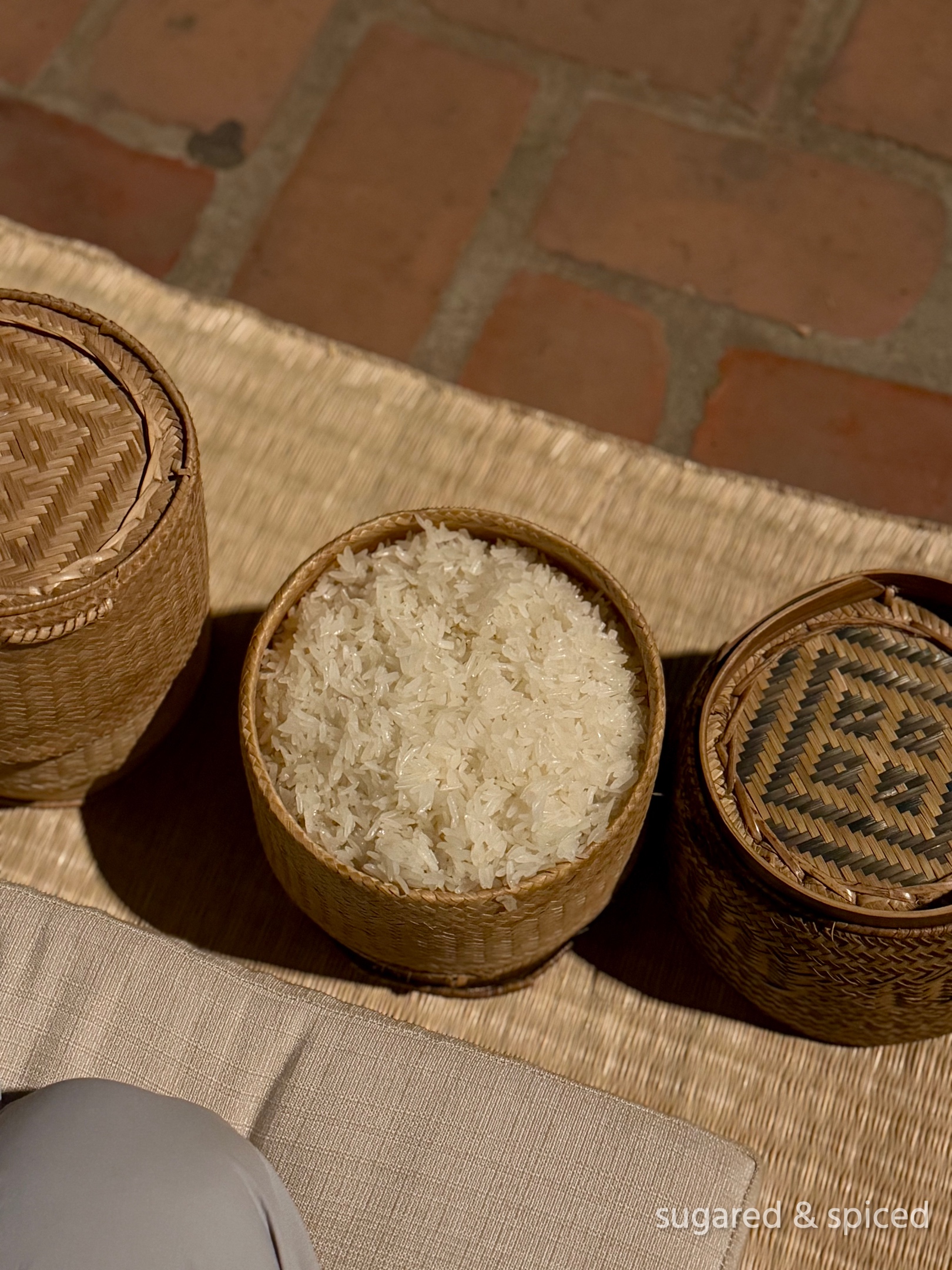
To witness this tradition, we gathered at the hotel entrance at 5:30am. The staff had already laid out mats and prepared freshly steamed sticky rice — so fresh, in fact, it was still almost too hot to hold.
Group by group, barefoot monks approached. All the while, life carried on around them: a motorbike speeding by, a curious dog weaving through the crowd. Yet there we were, kneeling quietly, focused only on placing rice into the next alms bowl in front of us – a simple, almost meditative experience.
數百年來,琅勃拉邦各寺廟的僧侶們每天清晨成行成列托鉢出行,民眾們則早早於道旁等候,準備將糯米飯一份份奉入鉢中。
為了體驗這個傳統,我們清晨5:30在酒店門口集合,服務人員已擺好墊子和糯米飯 – 顯然是廚房剛剛煮好的,拿在手裡還相當燙手。僧侶們一組一組赤腳走來,過程中有摩托車飛馳而過、也有狗狗來串門子…而我們跪坐著,只專注於將糯米飯放入下一個出現在眼前的鉢中,是個有趣的體驗。
3. Breakfast Time | 早餐時光
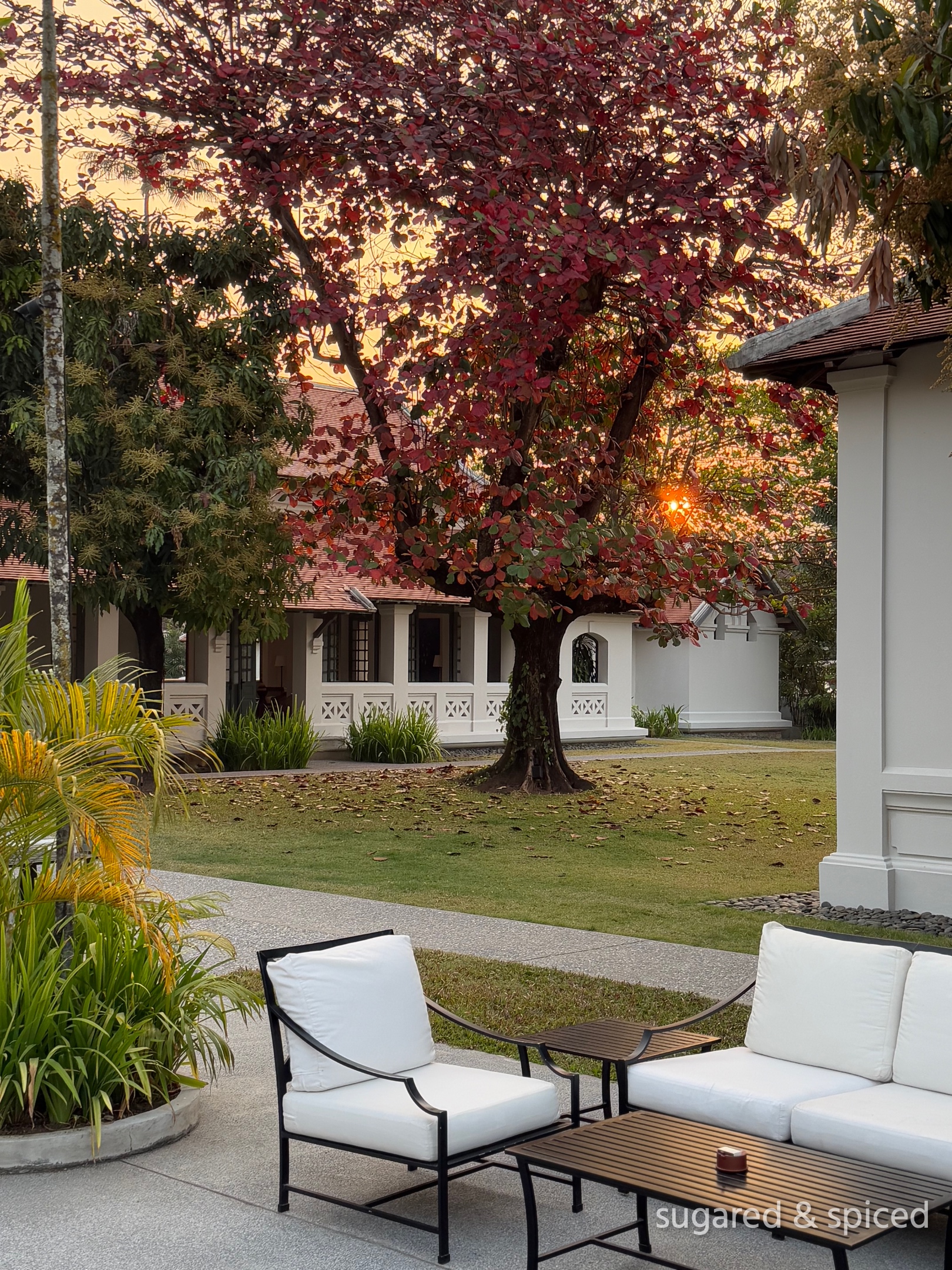
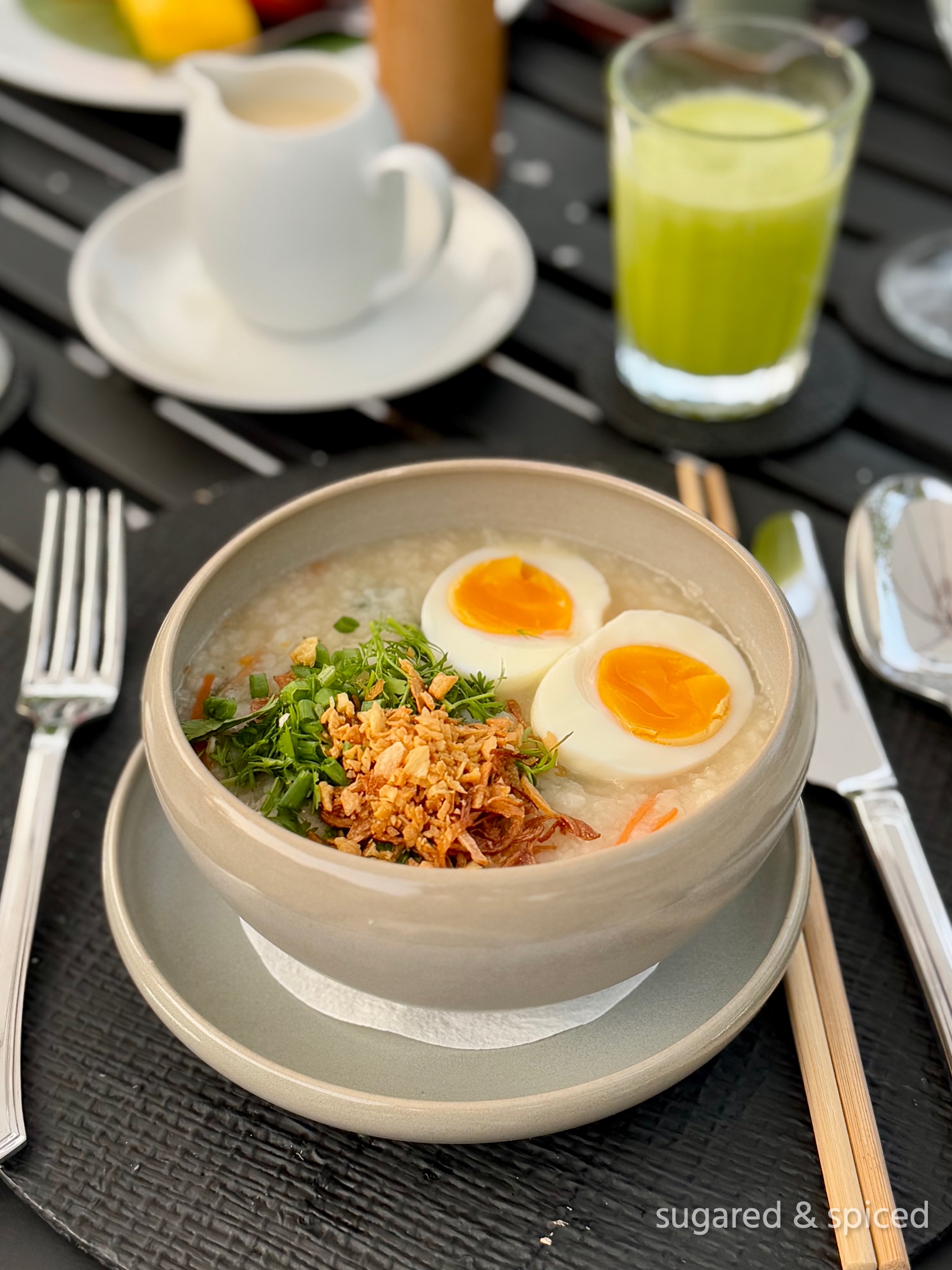
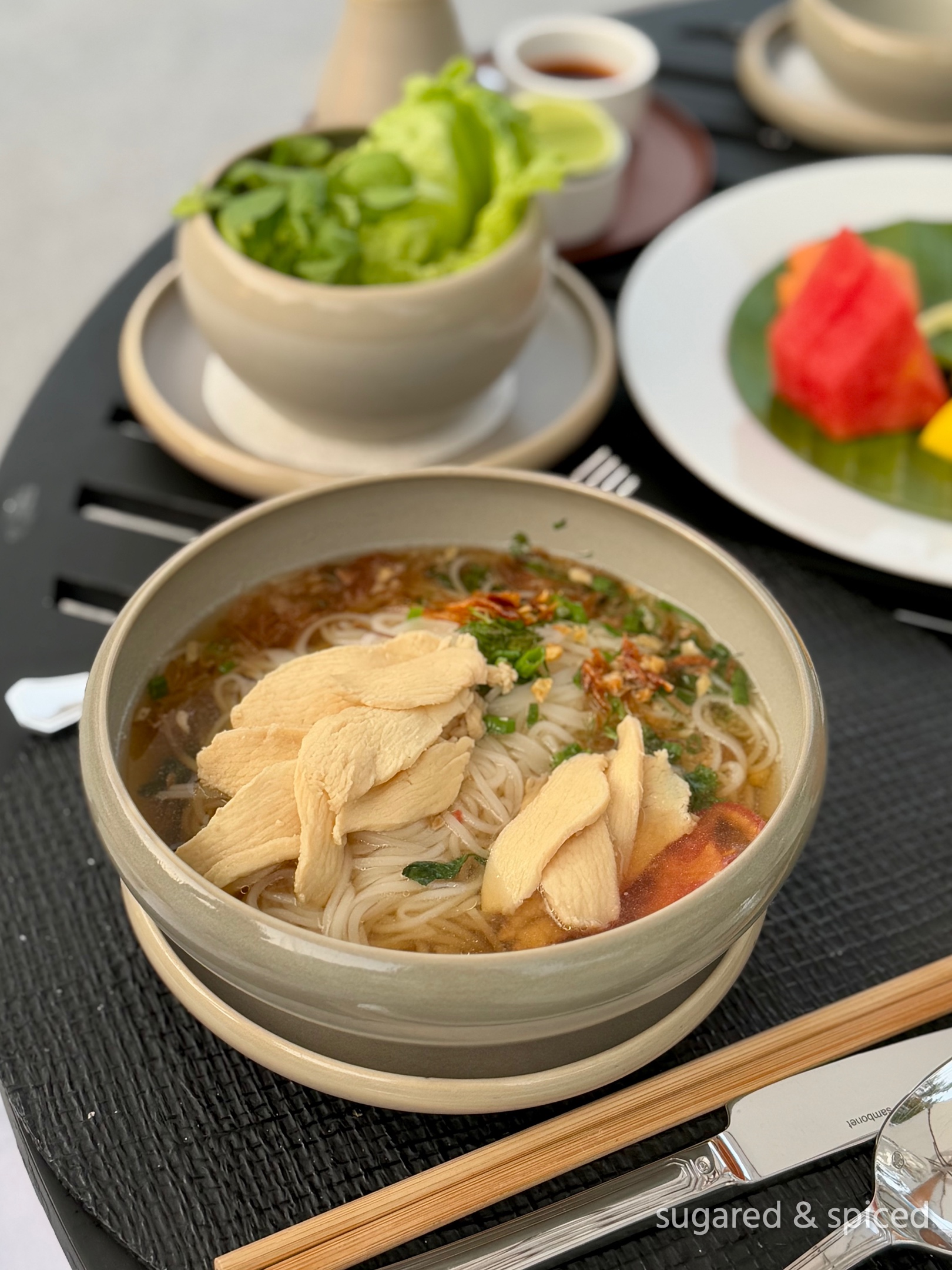
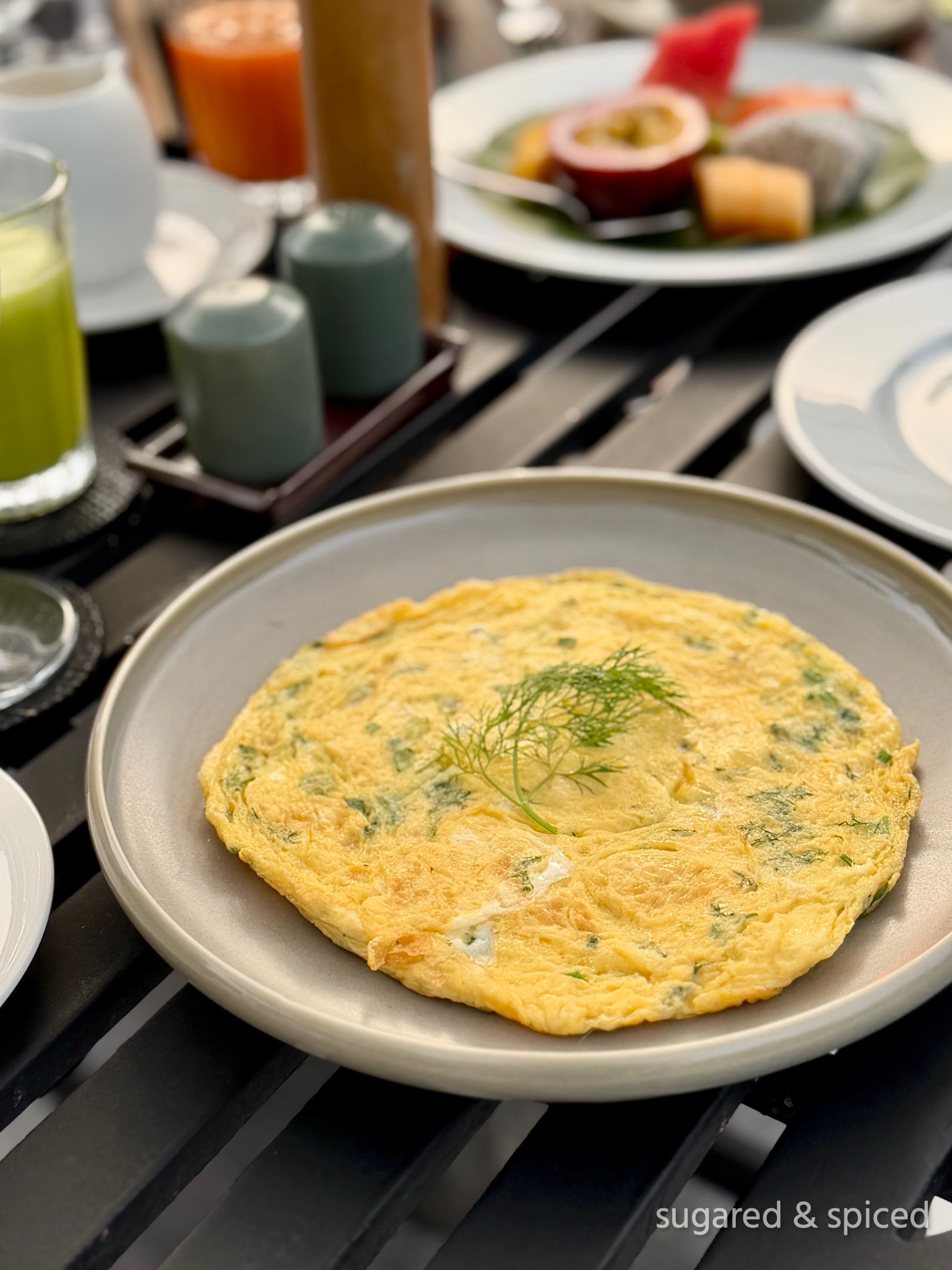
By 7am, the hotel courtyard was slowly waking up. Sunlight slanted across the white archways, the air carried a faint scent of freshly cut grass. Breakfast was served by the pool — warm bowls of Lao rice porridge (Khaow Piak Khaow Kai), comforting noodle soup (Fer Moo), and fragrant fried eggs (Jeun Khai) topped with dill and fresh chili. Every dish arrived steaming hot, soothing both my stomach and soul.
早晨七點,酒店的庭院靜靜蘇醒,陽光斜斜地灑在白色拱廊上,空氣里帶著一點新鮮草地的氣息。早餐在池畔享用,有寮國稀飯(Khaow Piak Khaow Kai)、湯麵(Fer Moo)、加了蒔蘿和小辣椒的香噴噴煎蛋(Jeun Khai)…每一道都熱氣騰騰,胃和心都被妥帖安撫。
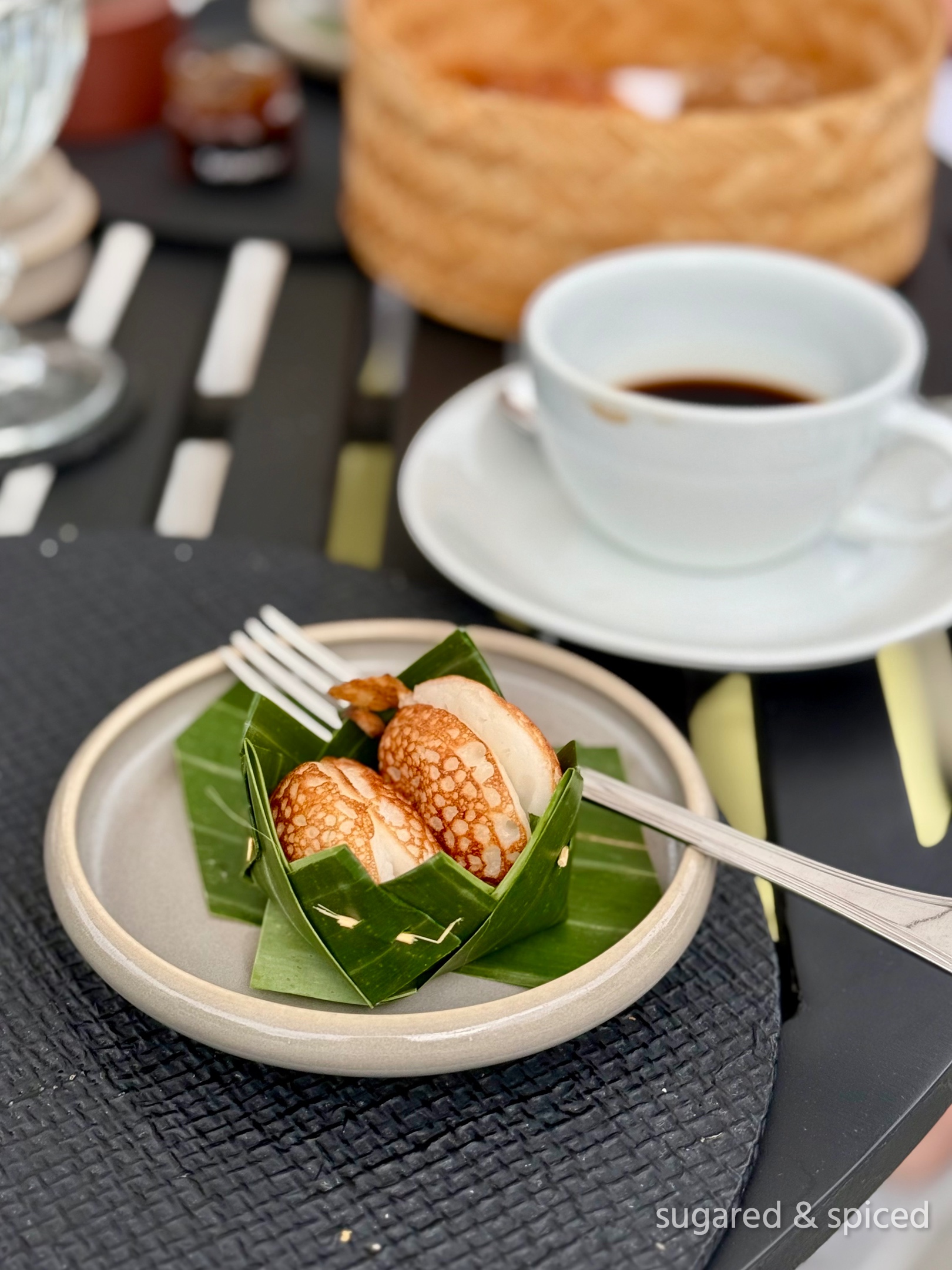
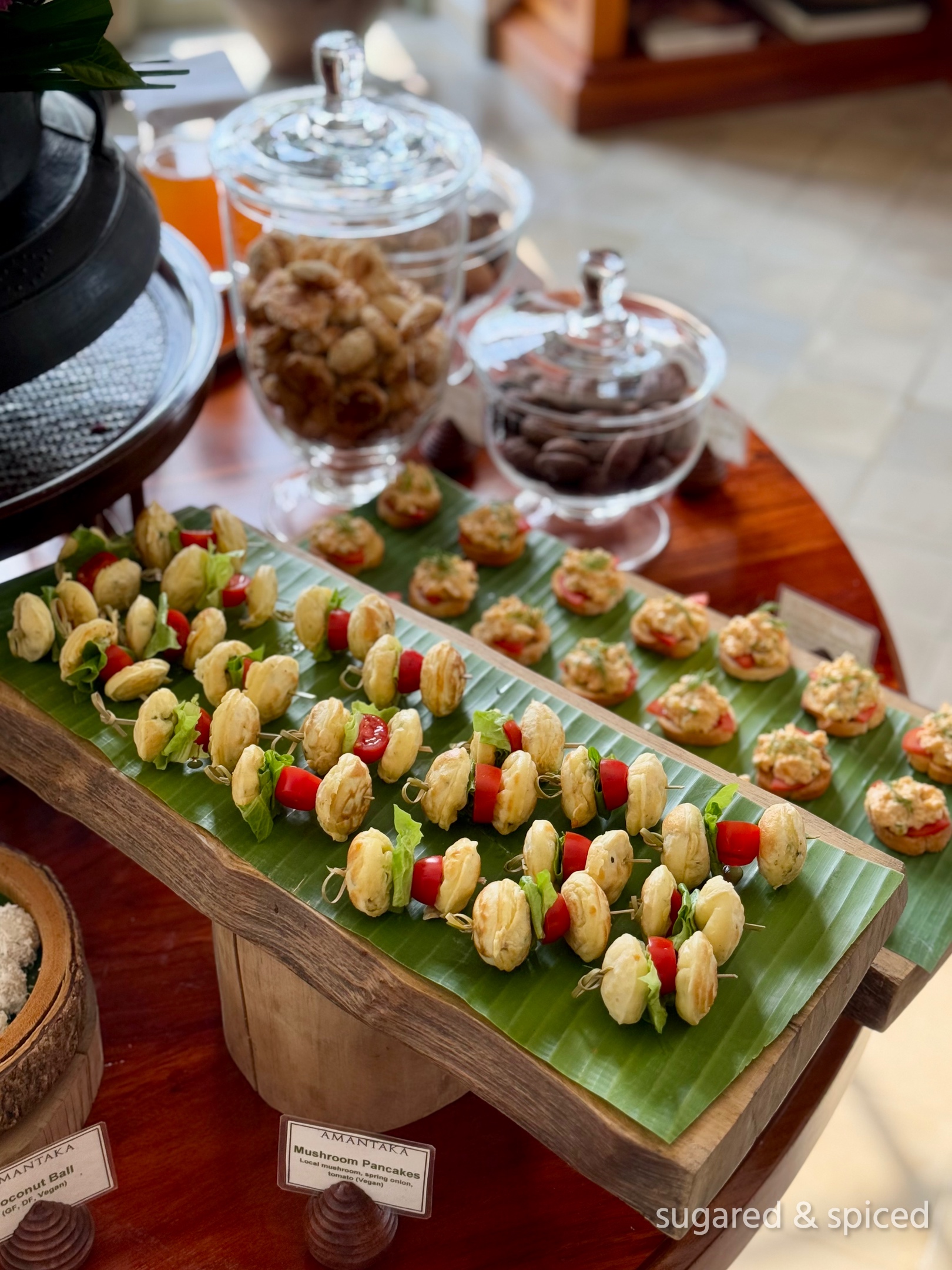
Hearing that I have also worked in pastry, Amantaka’s pastry chef, Touk, came by for a cheerful chat. As a special treat, she surprised us with Lao-style coconut pancakes — not on the menu, made just for us. Still warm, almost too hot to bite, served in both sweet and savory versions. These were one of my happiest bites from this trip.
酒店的甜點主廚 Touk 聽說我也是甜點師,熱情地過來打招呼,還特製了菜單上沒有的寮國椰奶煎餅給我們品嘗。入口時還有點燙口,咸的甜的版本都非常美味,是我這次旅行的 highlight 之一。
4. Morning Market | 逛早市
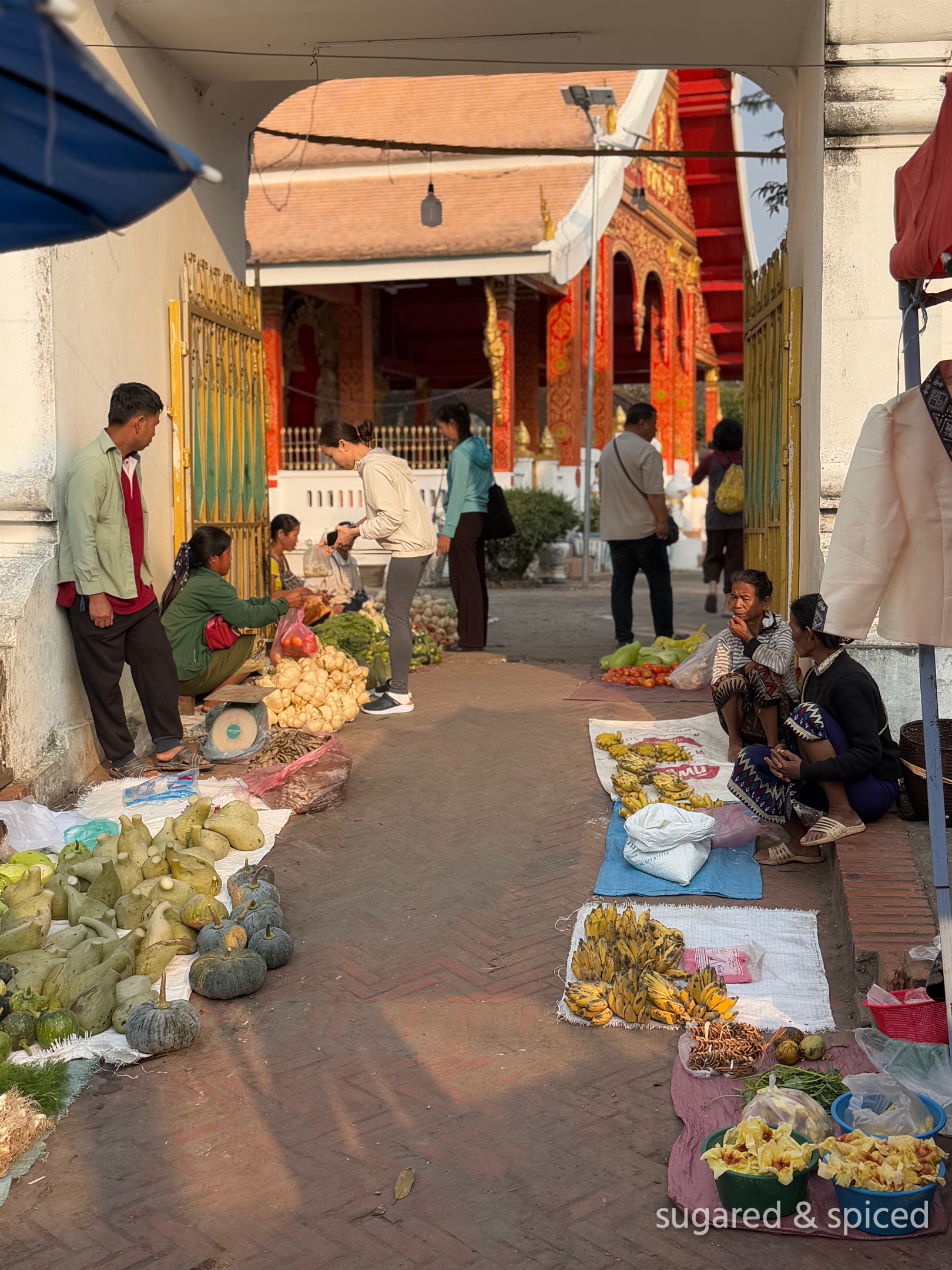
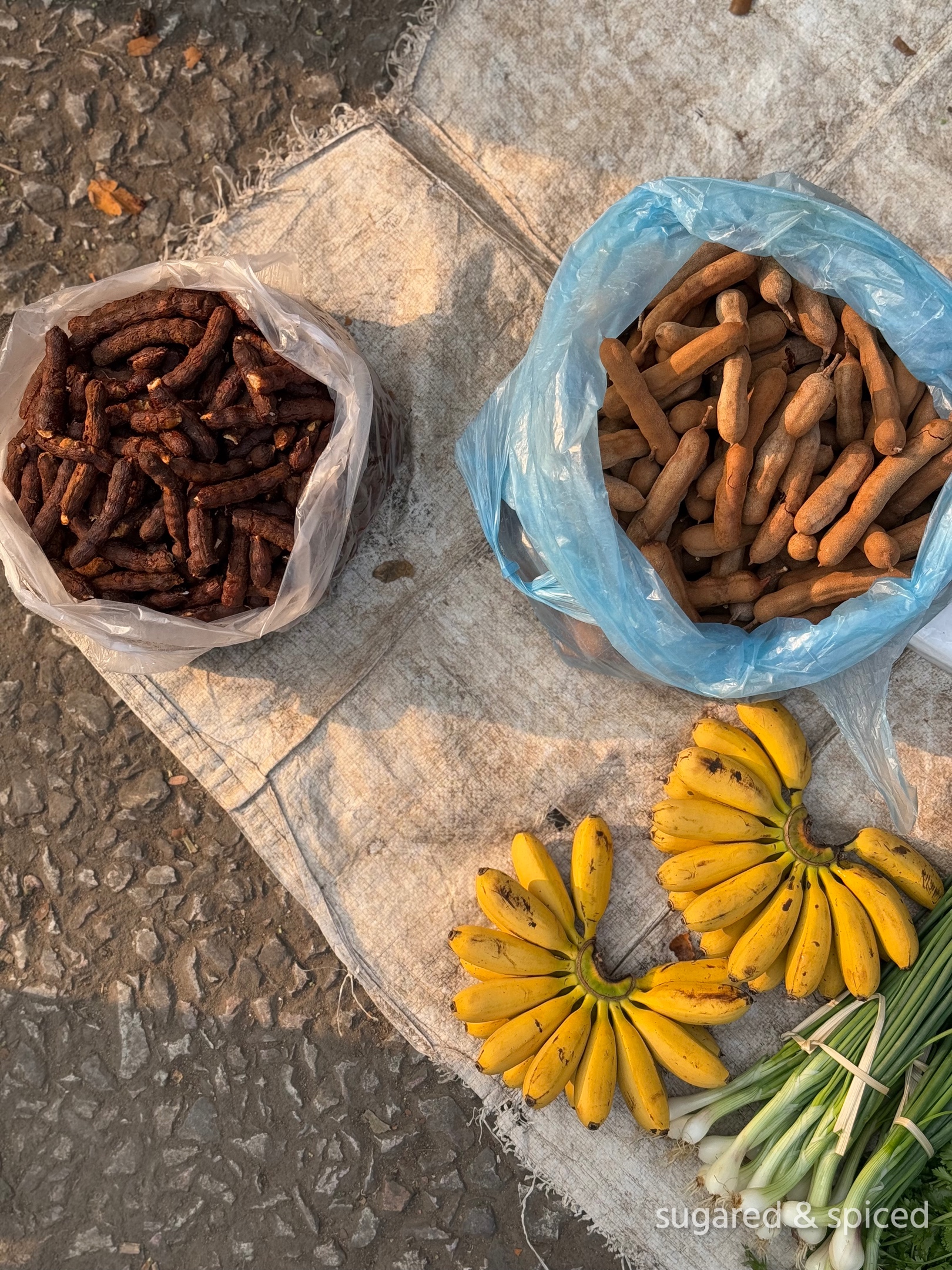
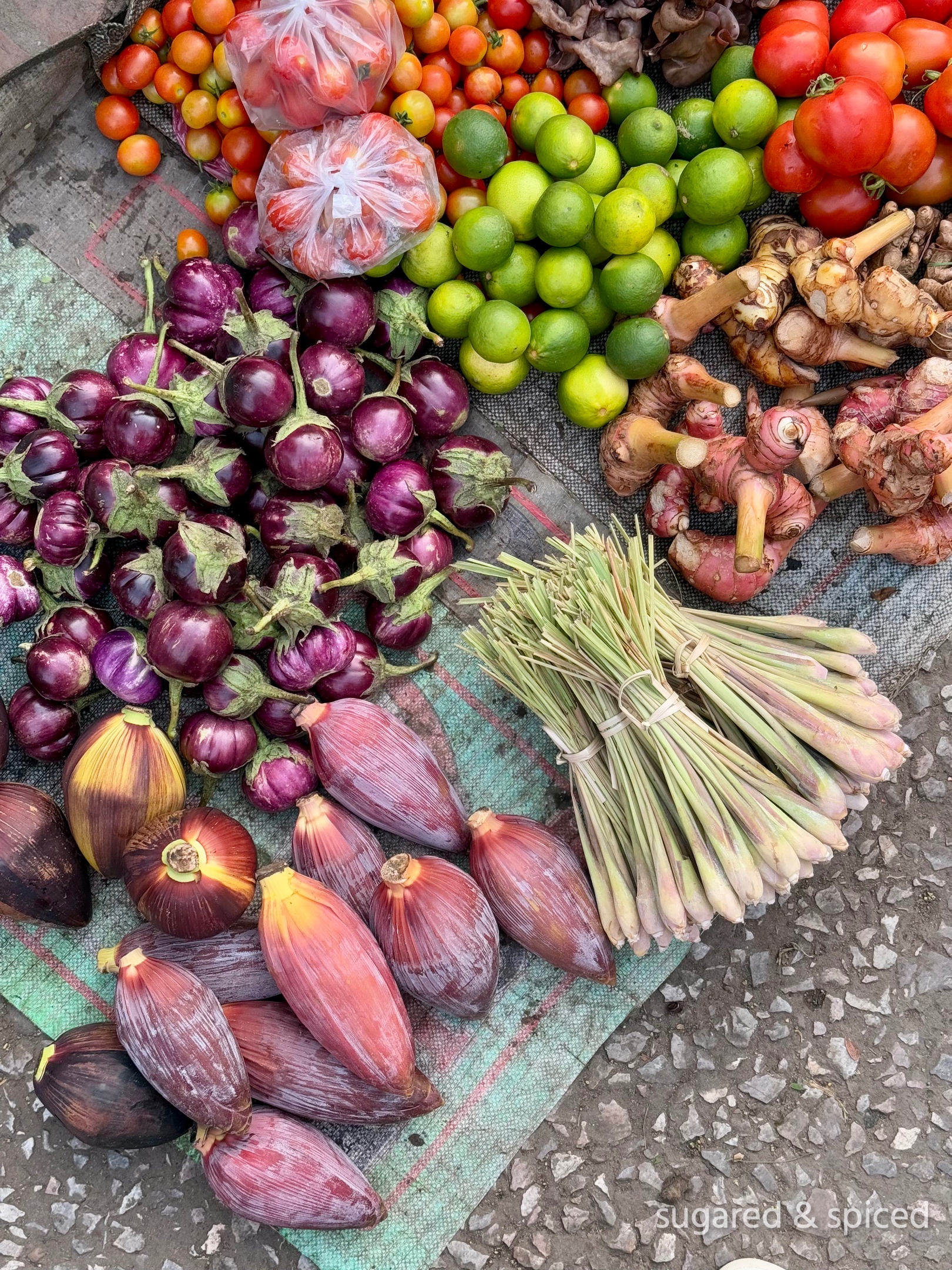
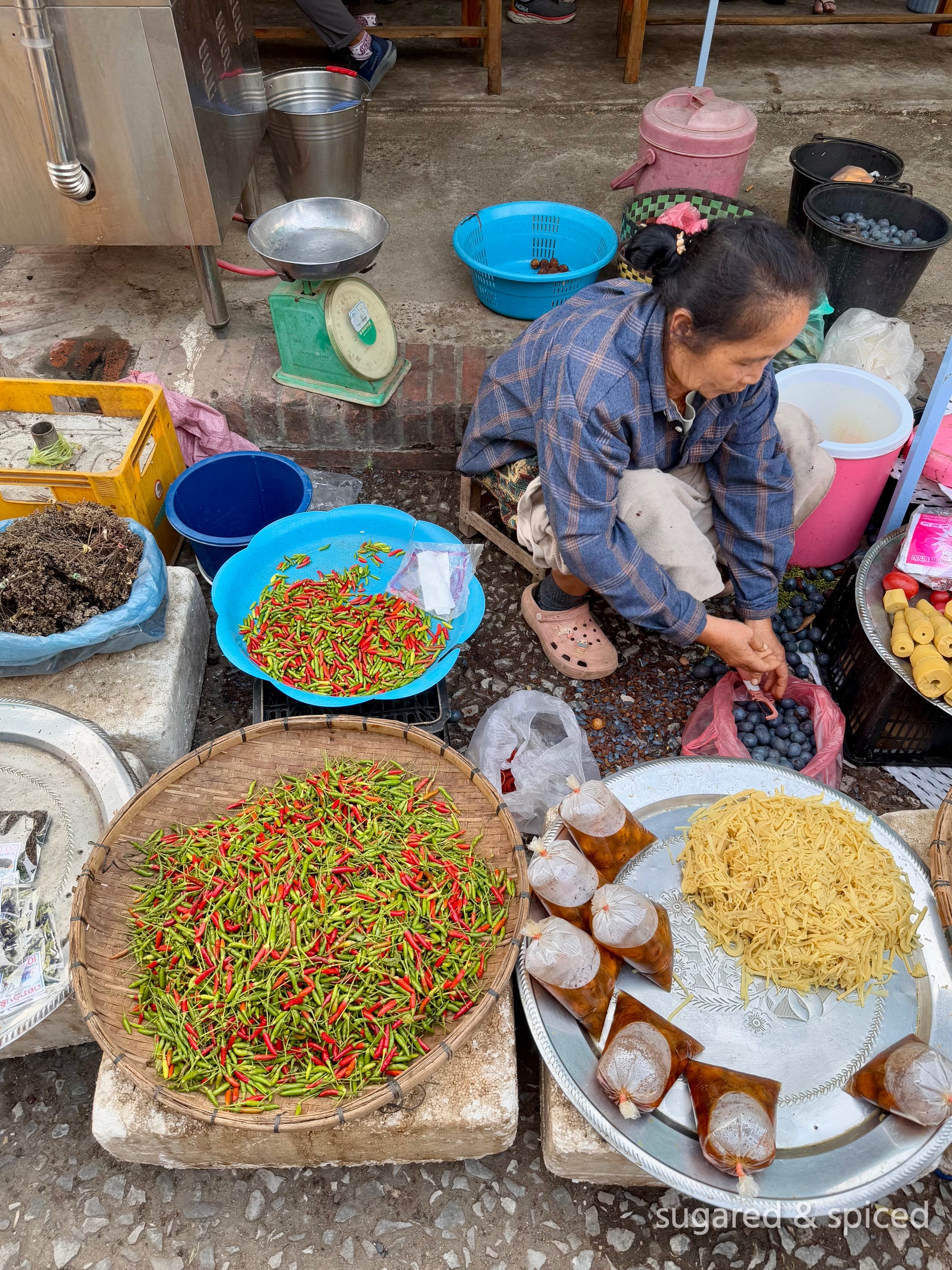
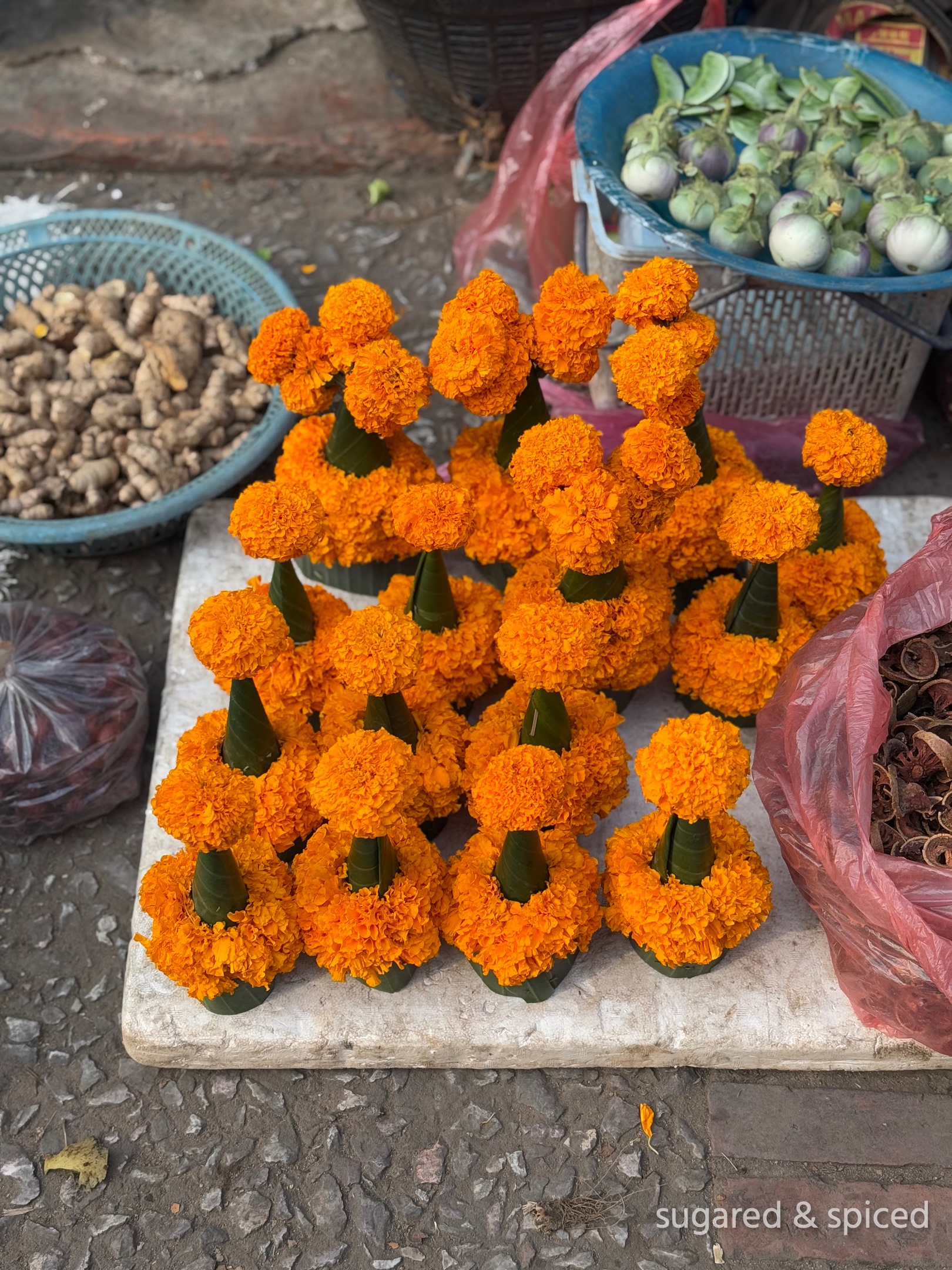
On our second day, we asked Amantaka to arrange a guided tour of the old town. First stop: the bustling morning market — a lively tapestry of colors and scents, where fruits, vegetables, spices, and temple offerings piled high on every stall.
We later visited the Royal Palace, Mount Phousi, and famous temple grounds…but truth be told, it was the market that left the deepest impression. Listening to vendors banter with locals, watching daily life unfold in its unhurried rhythm — that’s where the real heartbeat of Luang Prabang revealed itself.
抵達的第二天,我們請 Amantaka 安排了專業導覽帶我們參觀這座小城。第一站來到熱鬧的早市 – 五光十色的水果、蔬菜、香料與供品,是色彩和香氣的交織,呈現出濃郁的當地生活氛圍。後來還去了大皇宮、寺廟、普西山等著名景點,不過在早市裡聽著攤販與買家的交談,更能感受到寮國日常的真實脈動。
5. City Walk | 城市漫步
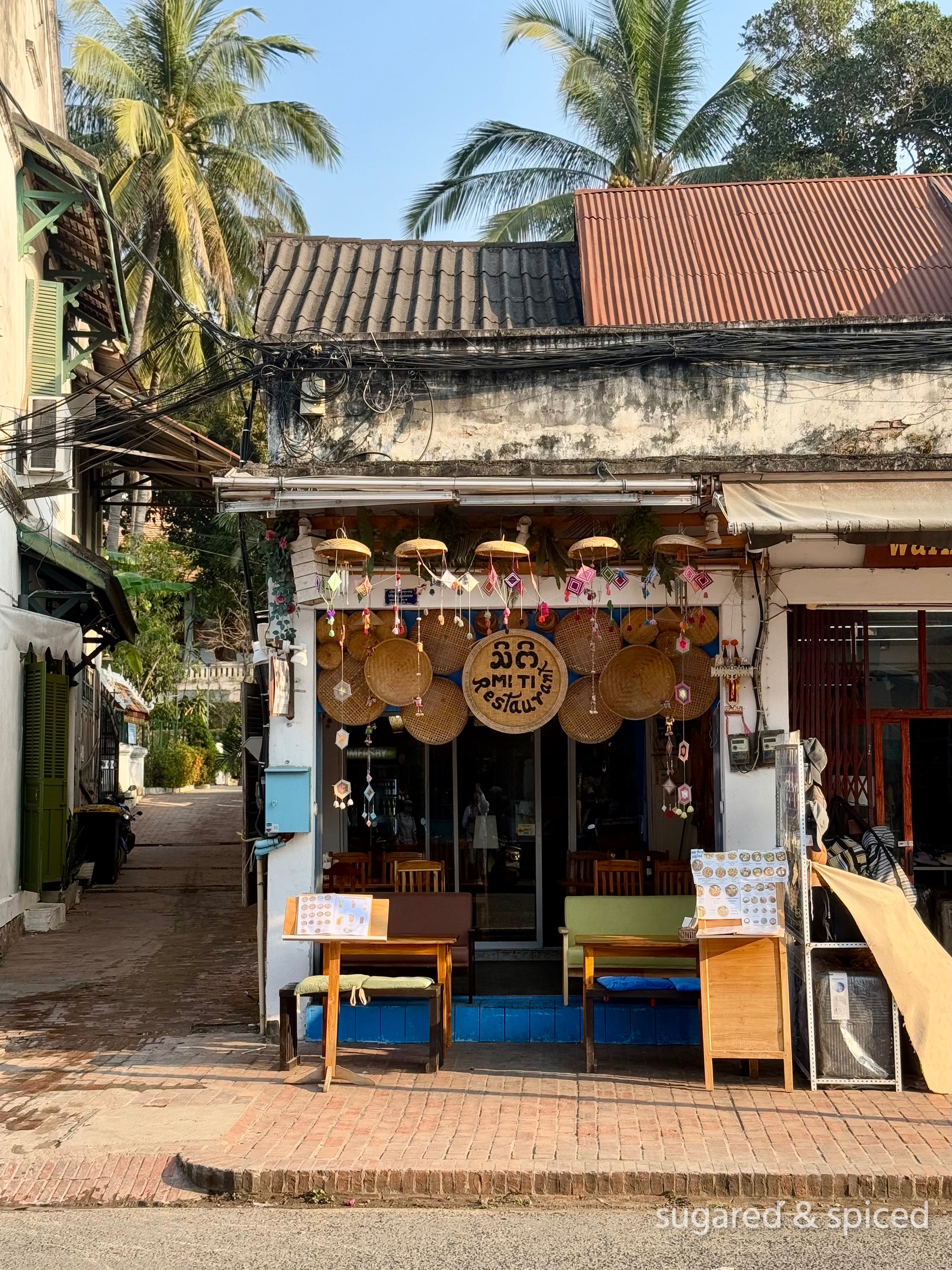
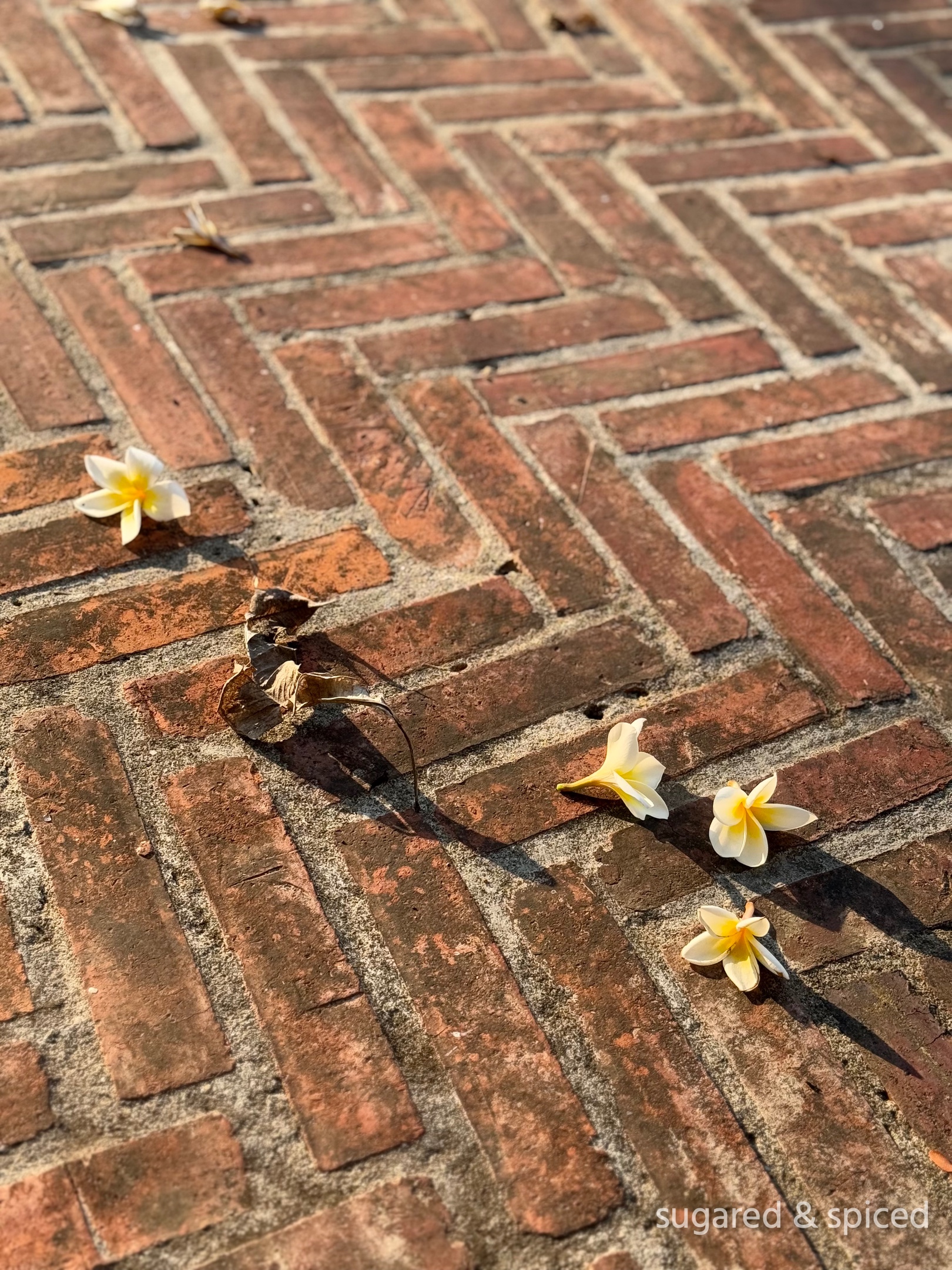
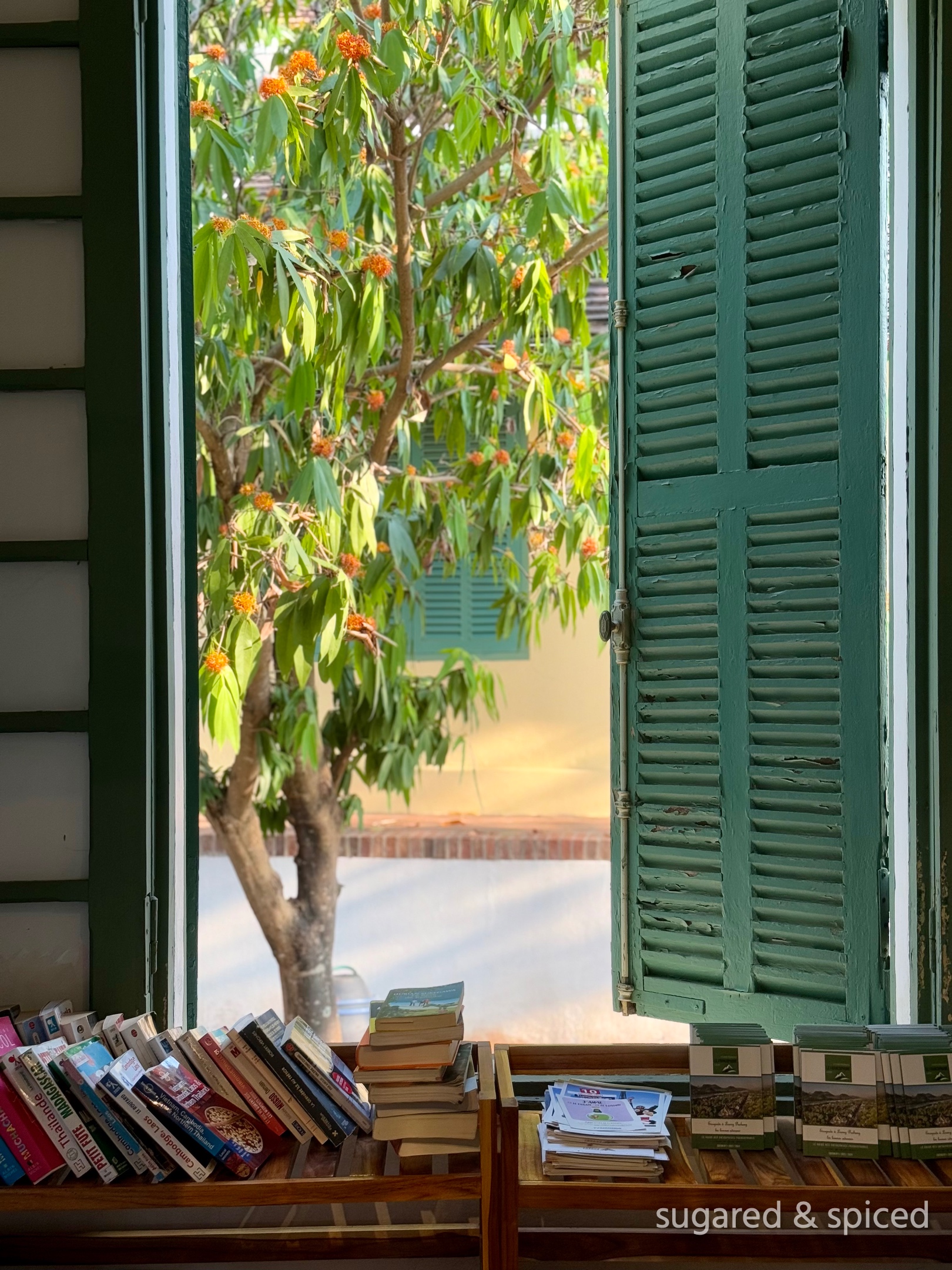
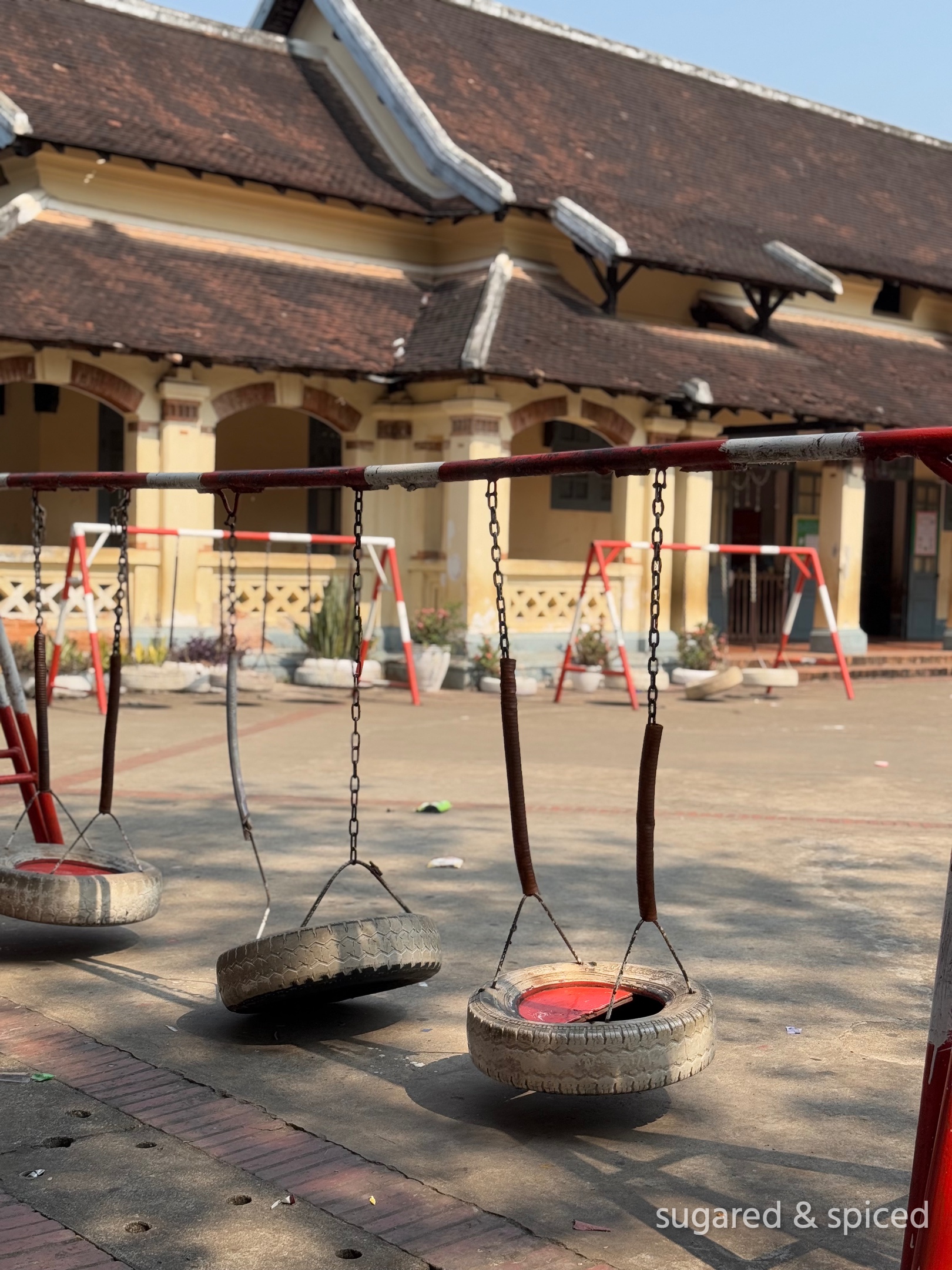
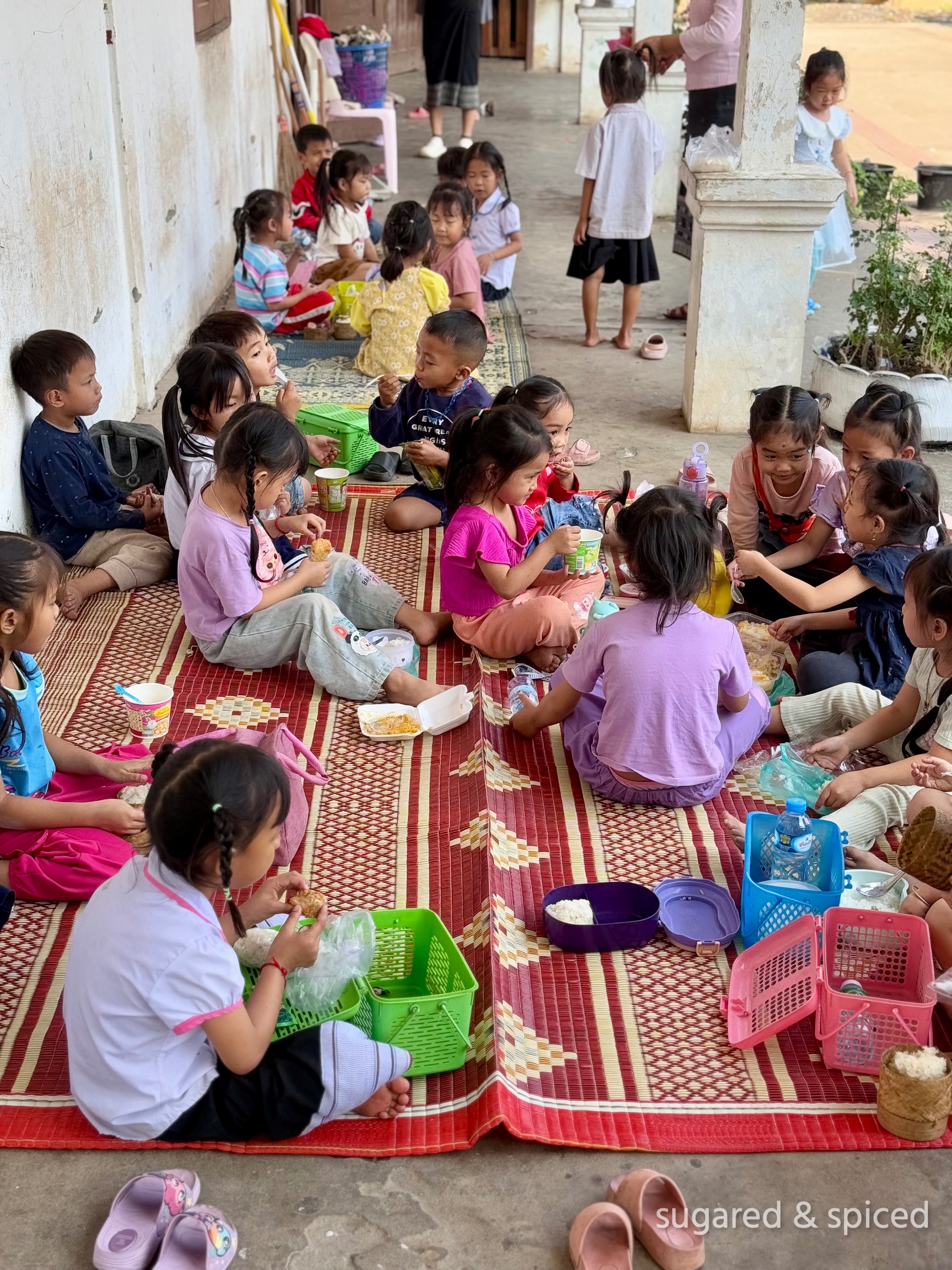
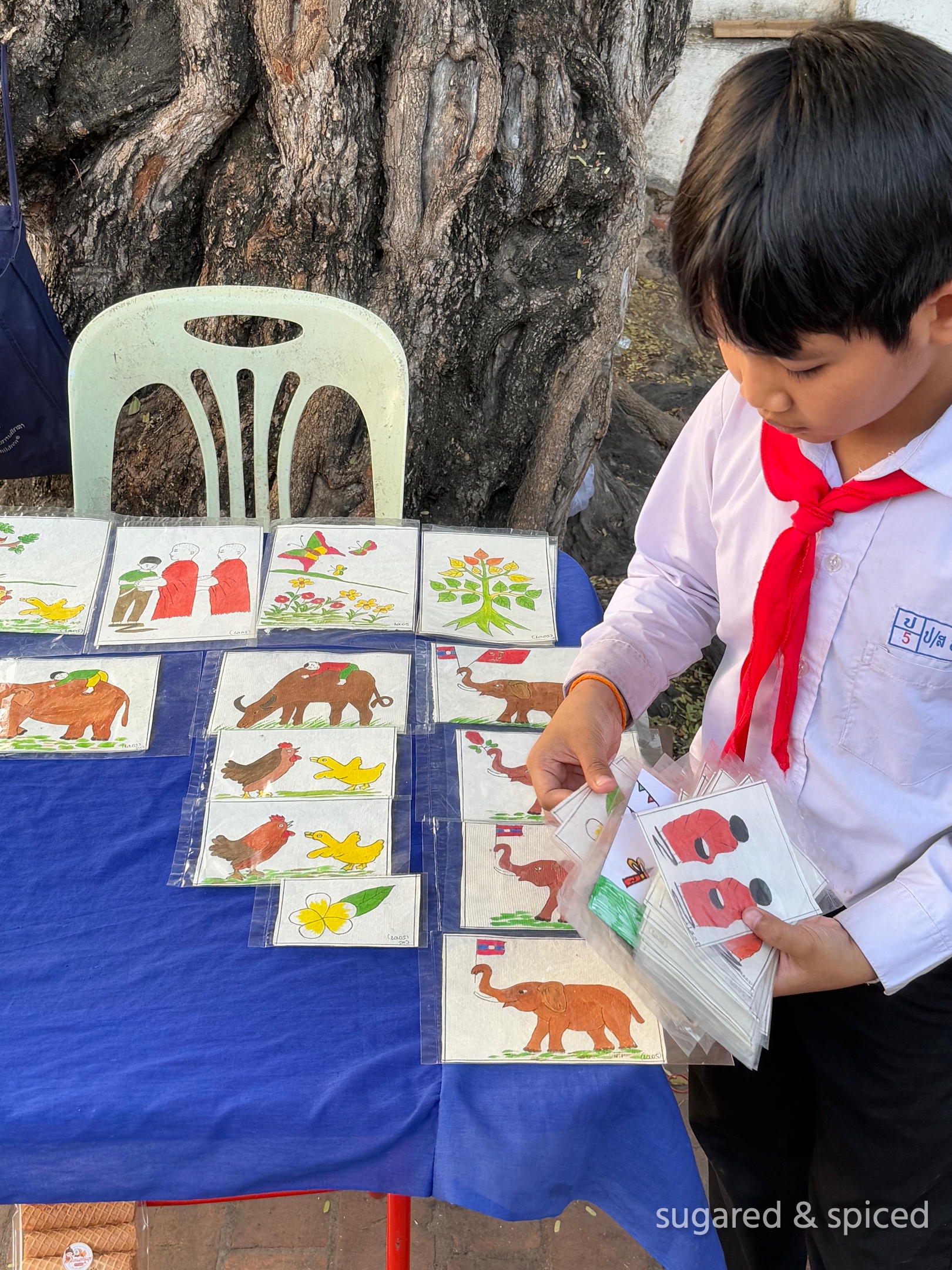
Luang Prabang is wonderfully compact — the kind of town best explored on foot, with plenty of little surprises waiting to be found along the way.
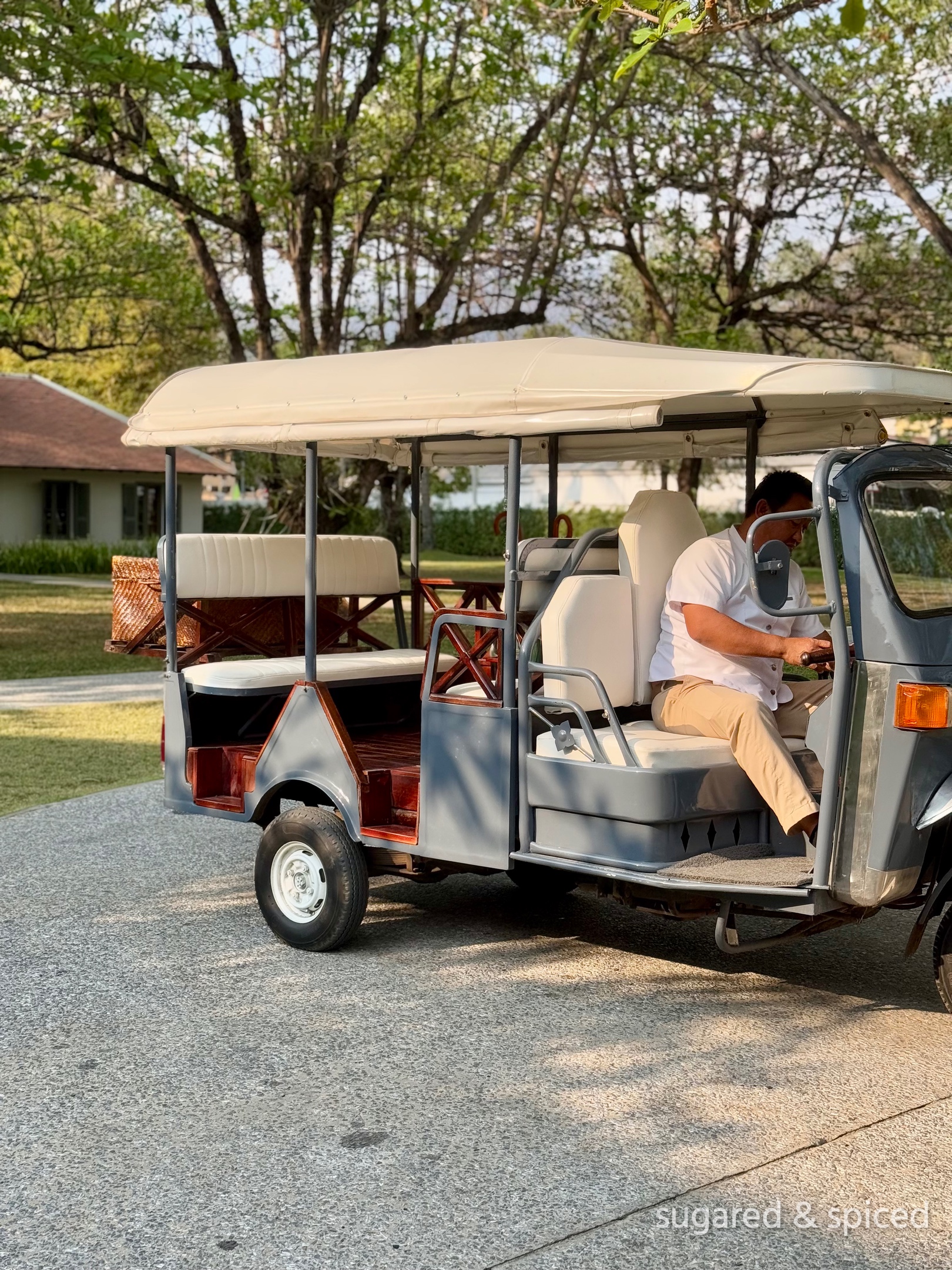
If you’re heading somewhere specific, Amantaka’s tuk-tuk service is just a quick call away, always ready to whisk you there. For those who prefer a slower pace, the hotel also offers complimentary bicycles — perfect for a leisurely ride through the streets.
龍坡邦是個相當小巧的城市,完全可以漫步探索,隨意發掘有趣的事物。若確認要去哪一個點,也可以請 Amantaka 的 tuk-tuk 接送,隨 call 隨到,非常方便。喜歡騎自行車的話,酒店也可以免費提供。
6. Dinner at Bouang | Bouang 晚餐
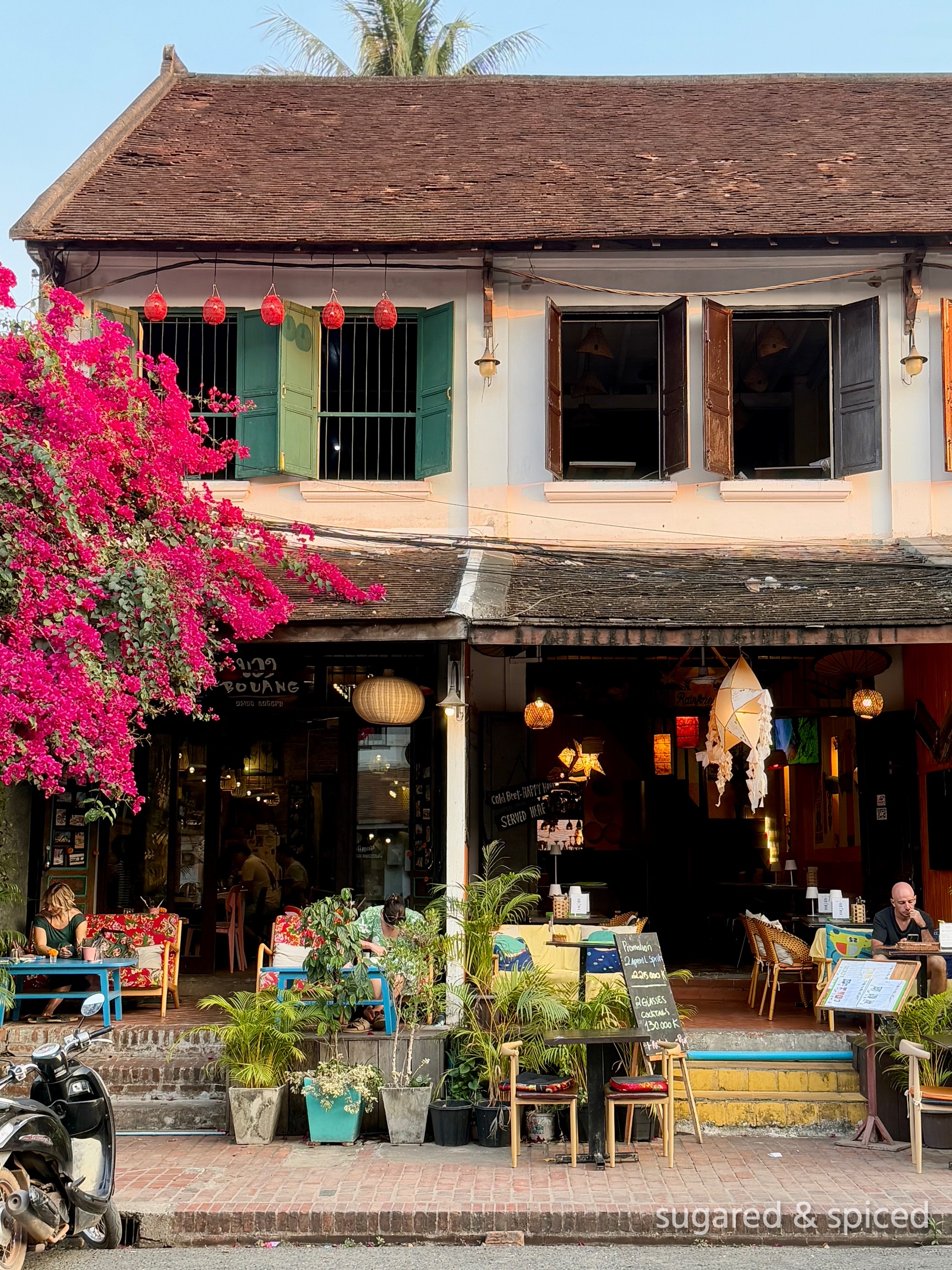
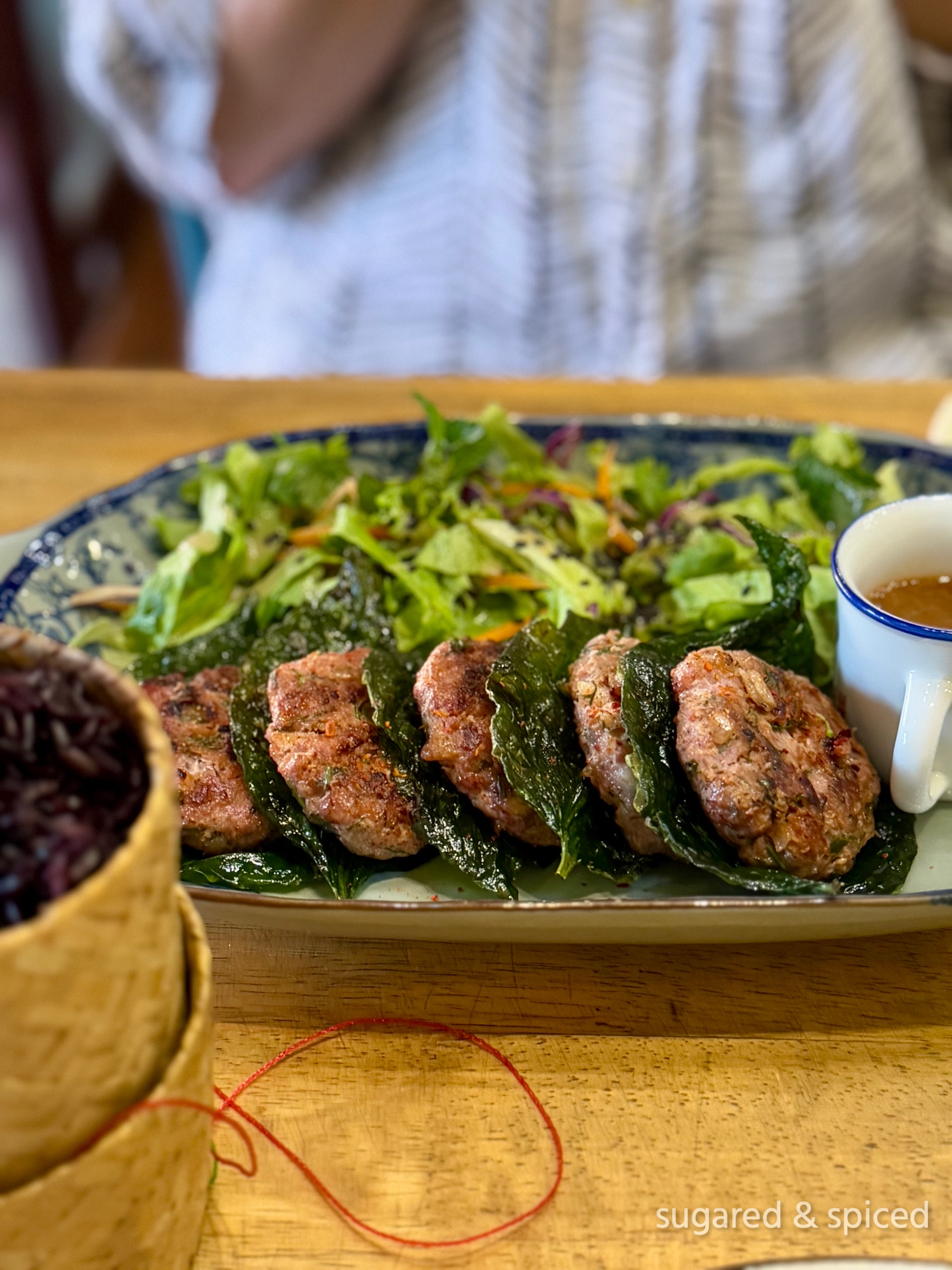
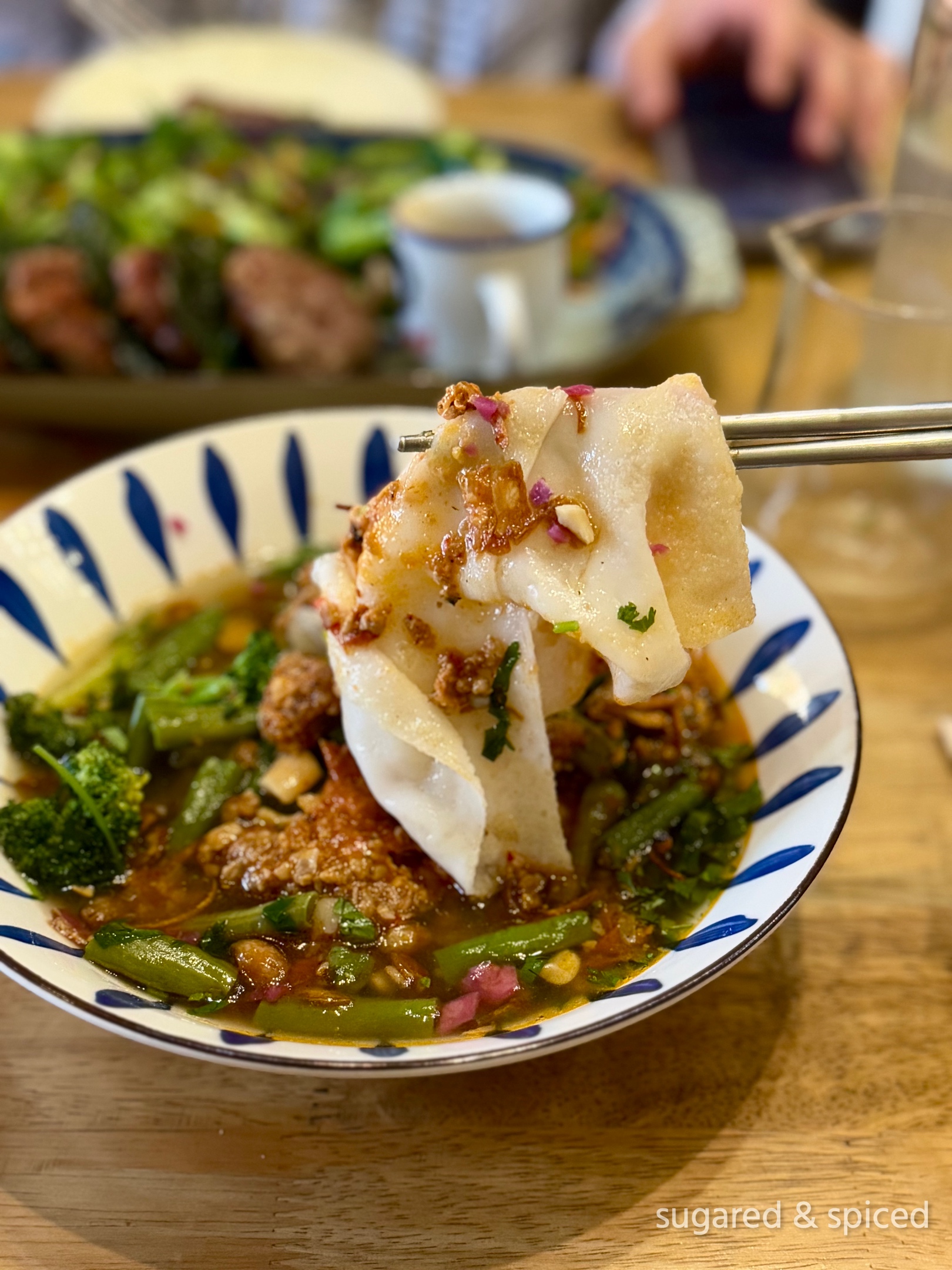
A French friend insisted we try Bouang, and after just one meal, we were hooked. So much so, we went back again the next day. Favorites included the Lao Meat Balls — patties wrapped in crispy betel leaves — and the Khao Soy Bouang Style, a comforting bowl of rice noodles with tomato and minced pork. The rest of the menu looked just as tempting.
Bouang 是一位法國朋友大力推薦的餐館,我們去了一次就愛上,三天內去了兩次。很喜歡 Lao Meat Balls(寮國式肉餅+炸檳榔葉)和 Khao Soy Bouang Style(番茄肉末米線),菜單上的其他選擇看起來也很吸引人。
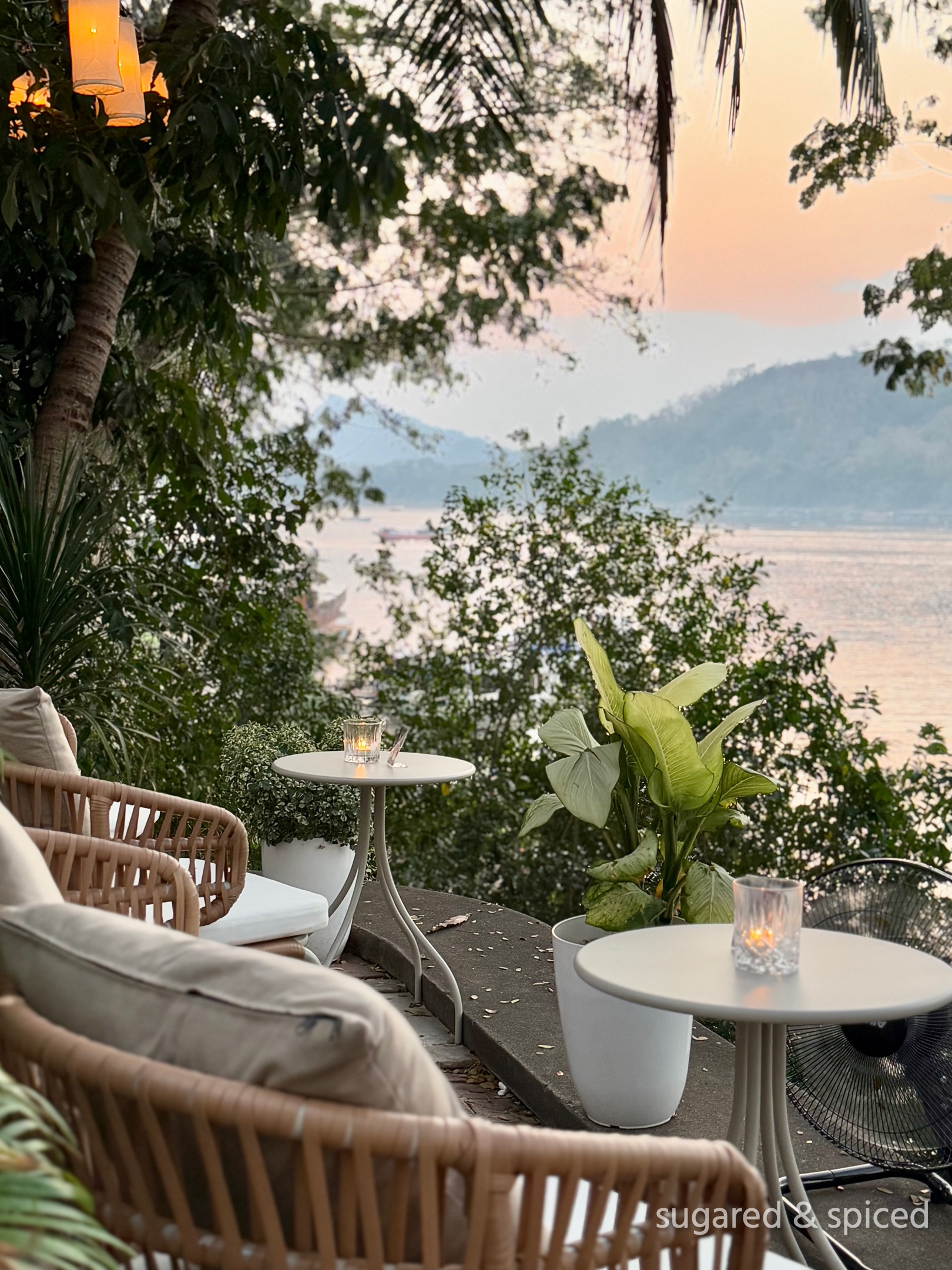
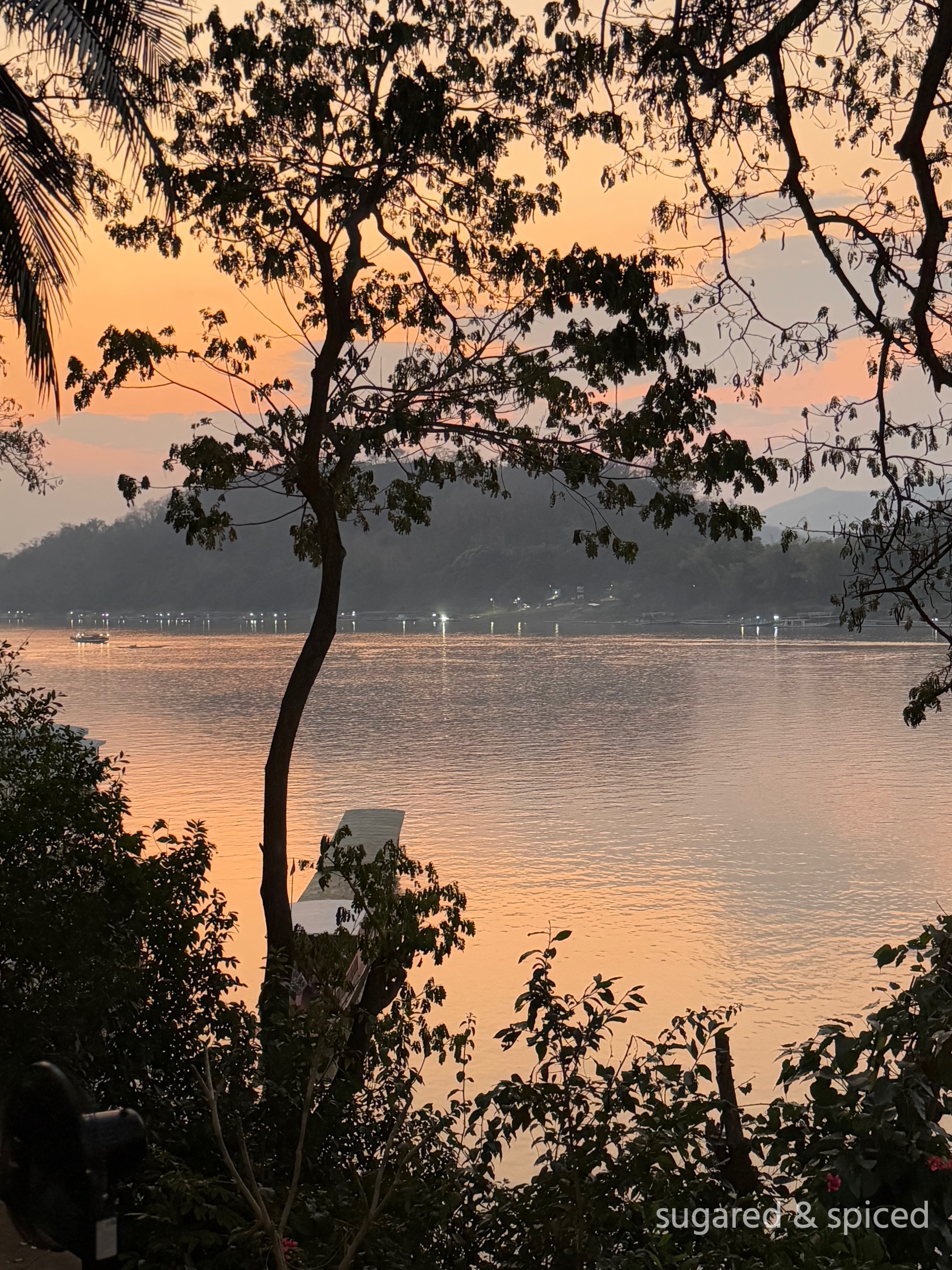
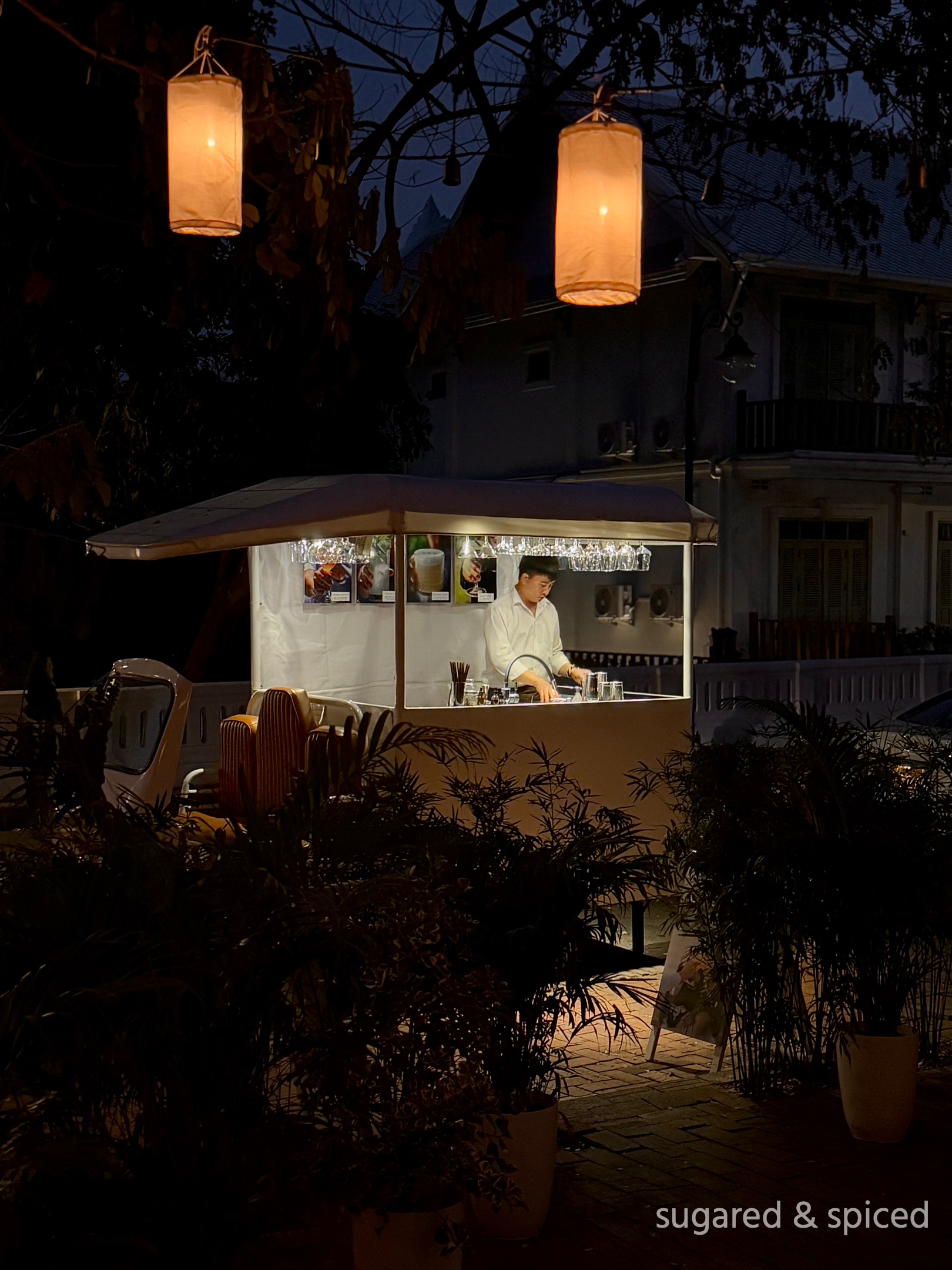
After dinner, we took a slow stroll through town and ended up at Terrace 525, a spot recommended by the hotel staff. I had imagined a bar, but it turned out to be a cute little mobile cart. We sat by the riverside, sipping on cold Beerlao, watching the Mekong’s surface ripple in the evening breeze. Soft lights, soft moods, perfectly content.
晚餐後沿著街頭散步,去了酒店工作人員推薦的 Terrace 525。原本以為是酒吧,結果是一台可愛的流動小車。坐在河邊,點杯 Beerlao,看湄公河的晚風吹皺水面。夜色微醺,心情也鬆軟。
7. Kuang Si Falls | 光西瀑布
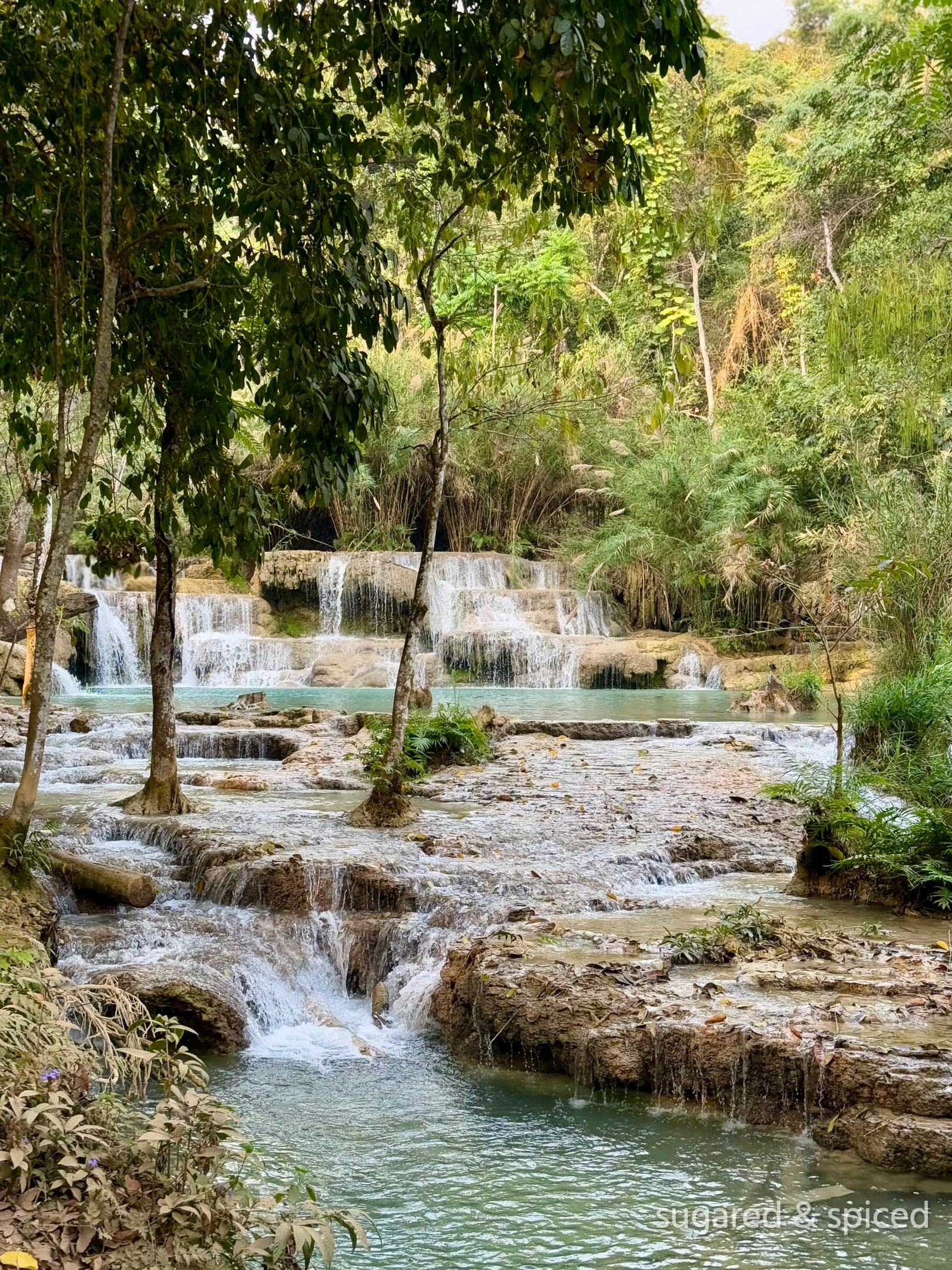
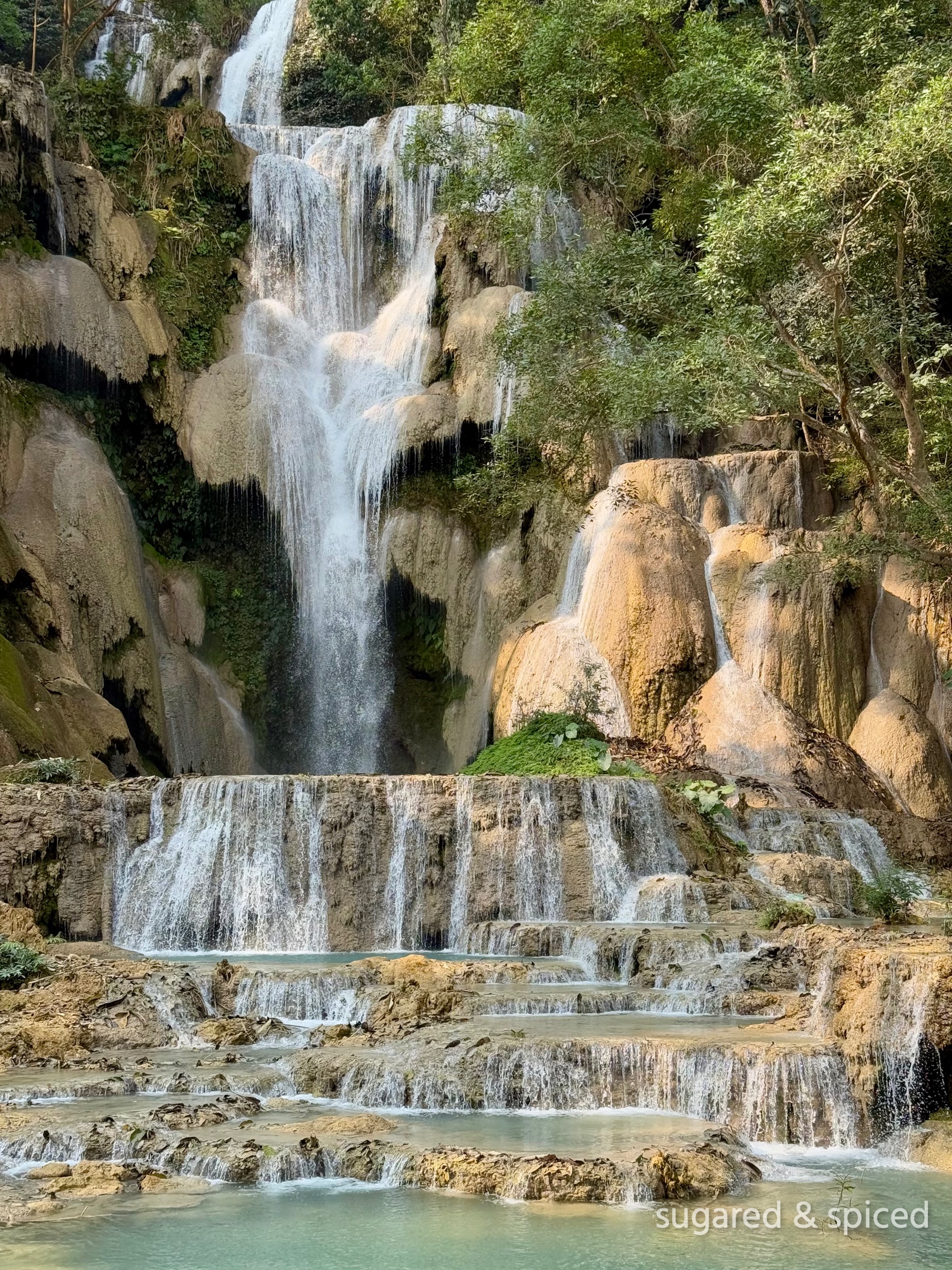
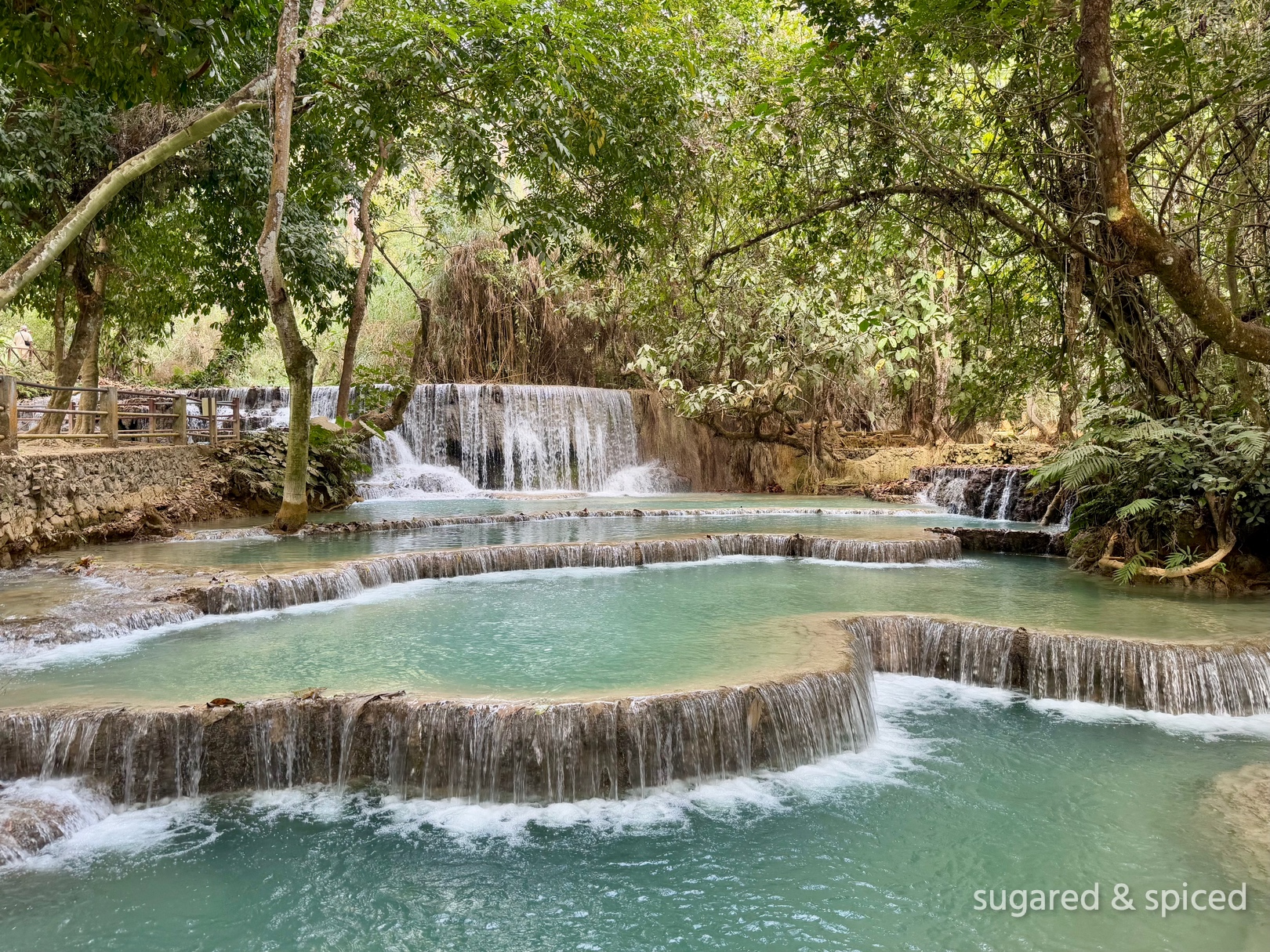
To avoid the crowds, we set out early at 7am for Kuang Si Falls. Along the way, we passed gilded temples gleaming in the morning light, water buffaloes lazily crossing the road, and a few charming cafés tucked away in the rice fields — bookmarked in my mind for next time.
The falls themselves were a charming shade of turquoise, cascading down in terraces. Quite dreamy when the sunlight hit just right.
為了避開人潮,我們一早出發前往光西瀑布。途中經過金光閃閃的廟宇、水牛悠然過街,還有幾間在稻田裡的咖啡館,默默記在心裡下次要來。光西瀑布的水色是令人驚嘆的土耳其藍,層層疊疊地流下山谷,在陽光灑下來時頗為夢幻。
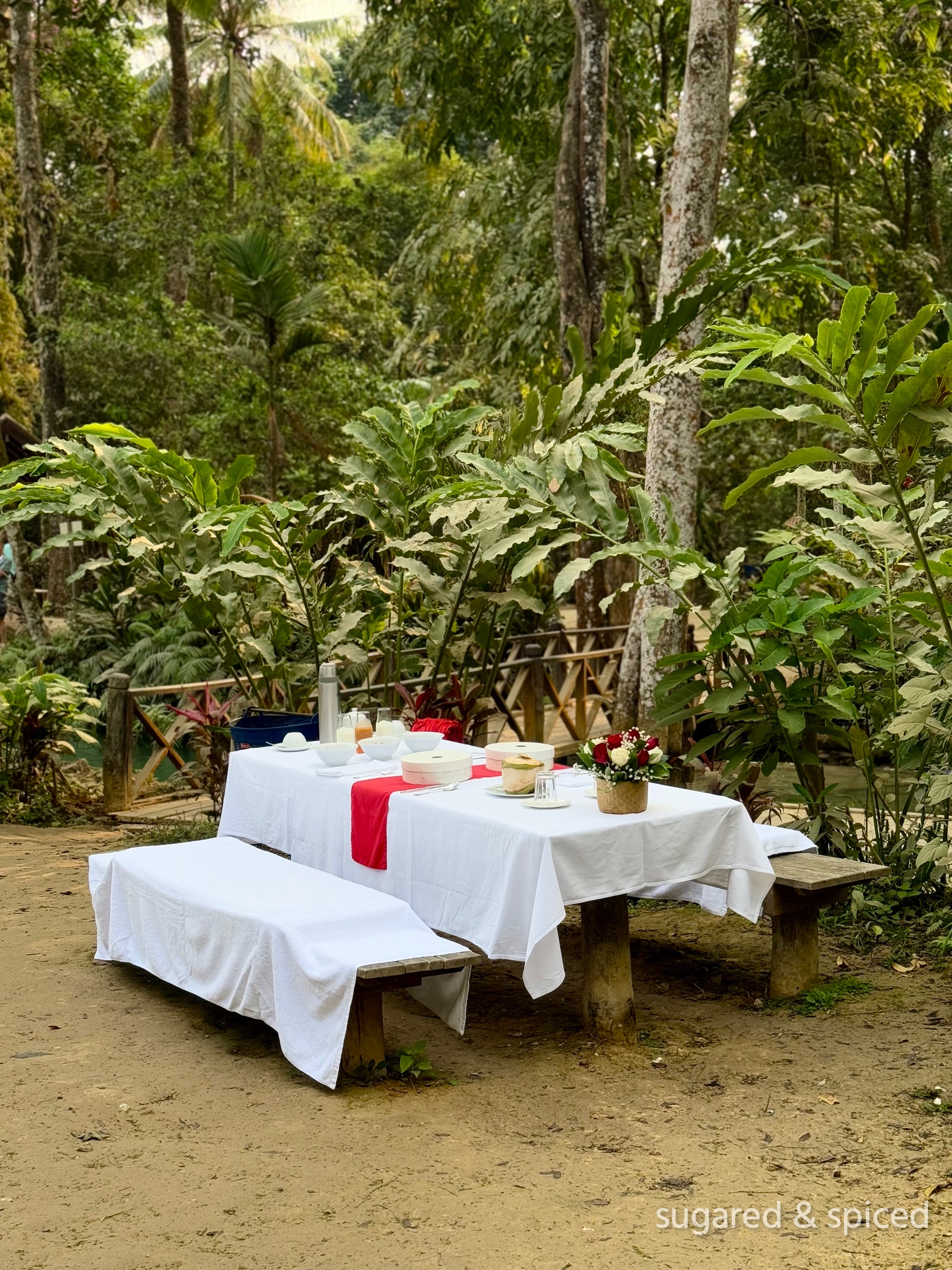
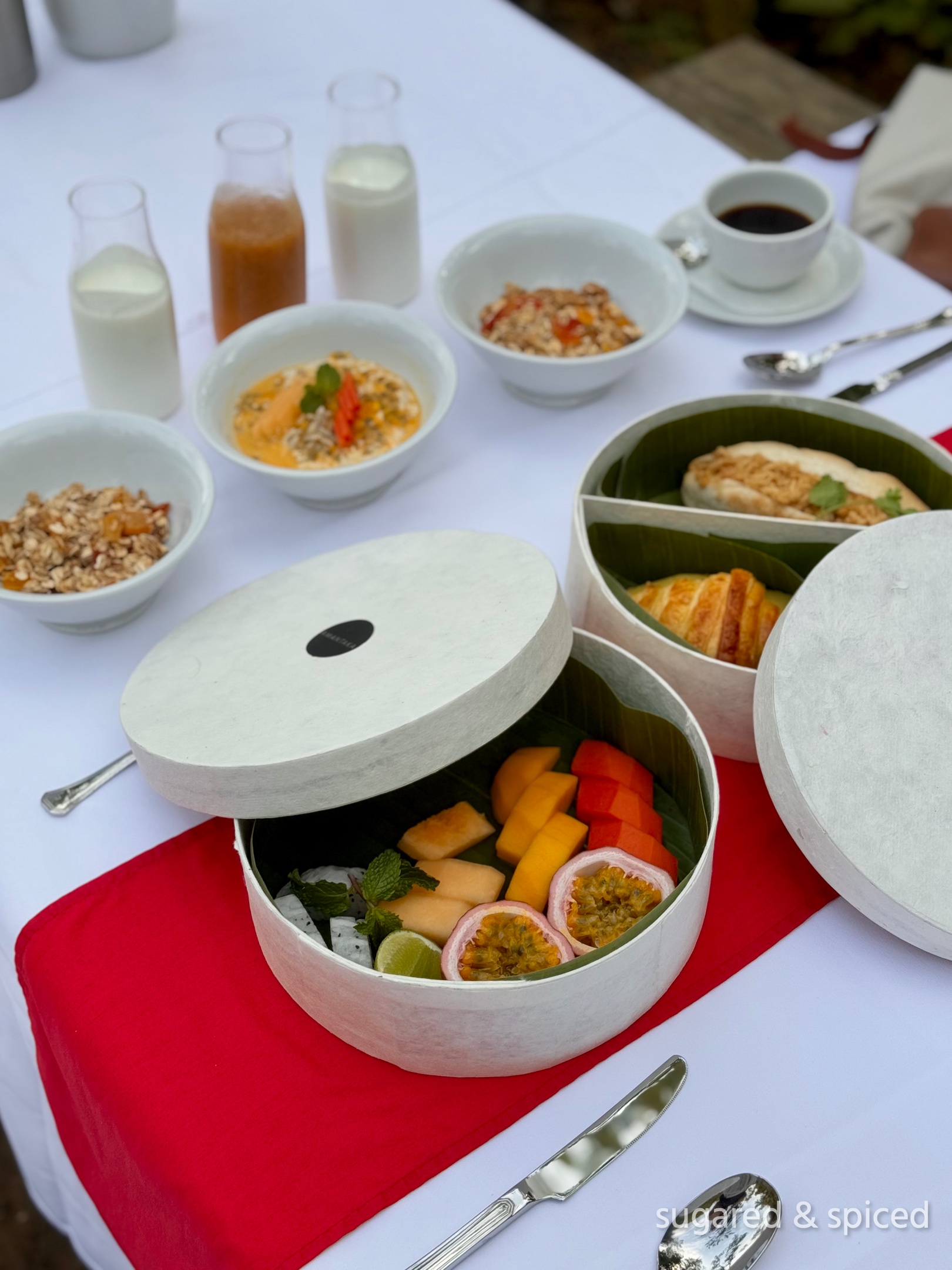
Amantaka had arranged a simple picnic breakfast for us here. Nothing extravagant, but with Kuang Si as the backdrop, it felt special nonetheless. The only small regret — we could have arrived even earlier. By the time we unwrapped our breakfast, tourists had begun to stream in, stealing away a bit of the morning’s tranquility.
If you plan to visit, I’d recommend leaving half an hour earlier than we did — I think that would make a big difference.
Amantaka 在這兒為我們準備了野餐早餐,內容不算豪華,但有光西瀑布作為背景,的確特別。可惜我們到的不夠早,吃早餐時遊客漸漸多了起來,少了份清幽感。若你也對這個行程有興趣,建議再提早個半小時出發。
8. Mekong River Cruise | 湄公河游船
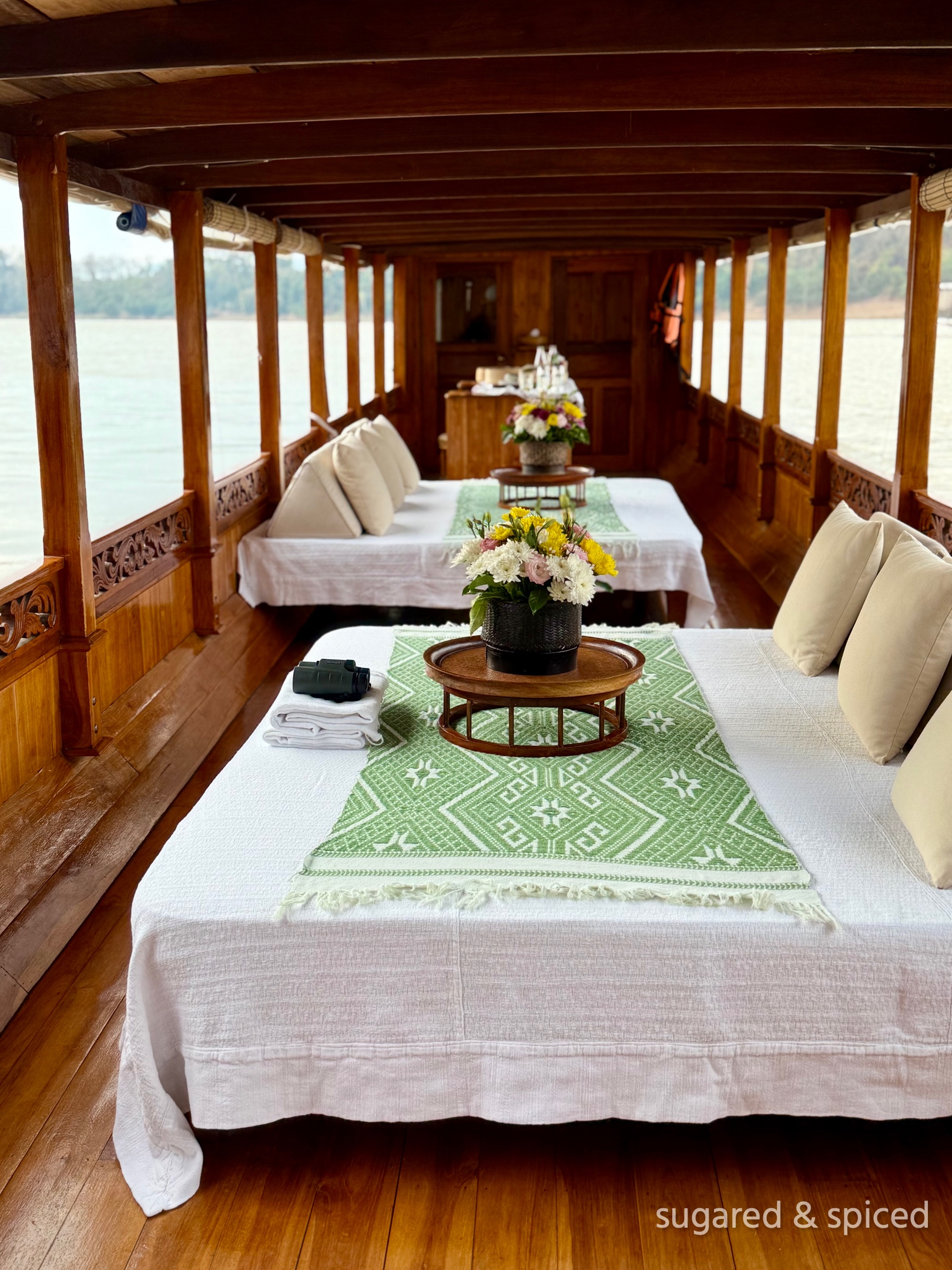
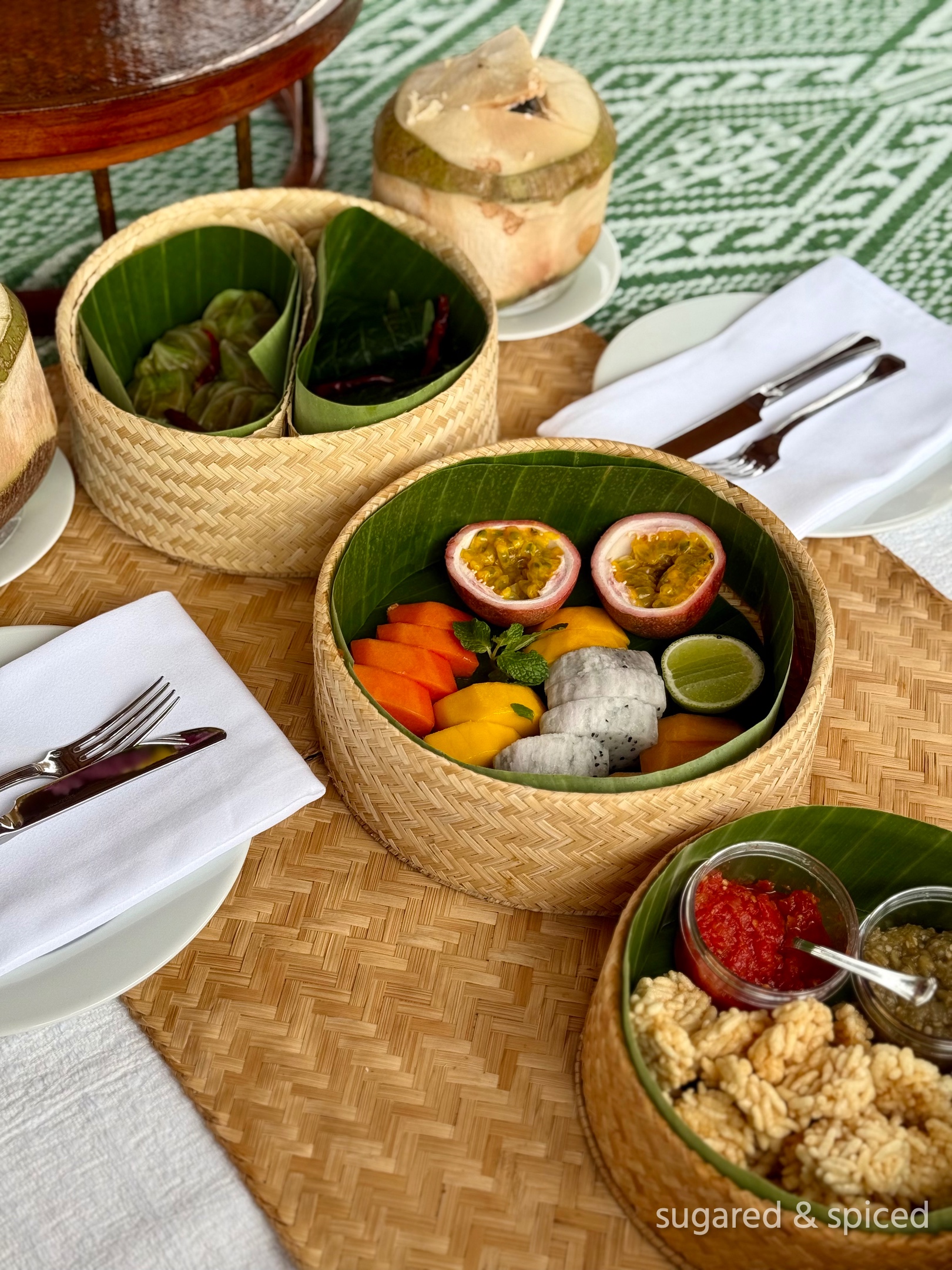
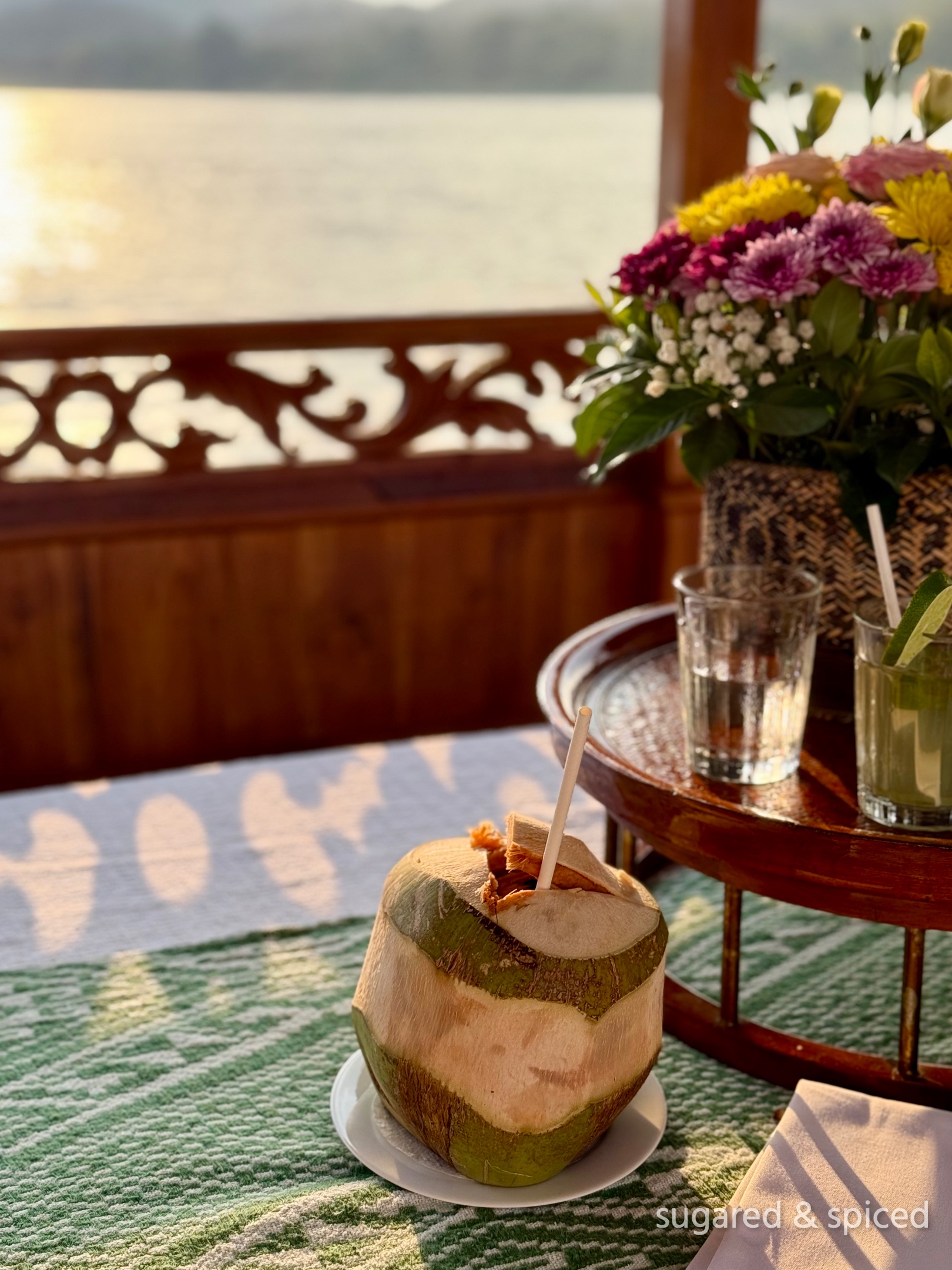
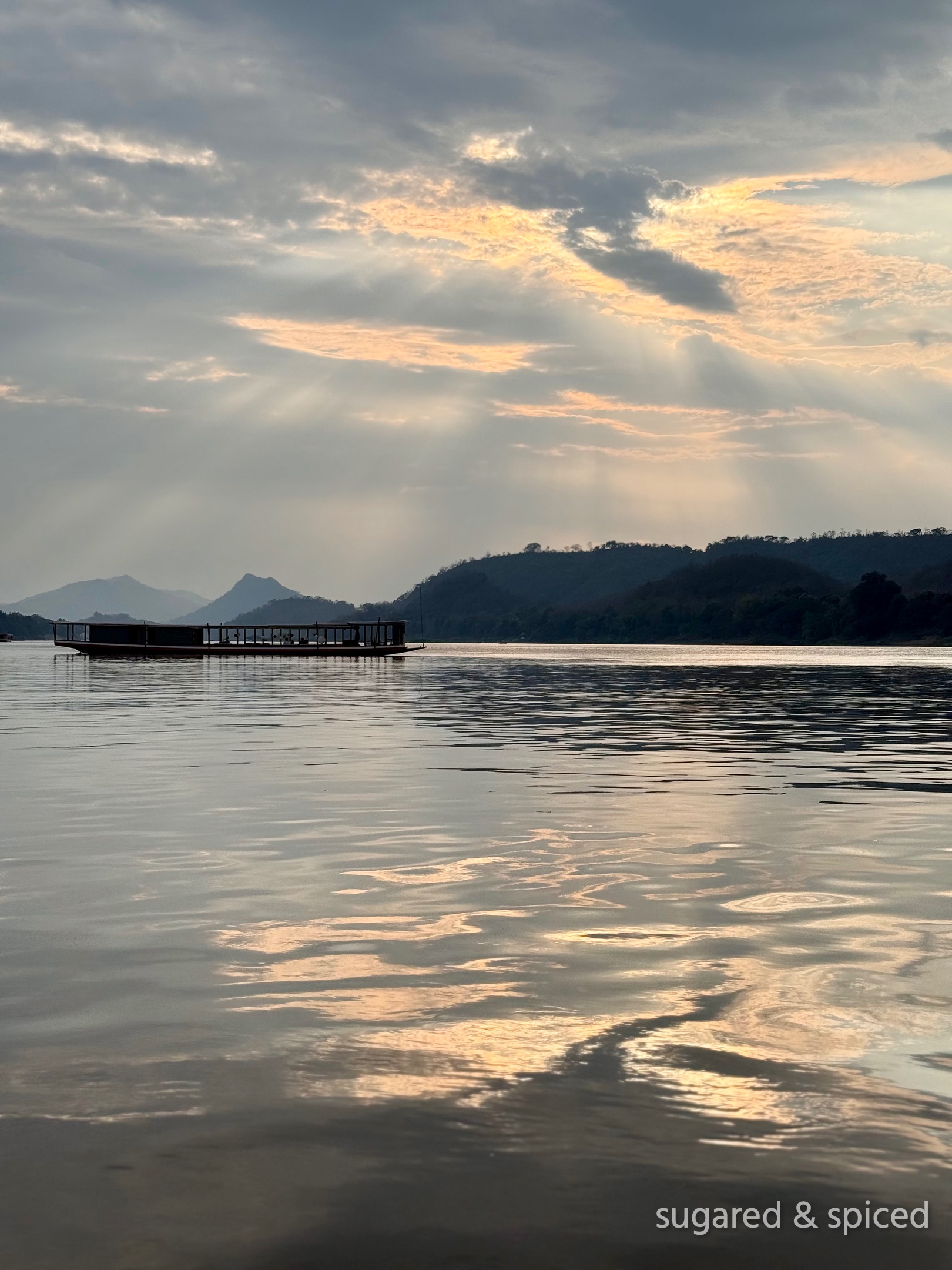
Sunset cruises on the Mekong are a classic Luang Prabang ritual — almost a must-do for any visitor. One afternoon, we boarded Amantaka’s private boat, sank into thick, cushioned daybeds as pre-ordered drinks and snacks arrived. A gentle breeze floated in from the river as we departed.
The only missing piece was the sunset itself. That day, the clouds were simply too thick. But when the boat engine cut off and we drifted quietly on the water, it felt as if the whole world had fallen silent. Just the soft lapping of waves against the hull, a hushed, floating moment.
Then, as if on cue, the sky opened just a crack. Sunlight spilled through, glimmering on the river’s surface. It was easy to imagine — on a clearer day, that same scene bathed in fiery orange, would have been spectacular.
湄公河的日落相當出名,坐船賞夕陽幾乎是定番的觀光行程。我們在傍晚搭乘 Amantaka 的私人船隻,脫鞋踩著溫潤的木地板,躺上厚厚的軟榻。 前日預訂的飲料與小食陸續送上,伴隨著微涼的河風,啓程。 可惜的是當天雲層太厚,沒能看到夕陽,但在船停下來、馬達熄火的那一刻,似乎全世界都安靜了。船隨波漂浮著,只有微波輕輕拍打船底的聲音。正好那時天開了一處,陽光從雲後灑了出來,在水面上閃閃發亮…可以想像天氣配合時的日落,天空一片橘紅的樣子,會很美。
9. Hot Bath & Tea | 熱池 & 午茶
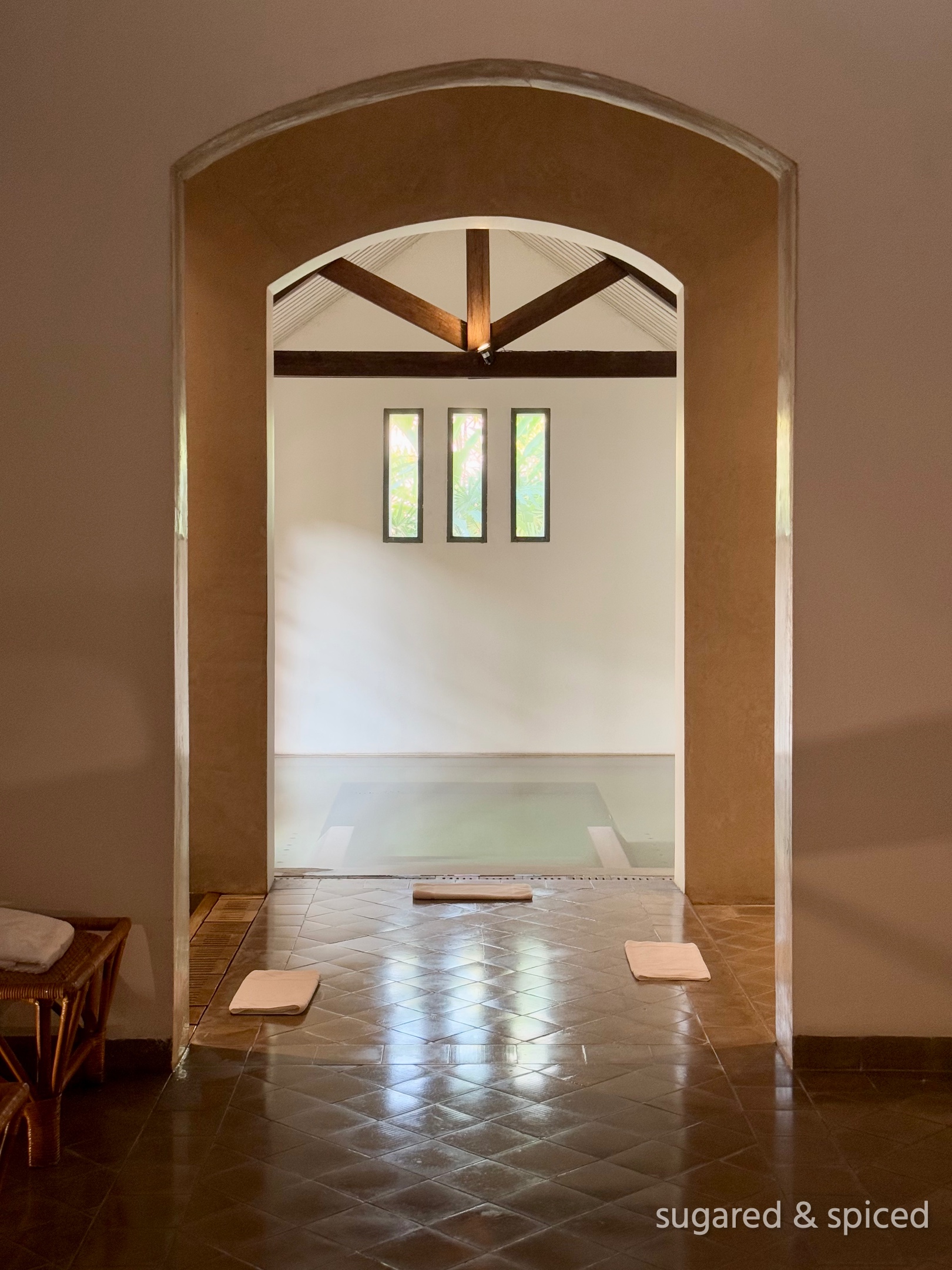
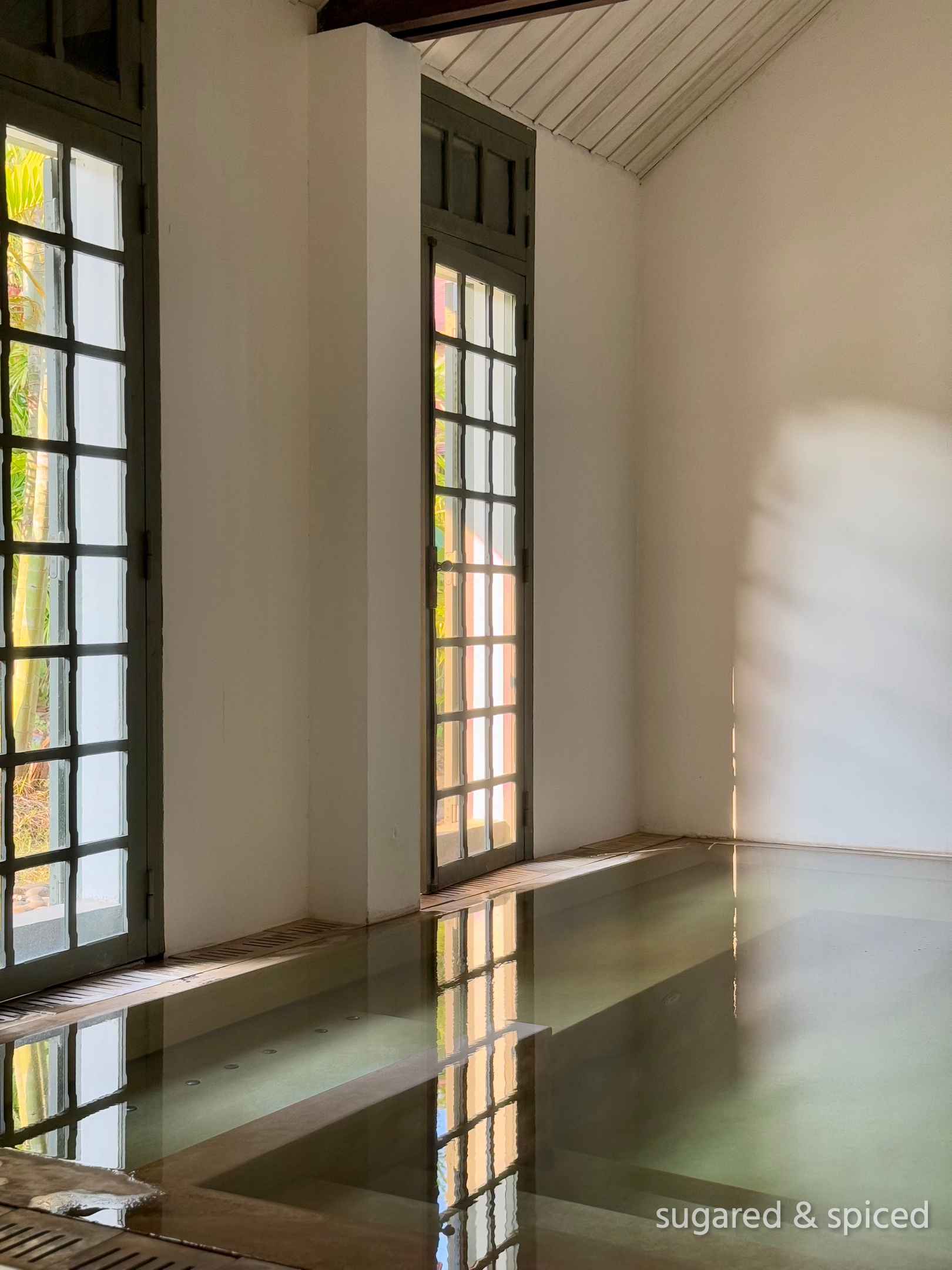
One of Amantaka’s hidden gems is its beautiful bath house, complimentary for hotel guests. Cold pool, hot pool, sauna — everything you’d need for a proper reset. Reserve in advance for complete privacy.
On this rare trip without the kids, there was no Em asking me a hundred whys, no El fussing to be carried, no mental checklist of feeding times. Just me, soaking in hot water, as time gently slowed to a standstill on the water’s surface.
酒店有個免費提供給住客的美麗 bath house,裡面冷池、熱池、桑拿應有盡有。提前預約後不用擔心會有別人進來,完全 private,完全放鬆。難得沒帶孩子的旅行,沒有 Em 在我耳邊問十萬個為什麼、沒有 El 哭鬧著要抱抱、無需記得何時要泡奶…就這樣沉在熱池中,時間徬彿在水面上緩緩靜止。
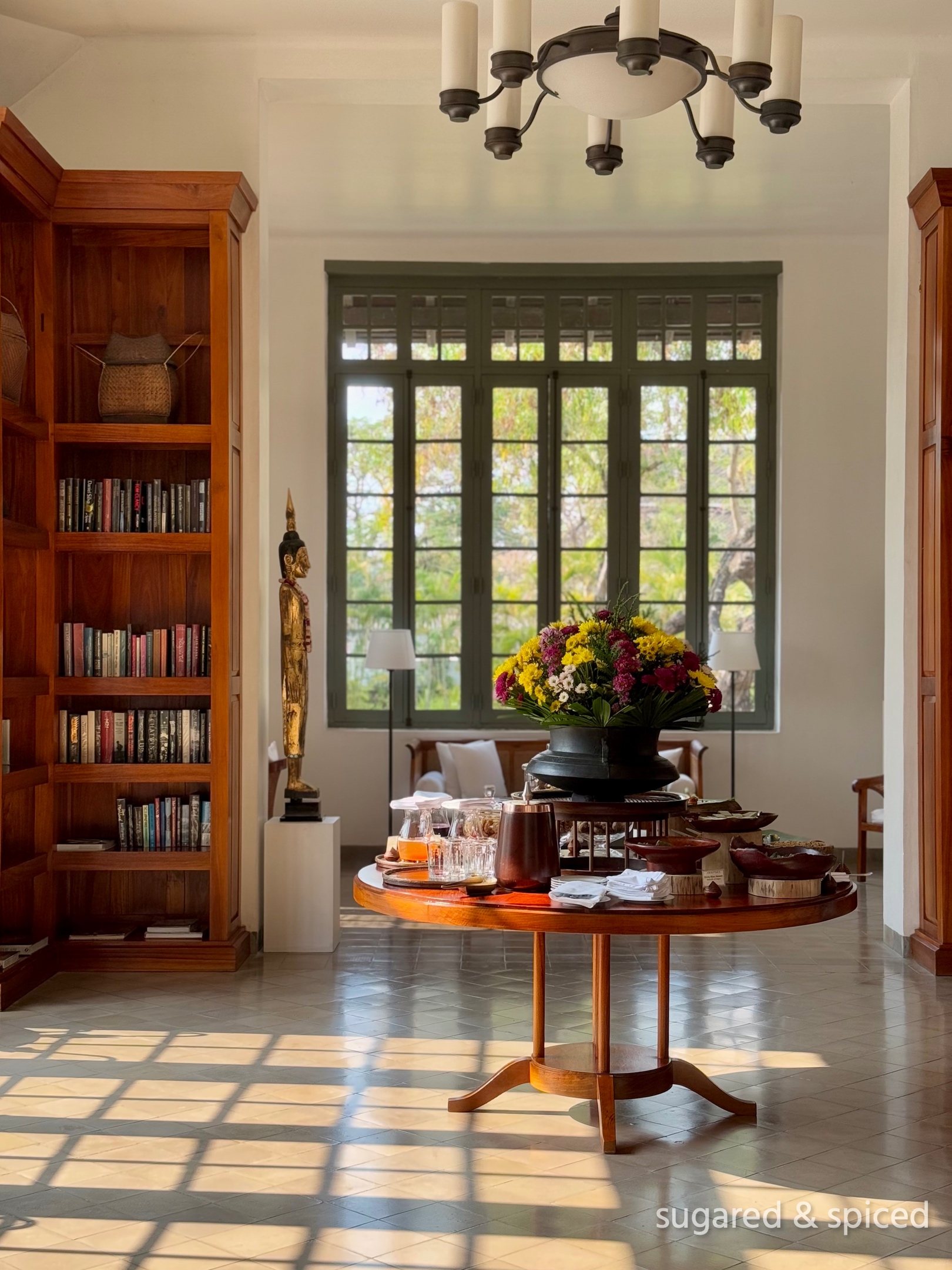
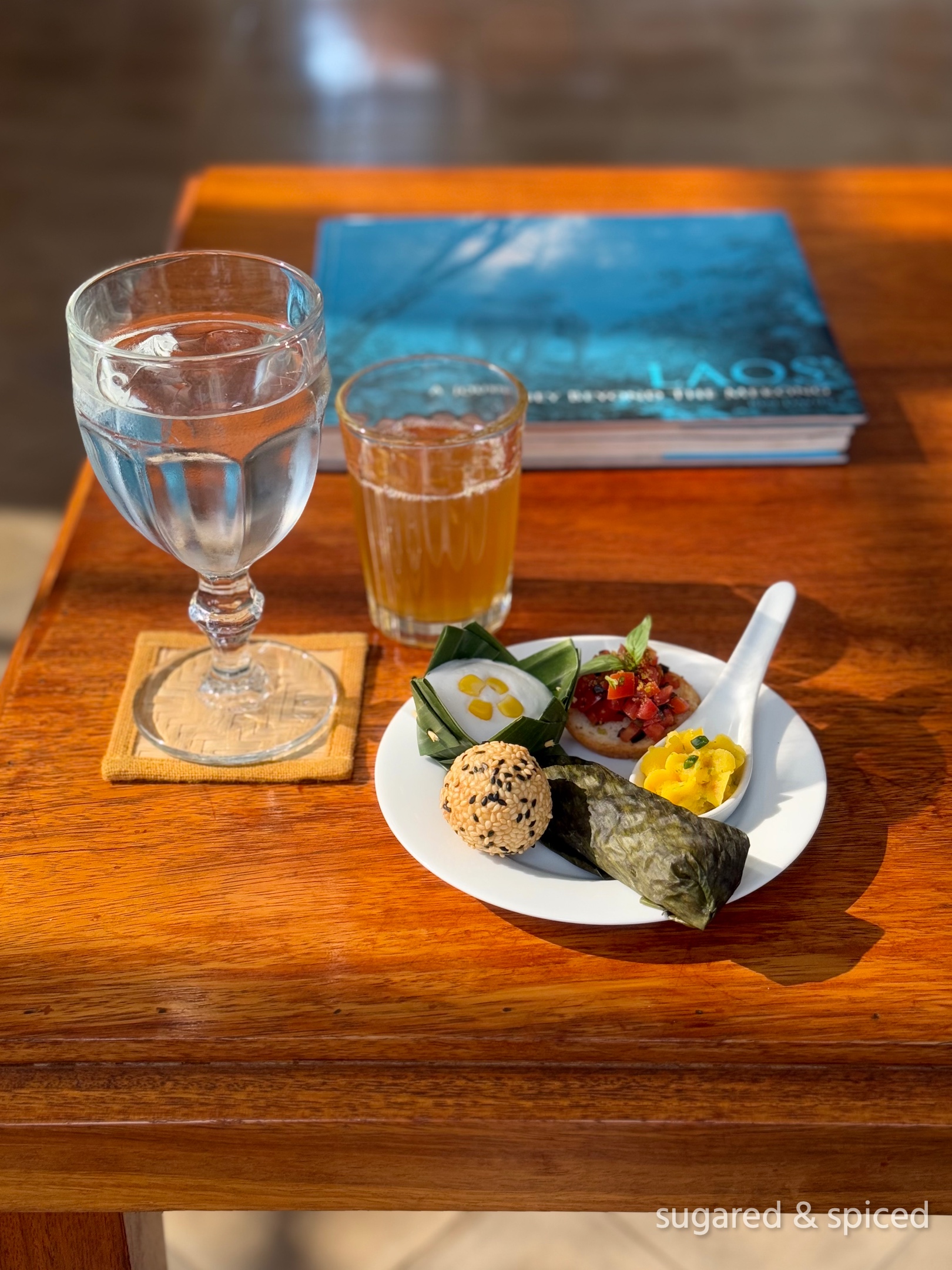
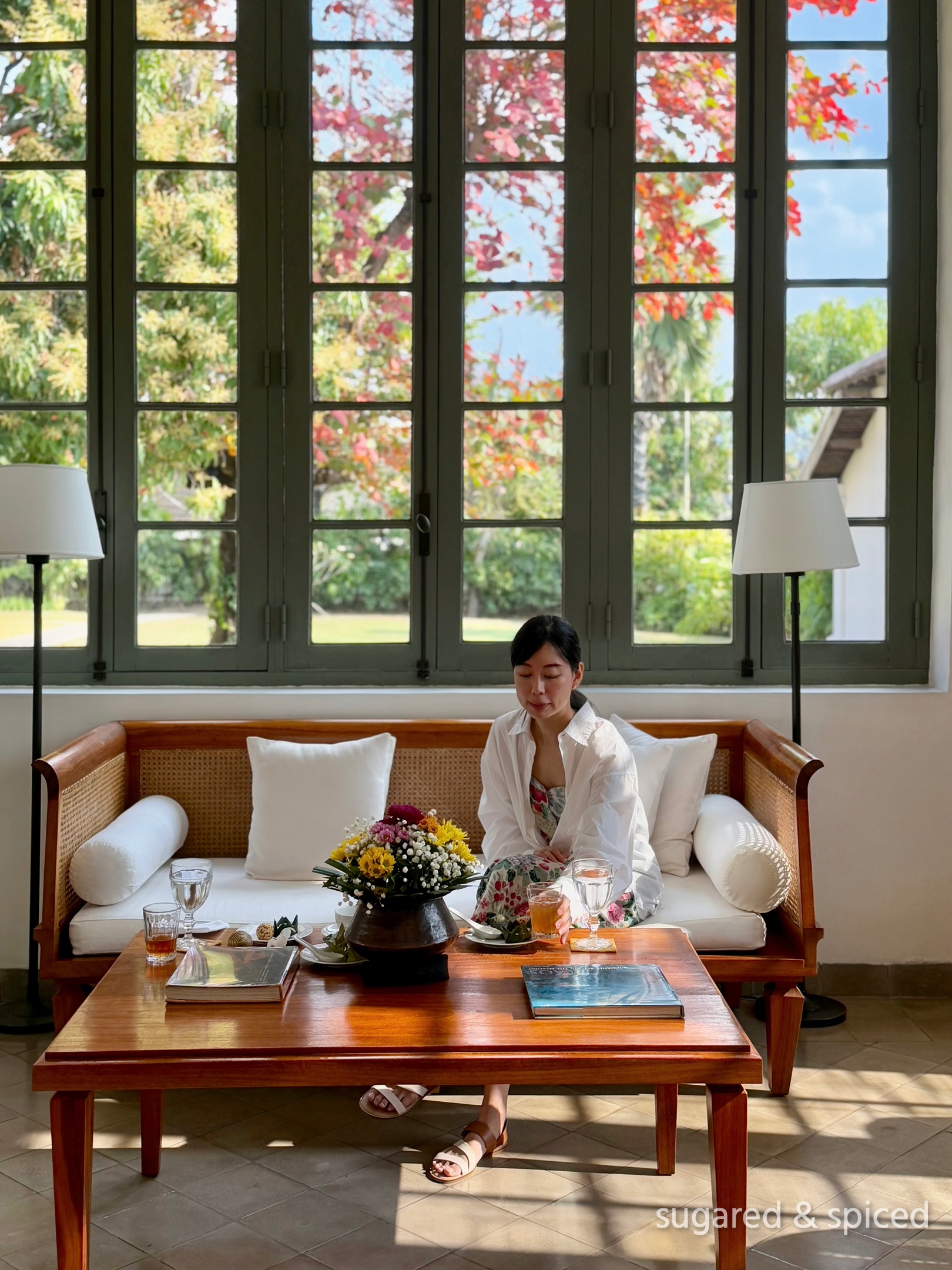
After the bath, we drifted over to the hotel library, a beautiful space filled with light, for a quick afternoon tea. (Complimentary and no need for reservations.)
泡澡後順勢在酒店圖書館享用了簡單的下午茶。無須預約且無額外費用,我們連續兩天都去報到。
10. The Last Morning | 最後一個早晨
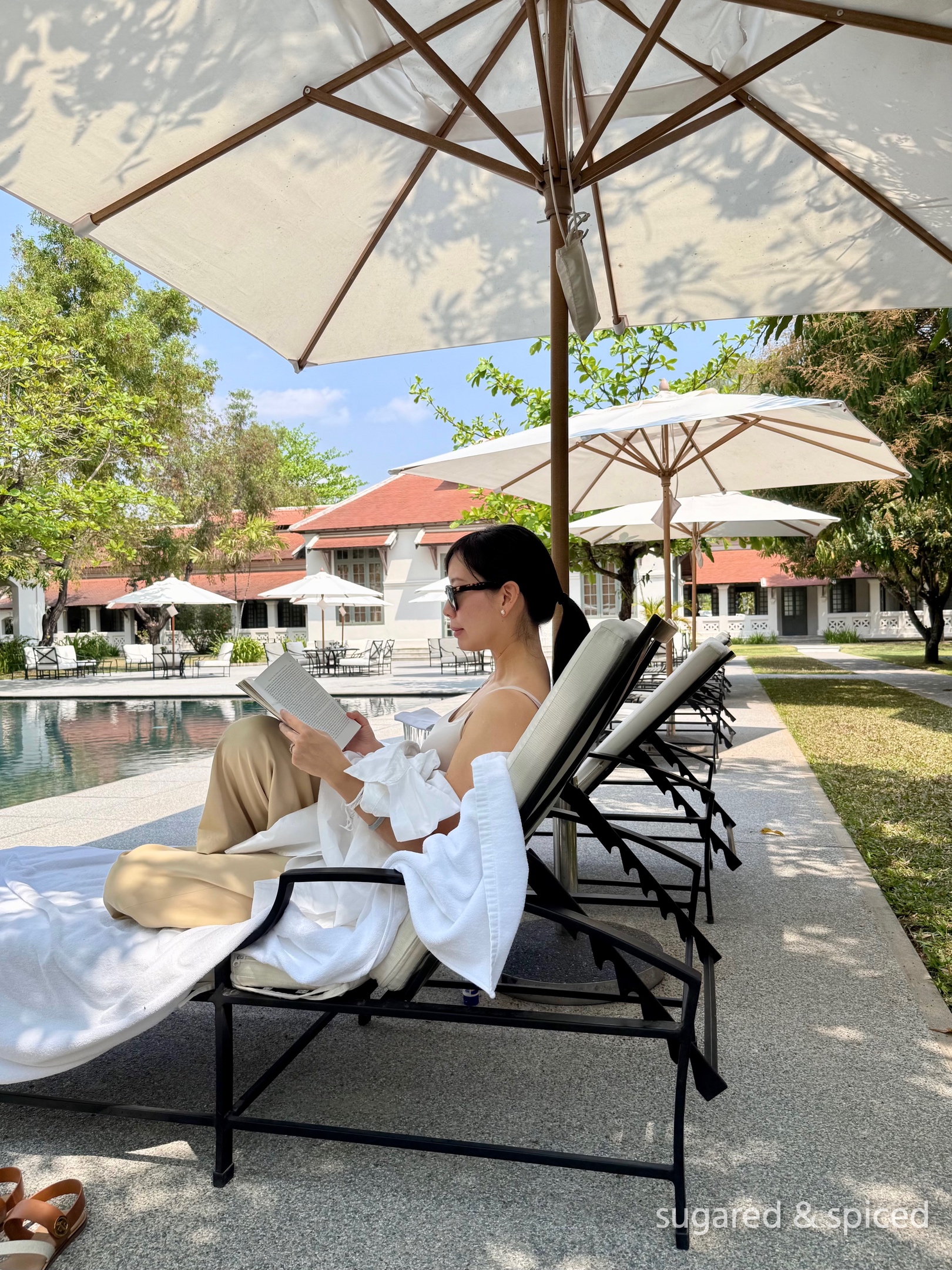
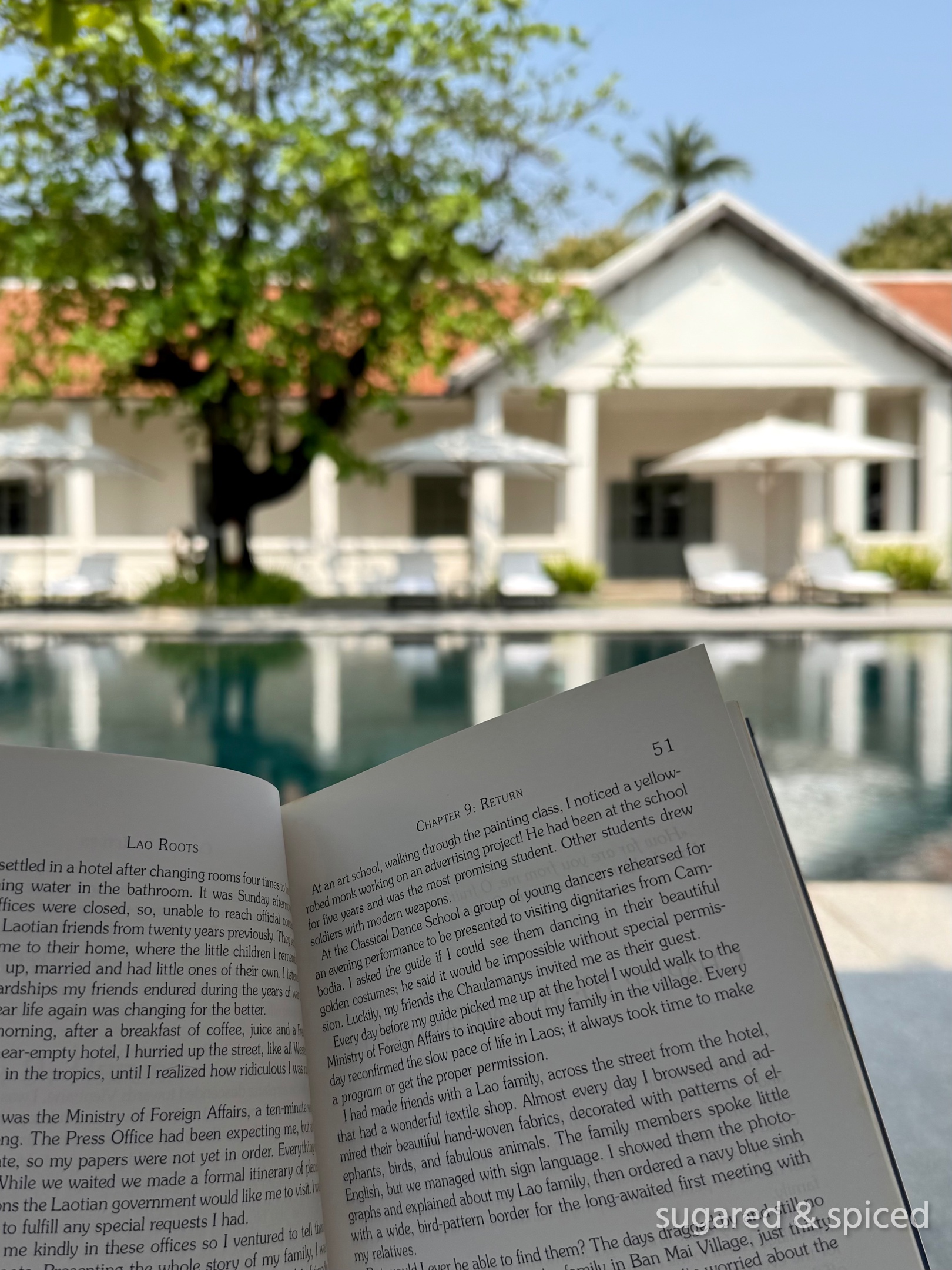
On our last morning, I decided to go nowhere at all. Just sat by the pool, reading a book I’d picked up from the library — Lao Roots, an unusual story about a Norwegian woman tracing her roots in Laos during the 90s.
Mom was resting in our suite, other guests were probably out exploring, leaving the poolside perfectly still, save for the occasional birdsong. I didn’t finish the book, and that’s just one more reason to come back.
旅程的最後一個早晨,我決定哪兒都不去。坐在池畔,讀著圖書館找到的一本《Lao Roots》(關於一位挪威人於90年代在寮國尋根的奇特故事)。媽媽在房間休息,其他住客大概都外出活動了,不見蹤影,整個泳池邊靜悄悄地,偶爾有鳥鳴。書沒看完,但我想,又多了一個要再回來的理由。
///
For this trip, I gave myself a little social media detox — no scrolling, no posting, not even organizing photos. I went to bed early, woke up with the sun, and kept my attention on the world around me, not on a screen.
It wasn’t until I got home when I started going through my camera roll, and that felt like reliving the trip all over again. In my honest opinion, Luang Prabang does not boast the most spectacular landmarks or jaw-dropping landscapes. Its charm lies elsewhere — in the way life flows here, unhurried and preserved despite the waves of Western and modern influences.
Of course, there was also Amantaka, quietly elevating my little “escape.” The cool towels upon each return, the ever-ready tuk-tuk, the thoughtful yet unobtrusive service. It’s not stunning opulence, more of a steady, comforting presence.
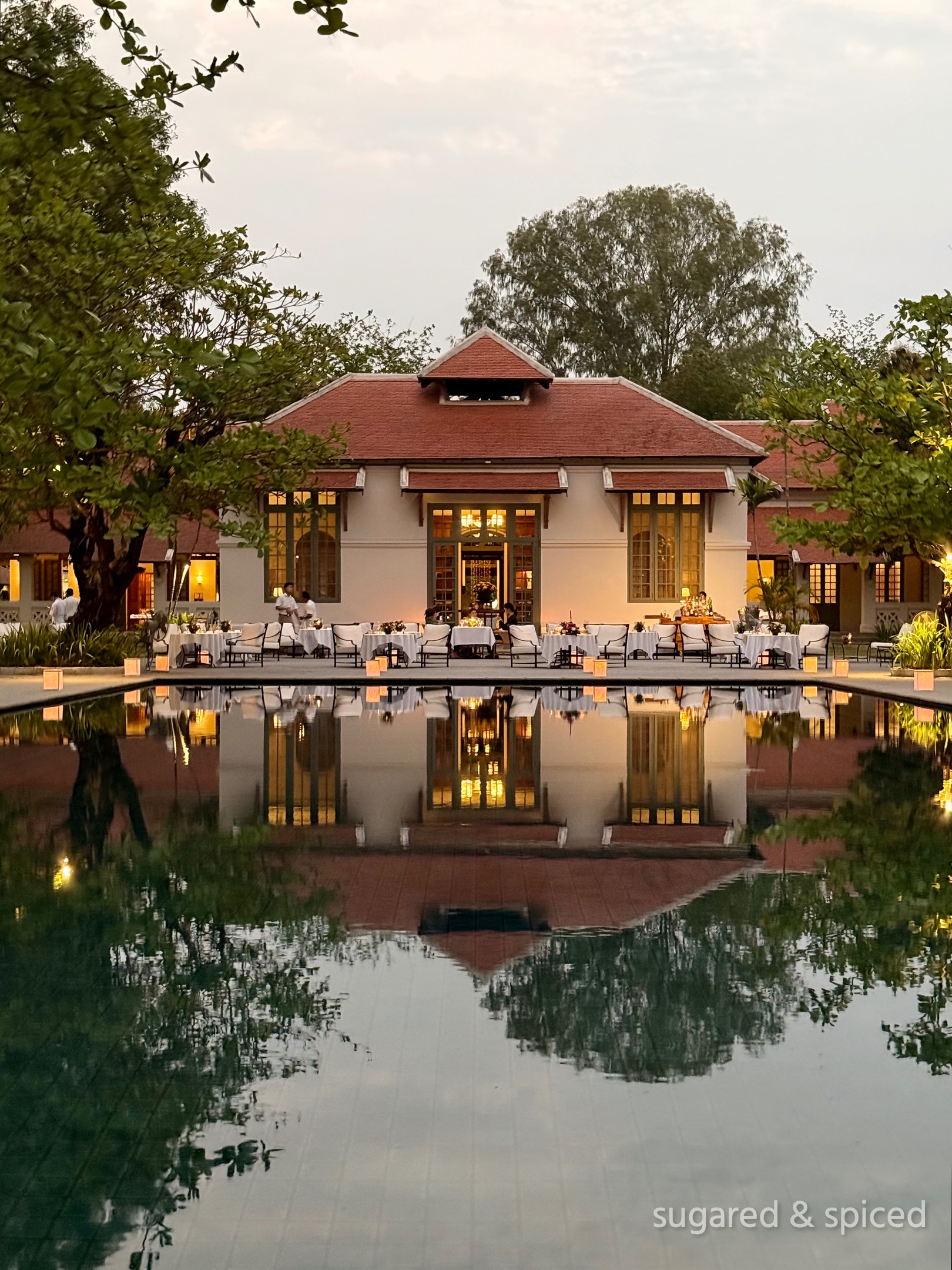
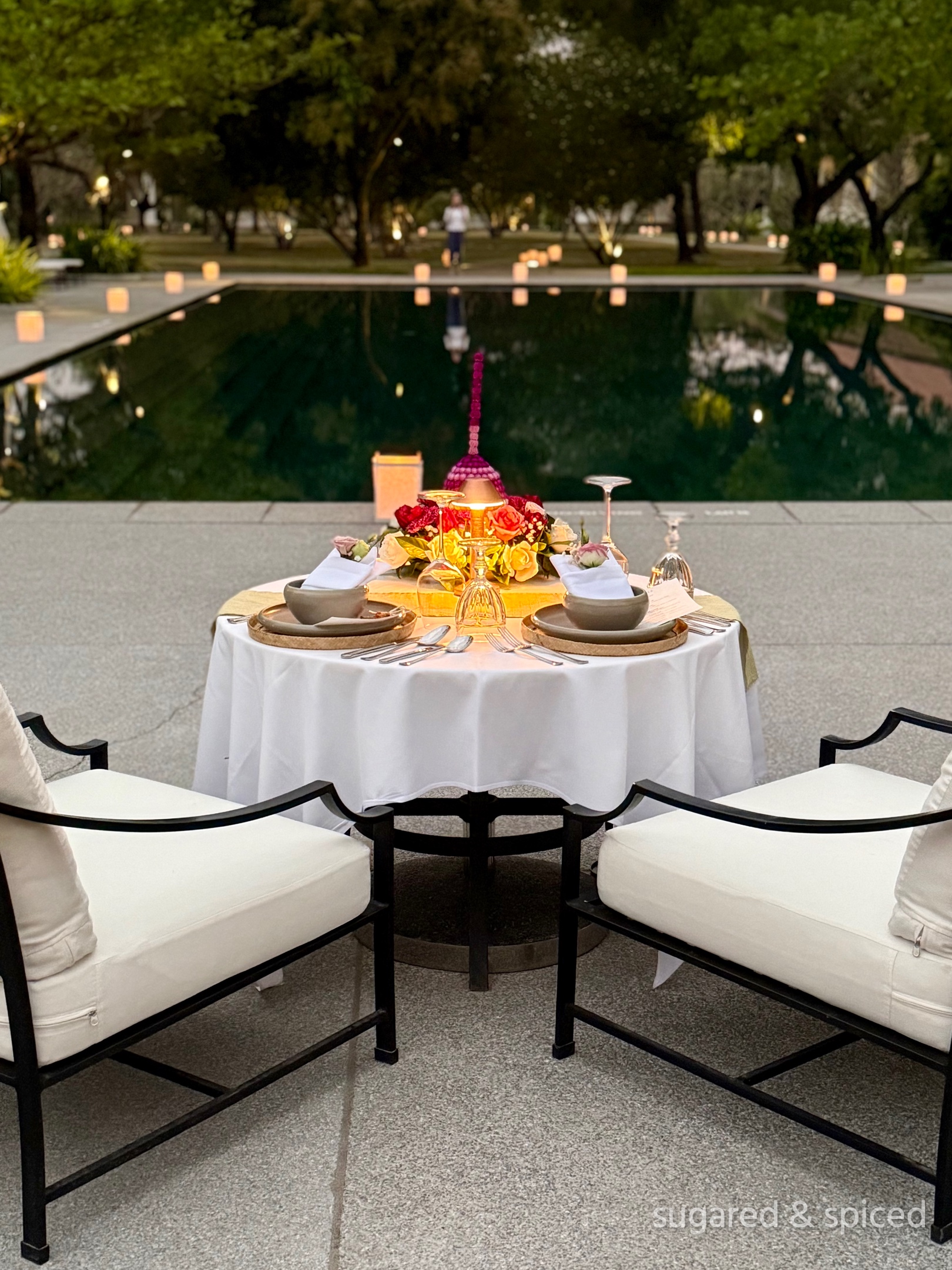
Interestingly, after sharing about this trip, friends with unexpected ties to Laos began popping up around me. A chef who once immersed himself in Laotian village life and brought those flavors back to his Michelin-starred kitchen in Japan. A family friend who just relocated to Laos for a two-year UN assignment. A backpacker friend who holds Laos as one of her favorite places in all of Southeast Asia — because of its people and its soul.
Their stories made me think — maybe I’d need to visit again, and for a deeper dive next time.
這次旅行,我給自己做了個social media detox – 沒看社交媒體,也沒整理照片。每天都早起早睡,不像平時那樣躺在床上無腦滑手機至凌晨。在龍坡邦的每一刻,我希望眼睛是在吸收當地的美,而不是黏在手機螢幕上。
回到家後整理照片時,彷彿又重新經歷了一次旅途。老實說,若論名勝古蹟或自然景觀,龍坡邦並非最出色的。她的吸引人之處,是那些被原汁原味保留下來的傳統生活方式,數百年來未曾因西方和現代文明的衝擊而流失,難得而可貴。
當然還有 Amantaka 的細膩服務,讓我的第一次 「逃離」 變得從容。每次回到酒店時的冰涼毛巾、隨時隨地都能接送的 tuktuk、還有那一份貼心的不打擾。它不是讓人驚呼奢華的酒店,而是細水長流般的存在。
很有趣的是,分享旅行後,我身邊突然冒出了幾位跟寮國有淵源的朋友。一位廚師朋友特地去了寮國的鄉村體驗當地的生活和料理,再將所學帶回日本,融入自己主理的米其林三星餐廳;一位自小認識的妹妹因為聯合國工作的關係,剛搬到了寮國,展開在那裡的兩年生活;一位背包客朋友說她在東南亞的那段日子里,寮國是她最愛的地方之二,因為人的純樸…
他們分享的故事,讓我有了要再去一次的念頭。